


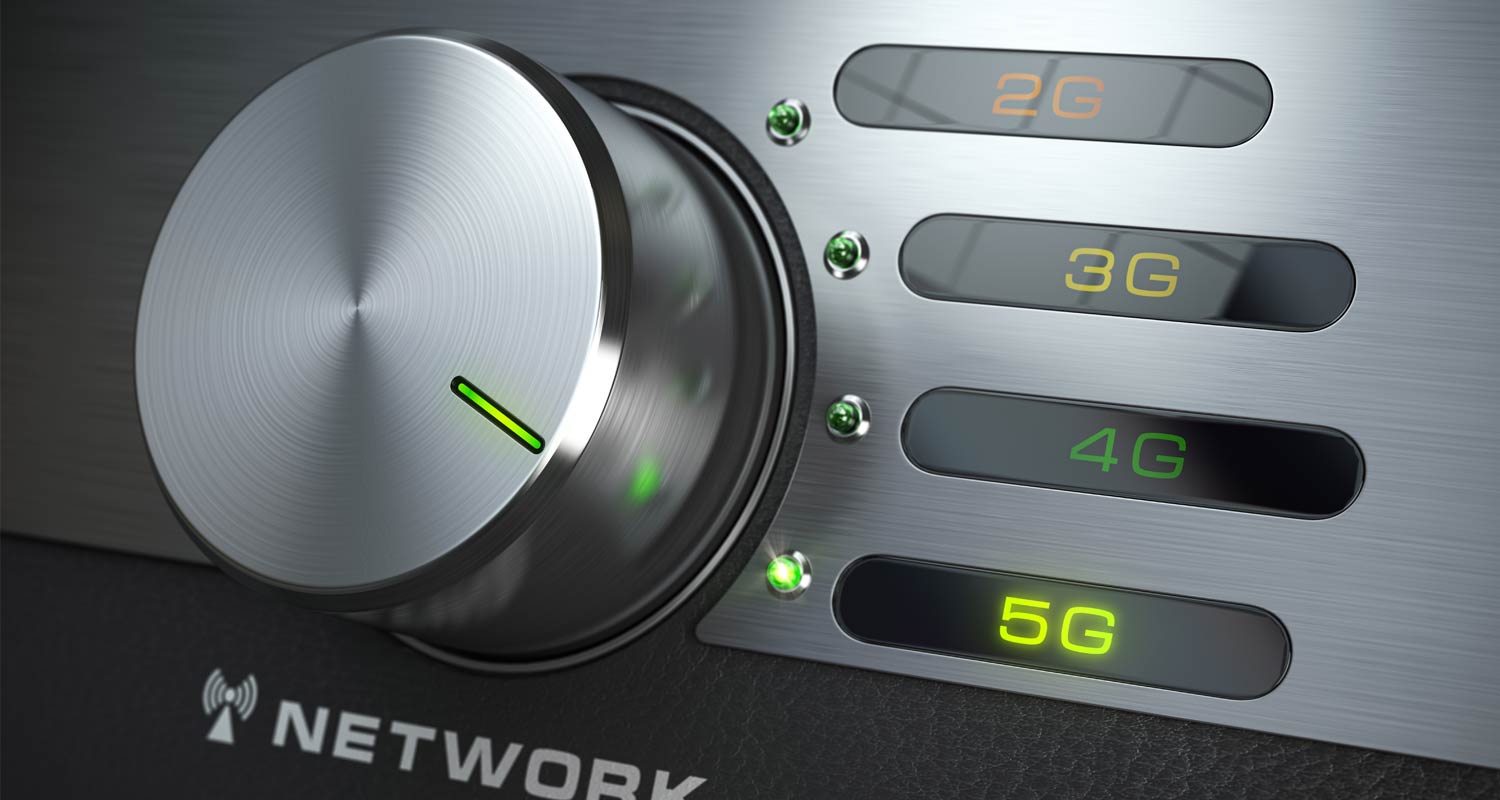

Vodacom expects to switch off its 3G mobile network before its 2G one, in a counterintuitive sequencing that reflects how stubbornly the cheapest end of the device market remains tied to legacy connectivity.
“The current subscriber trajectory suggests that demand for 3G device network support is lower than the demand for 2G devices on our network,” Vodacom spokesman Byron Kennedy told TechCentral. “In addition, most 3G devices are capable of falling back to the 2G network. If this trend is sustained, then it is more likely that the 3G network will be sunset first.”
2G mobile technology was first introduced commercially in 1991, when Finland’s Radiolinja launched the world’s first GSM network. It was a watershed moment, marking the shift from analogue (1G) to digital cellular communications and bringing with it SMS, encrypted calls and basic data services.
3G followed roughly a decade later, with Japan’s NTT DoCoMo launching the first commercial wideband CDMA-based 3G network in October 2001, ushering in mobile internet access at speeds that made services like video calling and mobile web browsing viable for the first time. South Africa’s mobile operators launched 2G GSM networks in 1994 and rolled out 3G from 2004 onwards.
The signal from Vodacom about its 3G shutdown plans comes nearly a year after communications minister Solly Malatsi scrapped the regulatory deadline for switching off 2G and 3G, handing the timing back to operators. None of them can turn off legacy networks while millions of customers and machine-to-machine devices still depend on them – and Vodacom said it could not predict how long 2G in particular would remain in service.
Binding constraint
The binding constraint is the price of 4G handsets. A recent report commissioned by the Development Bank of Southern Africa found that a “decently capable” 4G smartphone costs more than 16% of South Africa’s basic minimum wage – the equivalent of about R800 at current minimum-wage levels.
At the report’s launch, Pieter Grootes of consultancy Networks Anonymous said that when consumers must choose between a basic need such as electricity and a more expensive device, the former wins.
Read: Operators to decide 2G/3G shutdown timeline`
Both government and industry have moved on price. Following a lobby led by Malatsi, national treasury in February 2025 scrapped ad valorem (luxury) duty on smartphones costing R2 500 or less. Olebogeng Ramatlhodi, indirect tax leader at Deloitte South Africa, called it a useful first step at the time but argued for the removal of VAT on the same bracket of devices and a subsidy for qualifying buyers.
Vodacom in September 2024 introduced a low-cost 4G smartphone at R249. MTN followed in May 2025 with a R99 subsidised device aimed at 1.2-million customers – a programme then-MTN South Africa CEO Charles Molapisi told TechCentral was directly tied to migrating subscribers off legacy networks so the operator could simplify its network topology.
Handsets are not the only constraint. Although none of the operators queried would give exact numbers, they confirmed a long tail of tracking and telemetry devices reliant on 2G – from wildlife collars to vehicle trackers and factory sensors.
“2G still supports essential services such as basic voice and SMS at a very affordable device price point and certain legacy machine-to-machine operations,” Cell C said. “These devices are often deployed in remote or hard-to-access locations and are designed to remain in service for extended periods. As a result, migration needs to be managed carefully and on a customer-to-customer basis.”
MTN South Africa said 2G chipsets remain widely used for their affordability, low power consumption and low data requirements, but that demand in the IoT market is shifting to LTE-based technologies. The operator has deployed a narrowband-IoT coverage layer on its 4G network. Vodacom offers similar NB-IoT support.
As the number of devices on legacy networks shrinks, operators will re-farm the spectrum for 4G and 5G – and save on power and network management costs in the process. Vodacom said its future network profile was competitor-sensitive but expects 5G terminals to overtake 4G over time. Cell C said it was too early to predict its long-term network shape.
Read: Telkom to ditch 3G network after dumping 2G
“MTN operates a multi-generation network today to meet coverage and customer needs,” MTN South Africa said. “Over the next five to 10 years, the network will become increasingly data-centric, anchored on 4G and 5G. As usage declines and customers migrate, legacy networks are expected to be phased out.” – © 2026 NewsCentral Media
Get breaking news from TechCentral on WhatsApp. Sign up here.