


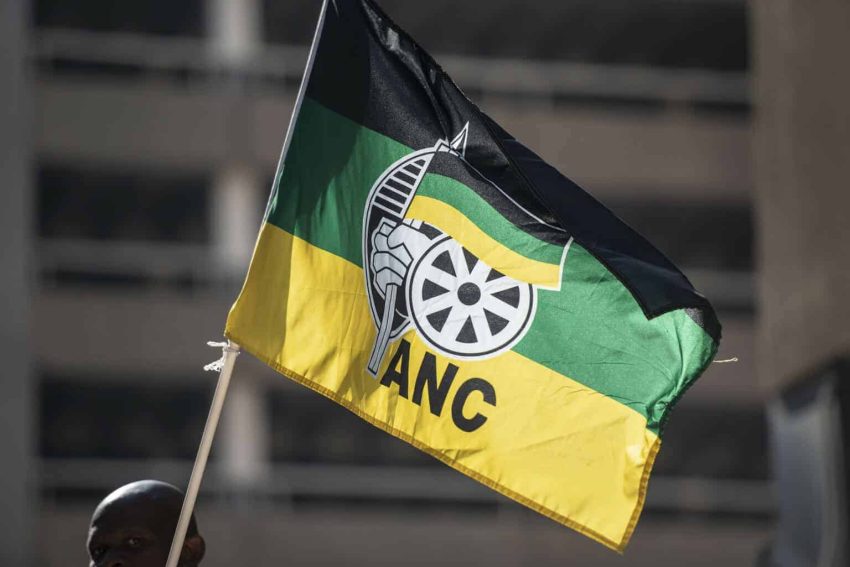
An analyst says strong scrutiny on corruption internally is limiting the ANC’s financial base.
With just six months to go until South Africa’s local government elections, questions have been raised about the ANC’s preparedness for the polls.
The party has not been seen campaigning on a large scale in municipalities and it is yet to announce its mayoral candidates, who will contest in various municipalities.
President Cyril Ramaphosa has announced 4 November as the date for the elections.
Research fellow and politics lecturer at the University of the Free State (UFS), Theo Neethling, told The Citizen that the ANC has started candidate selection and campaign preparations for the local elections late.
“This is happening against a backdrop of declining support (below 50% already in the 2021 local elections) and internal tensions (including the break with the SACP and emergence of new players), poor service delivery and growing dissatisfaction and apathy,” said Neethling.
ANC vs DA campaign
The DA, on the other hand, has been campaigning hard in metros like Johannesburg; its mayoral candidate has also been seen travelling across the city, exposing the shortcomings of the ANC and its partners in Joburg. This has also taken place in social media campaigns, the launching of billboards and through some controversial stunts.
“The question may be asked whether the ANC is currently less organised than the DA. In terms of organisation, it is not entirely accurate to simply state that the ANC is inherently less organised than the DA.
“The ANC has historically remained a mass movement with deep organisational roots across the country, including strong local structures and an extensive branch system.
“Yet in recent years the party has shown clear signs of organisational strain and weakening. Internal factional fighting, leadership conflicts and increasing pressure from declining voter support have affected the ANC’s ability to prepare for elections quickly and effectively.
“This is particularly visible in the slower pace at which candidates for local elections have been identified, and campaigns have been launched.”
Neethling said the DA’s organisational style enables it to make decisions more quickly, announce candidates earlier and communicate a more coherent campaign message.
“These characteristics create the impression of greater organisational efficiency and readiness, especially in the run-up to elections. However, this does not necessarily mean that the DA has a larger or deeper organisational network than the ANC; rather, it indicates differences in organisational culture and decision-making processes.”
Neethling said the ANC’s broad coalition of interests and ideological currents makes it more complex and often slower to reach consensus, while the DA’s more consolidated nature allows for quicker action.
“These organisational differences have direct implications for the second issue, namely Helen Zille’s chances of becoming mayor of Johannesburg. Zille is without doubt one of the most experienced and visible political figures in South Africa, with an established reputation for administrative management, particularly in the Western Cape.
“Her candidacy in Johannesburg can be seen as a strategic move by the DA to use a strong, recognisable figure to mobilise support in a critical metropolitan area. The city’s history of poor governance and unstable coalitions does indeed create a political opportunity for a candidate who can position himself or herself as an agent of stability and recovery.”
Financial problems
Another political analyst from the University of the North West, Andre Duvenhage, told The Citizen that another problem the ANC faces in these upcoming elections is the challenge of finances.
“I have no doubt that the money problem is central in this regard. We have come to know that the ANC is finding it difficult to afford Luthuli House, they are not paying their own staff, and there are major challenges with people within Luthuli House striking against the ANC, so finances are at the core of this, and it has to do with both internal and external lines.”
Duvenhage also suggested that the current international developments and power plays around the globe could have also affected the ANC’s international donations.
“Strong eyes on corruption internally is limiting their financial base… it seems as if money is not readily available to the ANC as was the case in the past,” he said.
Support Local Journalism
Add The Citizen as a Preferred Source on Google and follow us on Google News to see more of our trusted reporting in Google News and Top Stories.