

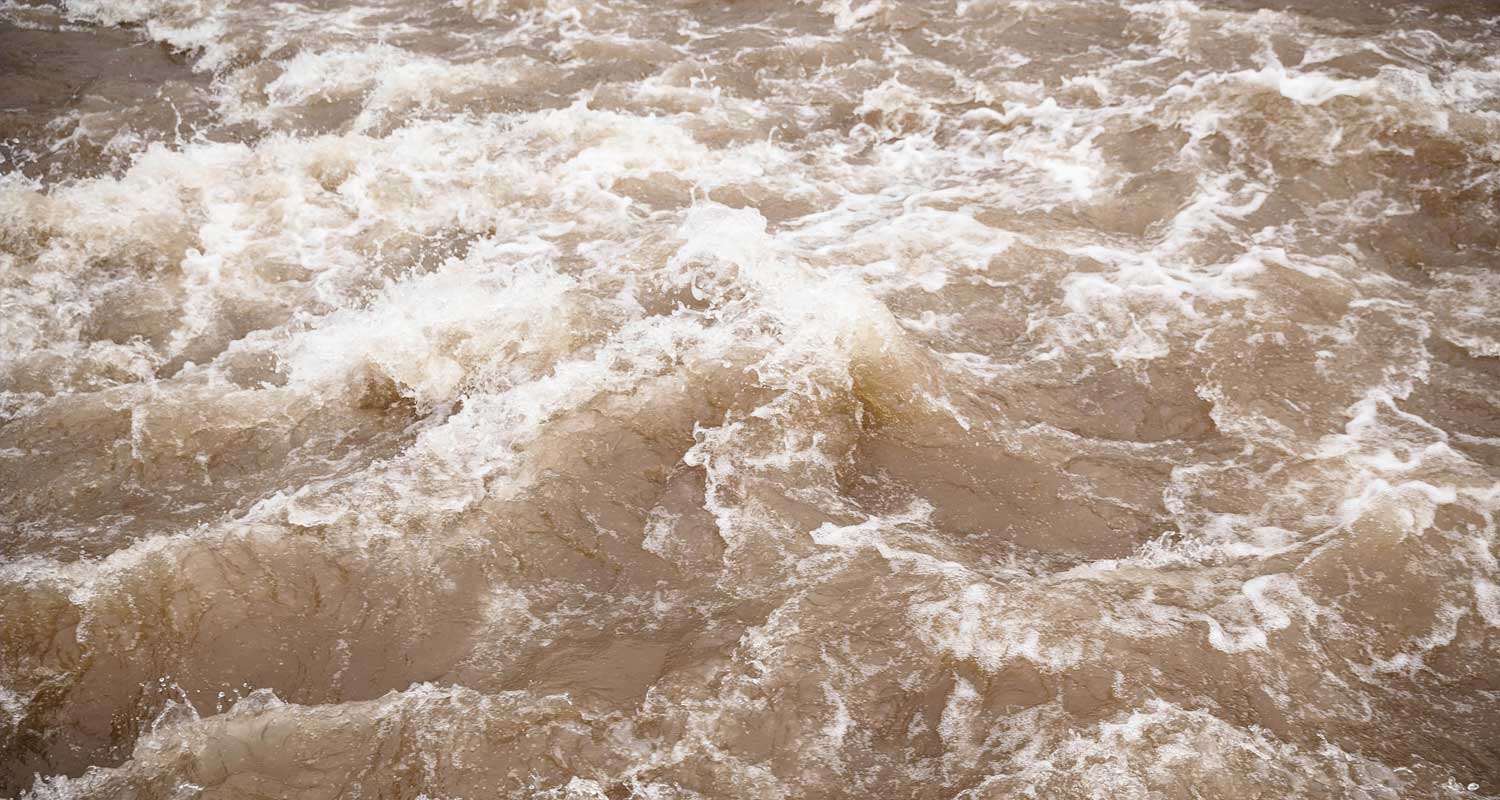
Before the second cut-off low hit the Garden Route in early June, every dam in the district was already at 100% capacity. The ground was saturated. Temporary road repairs from the May disaster were still in place. The region’s head of disaster management had warned publicly that any additional rainfall would simply add to what low-lying areas were already holding. When up to 200mm fell across parts of the eastern Garden Route between 3 and 4 June, the N1 at Leeu Gamka closed with no safe alternative route available.
AfriGIS had already rapidly mapped exactly where that scenario would hurt most.
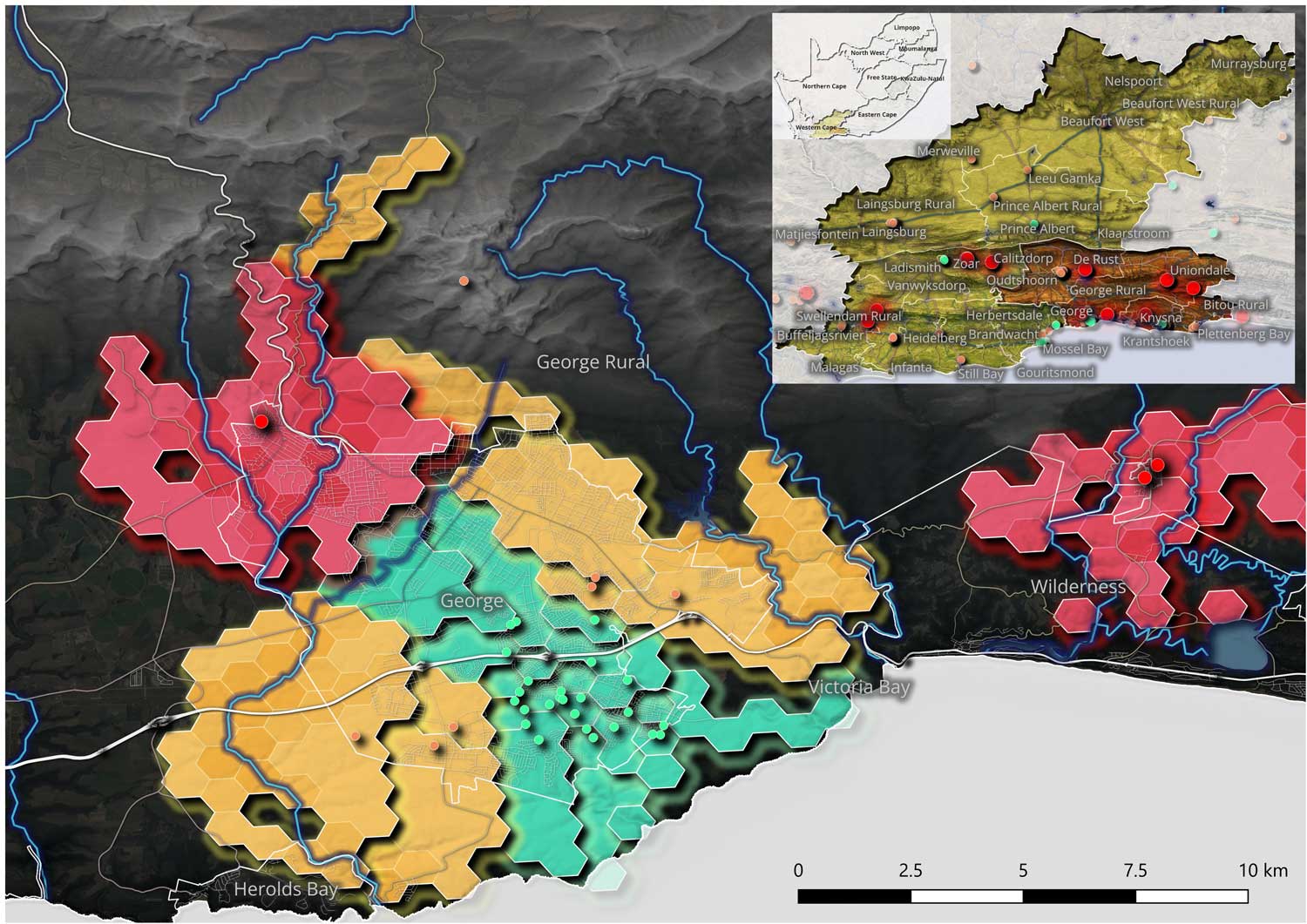
A road connectivity analysis of the Garden Route’s 209 informal settlements had identified 22 communities at extreme risk of losing all physical access if key river crossings became impassable. Kannaland and George carried the highest concentration of risk, accounting for 16 of those settlements. Zoar, Uniondale and Wilderness each contained multiple communities facing complete isolation.
That analysis – built on just four rapidly integrated data layers: roads, rivers, informal settlement locations and storm warning data – was precise enough to be able to aid disaster management teams to pre-position resources and plan evacuation routes before conditions peaked.
The Western Cape’s disaster response during both the May and June events was widely acknowledged as effective given the scale and frequency of the storms. That outcome reflects what spatial preparedness, applied in advance, actually produces – and it is only the beginning of what the underlying platform can do.
“By pinpointing exactly where road network access would fail first, this spatial intelligence enables disaster management teams and emergency responders to position rescue resources and plan escape routes before the floods begin,” says Marna Roos, senior client consultant and geospatial scientist at AfriGIS.
Beyond the four-layer foundation
What the Garden Route analysis also demonstrated is how much additional intelligence becomes available the moment you move beyond just the four-layer foundation.
The same spatial framework that answers a life-safety question – who will be cut off, and where? – can, with the addition of property deeds and cadastre data, calculate the estimated rand value of assets exposed within a defined flood zone. A short-term insurer moves from broad regional loss estimates to parcel-level flood and peril underwriting, pricing risk to a specific property rather than a post code. Layer in CIPC business registration data, and the picture expands further: now you can quantify revenue disruption, the businesses that couldn’t trade, not merely the buildings that flooded.
Infrastructure asset owners – Transnet managing railway lines through flood-prone rural corridors, Sanral monitoring road networks, Eskom tracking substation proximity to rising flood lines – each face the same underlying question: where is my exposure, and at what point does it become critical to my balance sheet?
This building-block quality is what distinguishes spatial intelligence from conventional risk reporting. Each layer added doesn’t just refine the existing answer; it opens an entirely different commercial and operational conversation. Four layers produced a nationally significant disaster response finding. The same platform, with verified deeds, cadastre and business data enrichment, produces an insurer’s loss ratio model, a logistics operator’s route risk profile and a municipality’s infrastructure maintenance priority map – simultaneously, from the same verified base.
AfriGIS sources exclusively from authoritative entities – never crowdsourced – and validates data against satellite imagery and even on-the-ground sources where further verification is required. The organisation holds 28 years of verified geospatial records for South Africa, which means risk profiles can be assessed not just at a point in time, but against a trackable historical baseline. For insurers recalibrating flood line assumptions after back-to-back cut-off lows, that depth of longitudinal data is a tremendous material advantage.
For municipalities and district government, the operational argument is equally direct. Critical information about informal settlement locations, infrastructure maintenance records and access route conditions typically lives in departmental spreadsheets, separated by function.
When that data moves onto a shared spatial platform, electrical teams, water management and emergency services can each see where their responsibilities intersect, coordinate where necessary and act independently where possible – without duplicating effort or missing the gaps between silos. A single spatial source of truth improves decisions during a crisis, but crucially, also accelerates them at the moment when every hour counts.
AfriGIS can integrate core data layers within hours or days of engagement. The constraint is rarely the technology.
South Africa’s rainfall season runs through November. The ground across the Western and Eastern Cape is saturated, flood lines are being reassessed, and the 22 settlements AfriGIS identified in the Garden Route are one data point in what a national-level analysis would surface. The Garden Route has now served as a live proof of concept – twice within a month. The intelligence to act on that more broadly is available now.
About AfriGIS
AfriGIS is the leading geospatial information science company in Southern Africa that specialises in location-sensitive data and solutions. It provides customers across the board with a suite of web-based tools and APIs to connect to, enhance and enrich their own data with location intelligence, insights and trusted data. The organisation was founded in 1997 and celebrates more than 28 years in business. It is a level 1-certified broad-based black economic empowerment (B-BBEE) business, with more than 100 employees in Pretoria, Durban and Cape Town in South Africa, Dublin in Ireland, and Dhaka in Bangladesh.
Stay in the loop with our latest updates and exciting news by subscribing to our newsletter, your gateway to a world of inspiration delivered directly to your inbox. Subscribe here.
AfriGIS offers an extensive selection of premium African GIS contextual insights solutions that empower businesses to gain sharper insights into their operations, customers and markets. These contextual insights solutions, in turn, enable more intelligent decision-making, giving companies a competitive edge in their respective industries. Contact us today.