





The digital divide in South Africa just got its most credible solution yet. After years of planning, trials and technical validation, dynamic spectrum sharing has moved from regulatory aspiration to proven reality – and it happened faster than anyone in the industry expected.
In late January 2026, stakeholders gathered in KwaZulu-Natal to witness the culmination of field trials that could fundamentally reshape how millions of South Africans access the internet.
The successful deployment of 5G networks using dynamically allocated spectrum in both Ntuzuma and Ixopo demonstrated something the industry has been pursuing for over a decade: a reliable, cost-effective pathway to bringing high-speed internet to underserved and rural communities.
The implications are massive. We’re not talking about incremental improvements to existing infrastructure. This is a paradigm shift in how spectrum – the most valuable and scarce resource in wireless communications – can be shared dynamically to maximise its utility and reach.
Having worked with communications regulator Icasa on spectrum initiatives for years, I can tell you this level of speed and efficiency is unprecedented. The regulator deserves huge credit for moving this technology from concept to field-tested reality in record time.
How we got here
The journey began with TV white-space trials, funded by a US$1-million grant from the US, which the Wireless Access Providers Association (Wapa) operated under an Icasa trial licence. Those trials, though interrupted by Covid-19, laid essential groundwork.
Shortly after the pandemic, Icasa opened TV white space as unlicensed spectrum and then published its intention to enable dynamic spectrum access (DSA) in two critical bands: the lower 6GHz range (5.925-6.425GHz) and the 3.8-4.2GHz band.
Read: Icasa gears up for South Africa’s next big spectrum auction
The technical heavy lifting fell to the CSIR, with chief researcher Luzangu Mfupe designing the universal access spectrum switch – the database that enables radios to operate without interfering with fixed satellite services sharing the same spectrum. Mfupe, who also designed the TV white space secondary geolocation database, brought deep expertise to ensuring the system could work in the real world, not just in theory.
The field trials themselves were led by Icasa councillor Thabisa Faye, with support from Icasa’s technical and field teams. Two wireless internet service providers (Wisps) – AdNotes, led by executive chairman Nkosinathi Mbele, and AfricaITA, represented by director Njabulo Hadebe of LeadUp Solutions – installed and operated the trial networks.
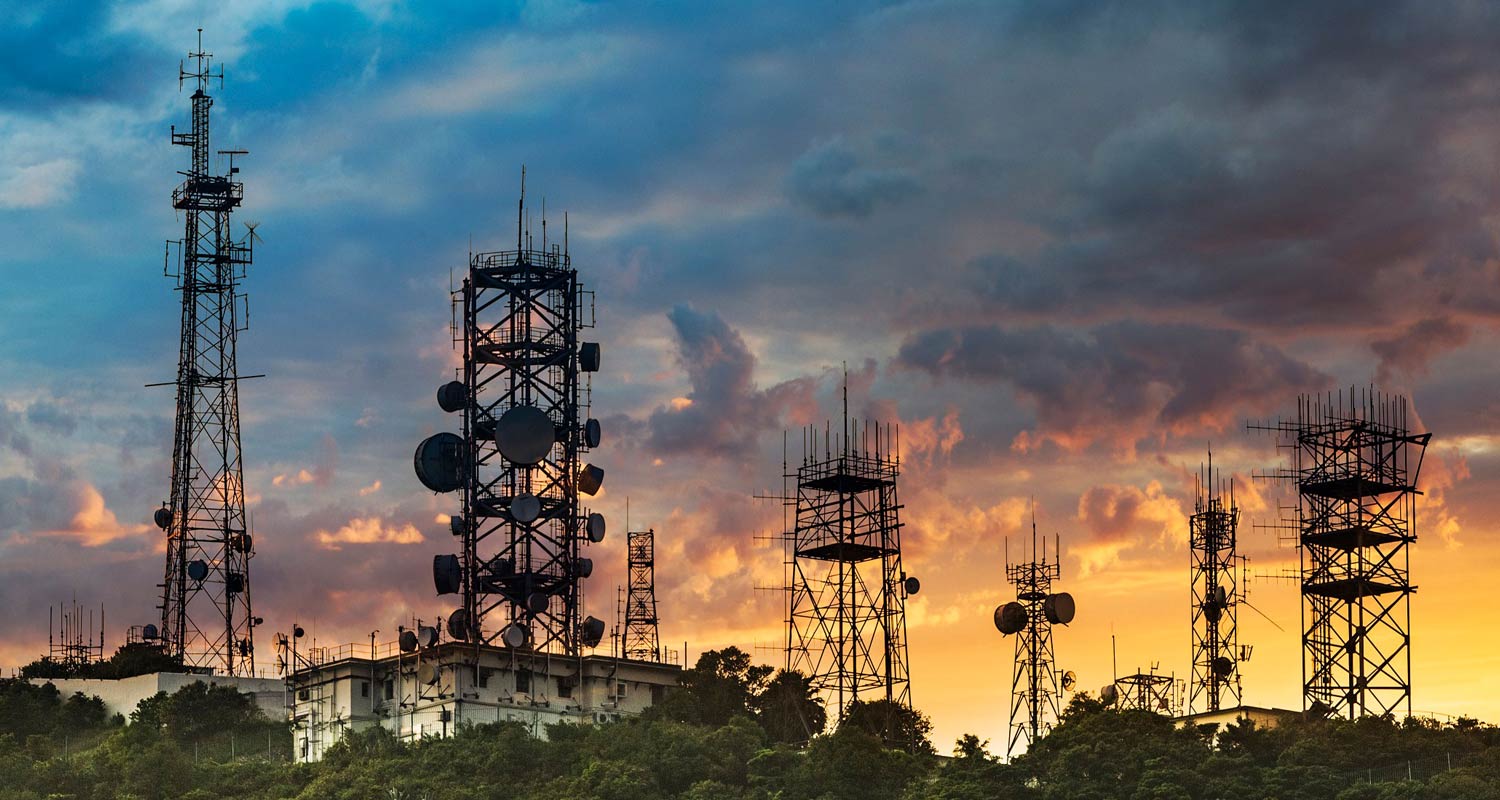
The two-day stakeholder site visit in January took place during what locals described as two of the hottest, most humid days in recorded regional history. Despite the conditions, the technology performed beyond expectations.
At both sites, 5G radios operating in the 3.8-4.2GHz band delivered download speeds up to 200Mbit/s direct to compatible cellular handsets and 5G routers. The networks achieved coverage at ranges exceeding 4km and remarkable results in non-line-of-sight conditions – the traditional nemesis of Wi-Fi transmissions. Backhaul came from Link Africa in Ntuzuma and Openserve in Ixopo, demonstrating interoperability with existing infrastructure.
The performance advantage over conventional Wi-Fi at 5.8GHz was dramatic. Where 5.8GHz suffers from high noise floors due to interference and requires clear line of sight, the dynamically allocated spectrum was pristine – no competing signals, excellent range, remarkable throughput. Testing included both direct-to-handset connections and fixed 5G routers serving households via Wi-Fi, with residents reporting satisfaction with their service quality.
Critically, this marked the first time dynamic spectrum has been used direct-to-device in South Africa, unlike TV white space, which required point-to-multipoint links. It’s essentially creating wireless hotspots with the performance characteristics of 5G, but without the infrastructure costs or licensing complexity of traditional cellular deployment.
Spectrum is the lifeblood of Wisps. Without it, they simply cannot operate. But spectrum is finite, and its allocation has historically been based on technologies and use cases from decades ago.
Spectrum sharing changes everything
The challenge is that spectrum allocated for specific purposes often sits underused, particularly in rural areas where legacy licenceholders may not have deployed services. Meanwhile, communities that desperately need connectivity have no access to the spectrum that could serve them.
Dynamic spectrum sharing solves this by enabling secondary use of spectrum that would otherwise sit idle. The spectrum switch continuously monitors the base station radios to protect the primary users (like satellite services) and allocates available capacity to secondary users (like Wisps serving rural communities) in real-time. It’s elegant, efficient and makes maximum use of our scarcest wireless resource.
According to recent data, South Africa still has millions without reliable internet access, particularly in rural areas where fibre deployment is economically unviable and cellular data remains prohibitively expensive for daily use. Dynamic spectrum sharing offers a third path: fast, stable broadband at costs that make rural deployment sustainable for service providers and affordable for communities.

This is a monumental moment for Wisps and other wireless service providers. The clean spectrum in the 3.8-4.2GHz and lower 6GHz bands, combined with the performance characteristics demonstrated in the trials, opens possibilities that simply didn’t exist before.
Radio equipment for the lower 6GHz band is already widely available globally.
Equipment for the 3.8-4.2GHz band exists and will be optimised for local specifications once Icasa publishes final technical requirements. The technology is mature, tested and ready for deployment.
Beyond consumer internet, the applications extend to private 5G networks for mission-critical operations – think open-cast mining operations where safety systems require absolute reliability and minimal latency, or campus networks for universities and corporate facilities. Globally we’re seeing similar deployments using what’s known as the N77 band; South Africa now has a regulatory pathway to enable the same capabilities.
For Wisps specifically, this represents the spectrum access we’ve needed to scale operations into previously unreachable markets. The economics finally work. The regulatory framework is emerging. The technology is proven.
What happens next
The KwaZulu-Natal trials have provided Icasa with real-world performance data, interference analysis and operational validation. The regulator now has everything it needs to finalise regulations for commercial deployment.
Given the speed and efficiency Icasa has demonstrated throughout this process – which, I cannot stress enough, is the fastest I’ve seen any spectrum initiative move – we’re optimistic that commercial authorisation could come within months, not years.
Service providers aren’t waiting. We’re already preparing our networks, planning deployments and ensuring we’re ready to move the moment regulations are gazetted. The technical foundation is solid. The business case is clear. The social impact – bringing meaningful connectivity to underserved communities – is profound.
Read: Vodacom dropping R5.6-billion for spectrum in key market
This isn’t just about opening new spectrum. It’s about fundamentally rethinking how we use the spectrum we have, making it work harder and reach further. For a country where connectivity gaps still leave millions behind, that shift couldn’t come at a better time.
The digital divide in South Africa has always been primarily an economics problem dressed up as a technology problem. Dynamic spectrum sharing changes the economics. That’s why this matters.
That’s why this is a breakthrough. And that’s why, after years of work by CSIR, Icasa and industry partners, we’re finally on the cusp of something genuinely transformative.
- Paul Colmer is an executive member of the Wireless Access Providers Association
Get breaking news from TechCentral on WhatsApp. Sign up here