
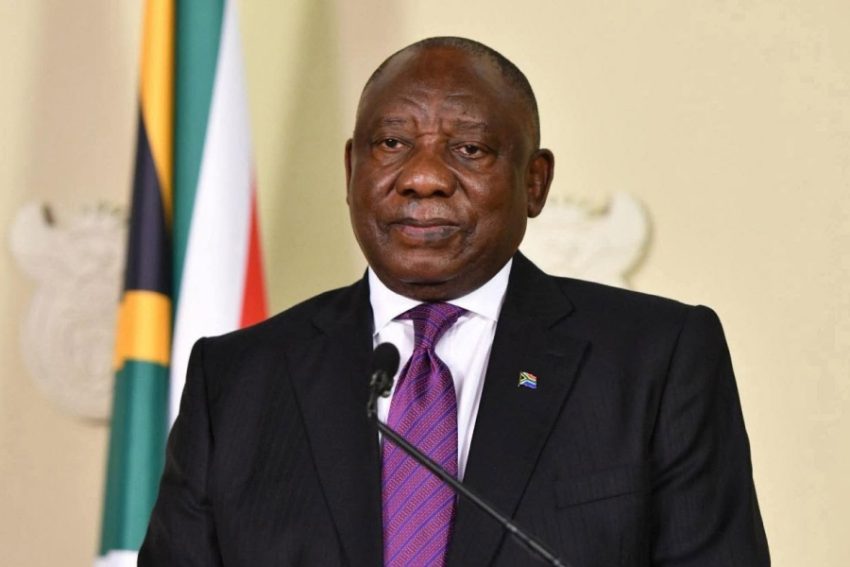
The parliamentary committee tasked with investigating whether president Cyril Ramaphosa should face impeachment over the Phala Phala scandal has postponed appointing an evidence leader, extending nominations until Friday as it awaits a court ruling that could determine the future of the inquiry.
The Section 89 committee resolved on Wednesday to reopen the nomination process after political parties raised concerns over the limited pool of available candidates and potential conflicts of interest involving one of the shortlisted senior advocates.
The committee will now accept further nominations until 6pm on Friday, after which Parliament’s legal services will verify the availability of nominees before circulating an updated shortlist to members on Monday.
MPs will then conduct their own due diligence ahead of a meeting next Wednesday, where they are expected to indicate their preferred candidate. The appointment itself will ultimately be made by the Secretary to Parliament.
Political parties represented on the committee were invited to nominate senior advocates to serve as evidence leader for the inquiry.
Nine names were initially submitted, but Parliament’s legal team informed members that four advocates were unavailable, while another, Advocate Zinzile Matebese SC, indicated he would only be available from November.
As the committee intends for the evidence leader to begin work in August, Matebese was excluded from consideration, leaving Advocate Kate Hofmeyr SC, Advocate Vuyani Ngalwana SC, Advocate Ismail Jamie SC and Advocate Pule Seleka SC on the shortlist.
However, Parliament’s legal services flagged that Ngalwana had previously made public comments relating to the Phala Phala matter.
Although Ngalwana indicated that he did not consider himself conflicted, some members argued that the perception of bias could undermine the credibility of the inquiry.
ANC MP Mikateko Mahlaule said the committee should avoid appointing anyone whose impartiality could later be questioned.
“He may have a view that he is not conflicted but if we come to a conclusion that we perceive him to be conflicted, I think that satisfies the issue of real or perceived conflict of interest,” Mahlaule said.
“I think that for us to enter into a clean process, we need to look at the perceived conflict of interest and rid ourselves from entering into what I would call a dirty relationship with perceived conflicted people.”
Mahlaule also argued that many committee members had never worked with some of the shortlisted advocates and should be afforded time to conduct their own due diligence before making a recommendation.
The proposal to reopen nominations, however, was not universally supported.
ActionSA parliamentary chief whip Lerato Ngobeni said parties had already been given sufficient opportunity to submit names and that extending the nomination process further was unnecessary.
“We agreed as a committee that we were going to nominate by a particular date, which all political parties submitted to,” Ngobeni said.
“We are not opposed to the 48-hour proposal for members to do their due diligence. However, the idea of further nominations is not something that we would entertain.”
She argued that the committee should instead work with the existing shortlist.
MK Party parliamentary leader John Hlophe, however, backed reopening nominations, saying broadening the pool of candidates would strengthen the credibility of the process.
He also cautioned against applying the conflict-of-interest test selectively.
“We should be careful not to push this argument too far,” Hlophe said.
“We can say the same thing with respect to some of these names. Advocate Kate Hofmeyr has appeared for President Ramaphosa, to the best of my knowledge, on more than one occasion. It is sensible to argue that she is perceived out there as being a Ramaphosa advocate.”
Hlophe said allowing additional nominations could produce candidates who would not attract similar concerns.
The Patriotic Alliance distanced itself from the process altogether, saying it would not participate in recommending an evidence leader because the eventual appointee could be perceived as aligned to the political party that nominated them.
PA chief whip Marlon Daniels said: “We shall not partake in nominating or celebrating this particular process, other than expressing our dissent on it.”
EFF leader Julius Malema dismissed that argument, saying senior advocates routinely represent different political parties and clients without compromising their professional independence.
He also criticised the suggestion that Parliament’s administrative staff should source additional candidates, insisting that only political parties should make nominations in line with the committee’s earlier resolution.
“The staff members do things that we were told to do as political parties,” Malema said.
“If a resolution says political parties, let it be political parties.”
The appointment of an evidence leader is regarded as one of the committee’s most important procedural steps, with the successful candidate expected to lead evidence, prepare witnesses and assist the committee in testing testimony during the impeachment inquiry.
The delay comes as the committee awaits a potentially significant court ruling.
Last week, a full bench of the Western Cape High Court reserved judgment after hearing Ramaphosa’s urgent application to halt the Section 89 inquiry pending the outcome of his review application against the independent panel report that recommended Parliament consider whether he had a case to answer over the Phala Phala saga.
Ramaphosa’s legal team argued that allowing the inquiry to proceed before his review is heard in September could cause him irreparable and reputational harm.
Committee chairperson Makashule Gana has previously maintained that, unless the court orders otherwise, Parliament will continue with preparatory work while awaiting the outcome of the application.
The High Court’s ruling is expected by the end of the week.
Should the court dismiss Ramaphosa’s application, the committee will be free to proceed with the inquiry, including appointing an evidence leader and ultimately calling witnesses to examine how large sums of foreign currency came to be stored at the President’s Phala Phala farm, the circumstances surrounding the 2020 theft, and whether Ramaphosa’s conduct warrants his removal from office under Section 89 of the Constitution.