


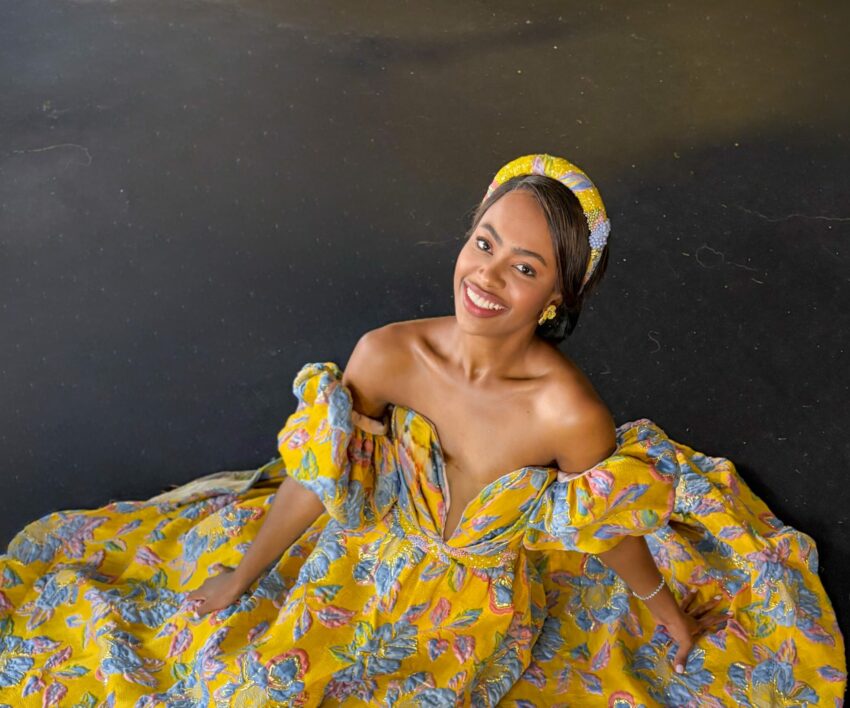
Picture: Instagram/@romandahombir
South Africa’s Romanda Hombir has officially secured a stellar global triumph, finishing in the Top 6 at the 75th Anniversary Edition of Miss World in Nha Trang, Vietnam, and taking home the coveted title of Miss World Africa 2026.
However, alongside the celebrations of her continental win, the 27-year-old clinical audiologist from Mpumalanga found herself at the centre of an intense social media debate back home regarding her cultural presentation and lineage.
Also see: Miss World South Africa 2026’s surname sparks debate about her nationality
A triumph on the global stage
Hombir, who was crowned Miss World South Africa on Mandela Day in July 2026, delivered a standout performance throughout the international pageant in Vietnam. She secured her spot early in the Top 40 by winning the Africa continental Head-to-Head Challenge, advanced to the Top 21 in the Top Model fast-track event, and ultimately advanced to the final Top 6.
Her crowning as Miss World Africa 2026 marks another proud moment for Mzansi’s pageantry history. During the national costume and ‘Dances of the World’ segment, Hombir wore a striking ‘Madiba dress’ designed by Hollywood Costumes SA, featuring a hand-painted portrait of Nelson Mandela, aiming to showcase the nation’s diverse identity on the global stage.
Mzansi divided over ‘Dances of the World’ performance
Despite her strong showing, video footage circulating on X (formerly Twitter) of her dance routine during the showcase ignited widespread debate online.
Also see: Zoalize Jansen van Rensburg in good space after missing out on Miss World title
Romanda Hombir is allergedly born and bred in Mpumalanga and is proudly South African but in 2019 she was proudly from Swaziland! 🙂 https://t.co/LNHXtbSQdZ pic.twitter.com/hgS77F3Ipd
— Miyandy (@Amahashi_) September 4, 2026
Social media users raised questions over the choreography, with several critics arguing that her high-energy, theatrical routine felt disconnected from traditional South African dance forms.
Some viewers compared the moves to West African, samba, or commercial dance styles rather than indigenous South African movements. While critics expressed disappointment over what they viewed as a missed opportunity to display traditional South African dance, defenders pointed out that traditional Swati movements can incorporate similar expressive steps, urging viewers to celebrate her overall representation rather than dissecting a short routine.
Standing firm on multicultural identity
The online discourse around the performance also reignited broader conversations regarding Hombir’s background and surname, which first surfaced after her national crowning.
Born and raised in Mbombela (Nelspruit), Mpumalanga, Hombir has consistently spoken with pride about her rich multicultural roots. Her mother is of Swati and Zulu descent, while her father is Coloured, with German lineage. Addressing scrutiny directly in media interviews, Hombir affirmed her South African identity, emphasising that her blended heritage reflects the true reality of Mzansi’s Rainbow Nation.
Our Miss World 2026 South Africa 🇿🇦 Romanda Hombir pic.twitter.com/UD8EO55Bd0
— Ntshaba (@lindamnkhonto) September 4, 2026
As Miss World Africa 2026, Hombir plans to leverage her platform to advocate for accessible healthcare, mobile screenings, and education through her non-profit organisation, the Caring Purpose Foundation. While online debates over representation remain a constant feature of modern pageantry, her historic placement in Vietnam reaffirms South Africa’s standing as a formidable powerhouse on the international beauty stage.
Also see: From Mpumalanga to the global stage: How Romanda Hombir is fast-tracking her Miss World dreams
Be the first to know – Join our WhatsApp channel for content worth tapping into. Click here to join!