
Rate path hinges on a ceasefire in the Middle East and how quickly oil prices come down, economists say.
Economists and analysts believe the South African Reserve Bank’s (Sarb) latest interest rate hike is unlikely to signal the start of an aggressive tightening cycle.
The outlook for further increases will hinge largely on whether tensions in the Middle East, oil prices and inflationary pressures ease in the coming months.
The central bank raised the repo rate by 25 basis points on Thursday, a move that was widely expected by markets and economists.
The Monetary Policy Committee (MPC) lifted the repo rate to 7%, effective from 29 May. Four members voted for the increase, while two preferred no change.
Johann Els, group chief economist at PSG Financial Services, described the move as “totally expected – as was the split decision by the MPC”.
“The Sarb said it was a ‘managing risk’ decision, with which I agree. Hiking early will mean less hikes later,” he added.
Inflation risks deepen
The MPC’s decision comes against a backdrop of heightened geopolitical tensions and persistent supply shocks linked to the crisis in the Middle East.
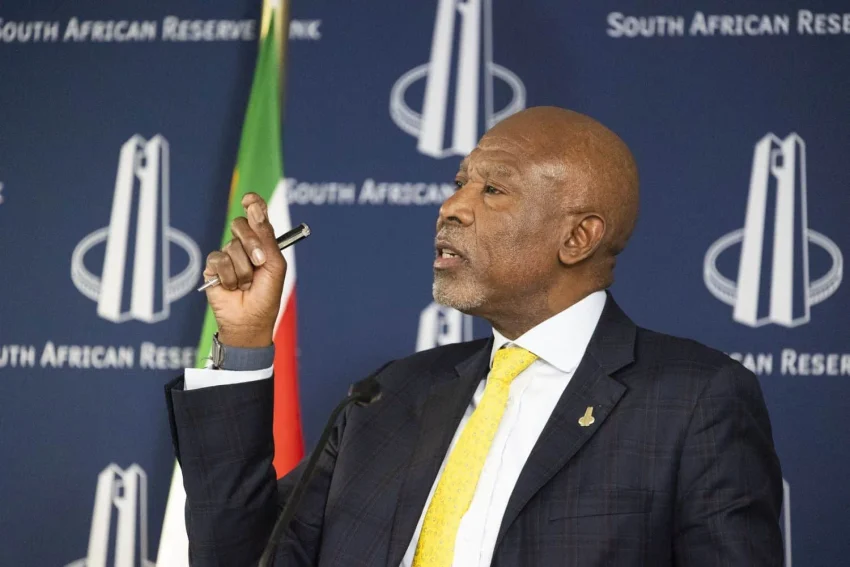
Governor Lesetja Kganyago said in his statement that earlier hopes for a quick end to the conflict had faded, with the Strait of Hormuz still largely closed and oil prices hovering around $100 a barrel.
The Reserve Bank also lowered its domestic growth forecasts, warning that South Africa now faces a “painful combination of higher global uncertainty and reduced disposable income”, which is expected to weigh on investment and household spending.
On inflation, the central bank raised its oil price assumptions and warned of renewed pressure on food costs, with the agricultural sector facing higher diesel and fertiliser prices.
It now expects headline inflation to average 4.4% this year and 3.7% next year, before returning to the 3% target in 2028.
Kganyago said the committee agreed that inflation risks had intensified and that overlapping shocks were likely to trigger second-round effects that would require a monetary policy response.
The decision, he said, was aimed at “managing risks and ensuring that inflation returns to target”.
While the Sarb’s quarterly projection model indicates one hike this quarter before rates begin easing later in the forecast period, Kganyago reiterated that decisions would continue to be taken on a “meeting-by-meeting basis”.
How much more tightening?
Els said the path ahead will depend heavily on developments in the Middle East.
“We might not need another rate hike in July – [it] all depends on the ceasefire and how quickly oil prices come down,” he said, adding that he does not expect “a series of rate hikes, and even rate cuts from this time next year onward”.
Sanisha Packirisamy, chief economist at Momentum Group, expects one more rate increase, but believes two additional hikes in 2026 would be too aggressive unless the closure of the Strait of Hormuz is prolonged.
Patrick Buthelezi, an economist at Sanlam Investments, notes that the 25 basis point increase likely marked the end of the easing cycle that began in 2024, but the path ahead remains uncertain.
“The quarterly projection model produced one interest rate hike this quarter, easing later as inflation slows,” he says, noting that the policy stance is now viewed as less restrictive than in March.
“Overall, this could be the only hike, but clearly there are upside risks, and a delayed resolution to this conflict certainly increases the risk of more hikes.”
He adds that the Sarb’s three adverse scenarios – including a prolonged conflict, El Niño-related disruptions and stronger inflation effects – all point to circumstances under which further tightening could be warranted.
Elna Moolman, group head of South Africa macroeconomic research at Standard Bank Group, said the Reserve Bank’s move was a proactive attempt to prevent the inflation spike from becoming entrenched in pricing behaviour.
“The Sarb’s decision to hike rates with 25 basis points today was a proactive move to ensure that the spike in inflation does not become the assumed trend for general price-setting,” she said.
Moolman added that Thursday’s increase might be sufficient if fuel prices do not rise significantly in future.
The rate hike would nonetheless place further pressure on already strained consumers.
Not everyone agrees with the decision. Independent economic analyst Bonke Dumisa notes the increase was “very expected, but it was the wrong decision”, pointing to the split vote as evidence that there was an opportunity to keep rates unchanged.
From a property market perspective, Andrew Golding, chief executive of the Pam Golding Property group, believes the increase is unlikely to significantly disrupt property activity.
“The hike is modest and unlikely to derail market activity in South Africa’s resilient residential property market in the short term,” he says, adding that the prime lending rate, at 10.50%, is broadly in line with levels seen between 2016 and 2019.
This article was republished from Moneyweb. Read the original here.