
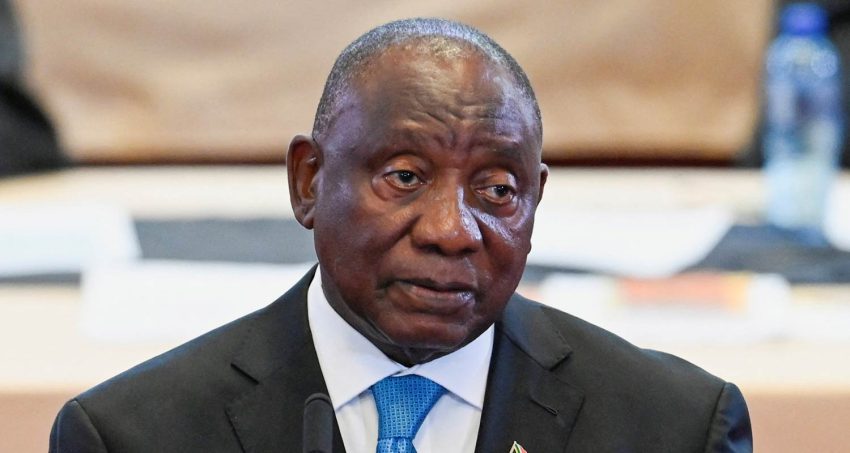
South Africa will push ahead with breaking up Eskom and creating a standalone company to run the transmission grid, President Cyril Ramaphosa said on Thursday, a key reform being monitored closely by international investors.
The economy has been hobbled for years by rolling outages as state-owned Eskom struggled with ageing plants and weak finances. Splitting the company is meant to attract private capital and build a more modern, reliable electricity system. Power transmission is one of the biggest constraints to new electricity supply and economic growth.
In his state of the nation address in Cape Town on Thursday evening, Ramaphosa confirmed plans for “a fully independent state-owned transmission entity” that will own and operate grid assets and the electricity market.
He assigned a task team under the National Energy Crisis Committee to oversee the restructuring and deliver a report within three months with clear implementation timelines.
Ramaphosa’s announcement follows an update from energy minister Kgosientsho Ramokgopa in December, which proposed keeping transmission assets as an Eskom subsidiary.
“This issue has caused major concern, with international investors and local business leaders starting to question the government’s commitment to the reform programme,” said Busi Mavuso, CEO of Business Leadership South Africa.
Reforms
Olga Constantatos, credit head at Futuregrowth Asset Management, said unbundling Eskom was intended to spur competition and private investment in power generation after decades of monopoly control. Private sector investment in renewables has already mobilised more than R200-billion and added 6GW of capacity without weighing on Eskom’s balance sheet.
A presentation from the department of electricity & energy said South Africa needs R390-billion over the next decade for transmission infrastructure, funding Eskom cannot provide alone because of its financial constraints.
Read: Eskom unbundling U-turn threatens to undo hard-won electricity gains
In its Article IV report, the International Monetary Fund urged South Africa to speed up electricity reforms, including separating Eskom’s generation and transmission units, establishing a functional wholesale market and supporting private transmission projects through risk-sharing tools such as a forthcoming credit-guarantee vehicle backed by the International Finance Corporation.
The IMF also flagged Eskom’s weak debt-servicing capacity and sharply rising public debt levels. — (c) 2026 Reuters
Get breaking news from TechCentral on WhatsApp. Sign up here.