




For the first time in many years, DStv subscribers will not face a price increase in April – a significant strategic shift under new owner Groupe Canal+ as the pay-television operator battles to arrest years of punishing subscriber losses.
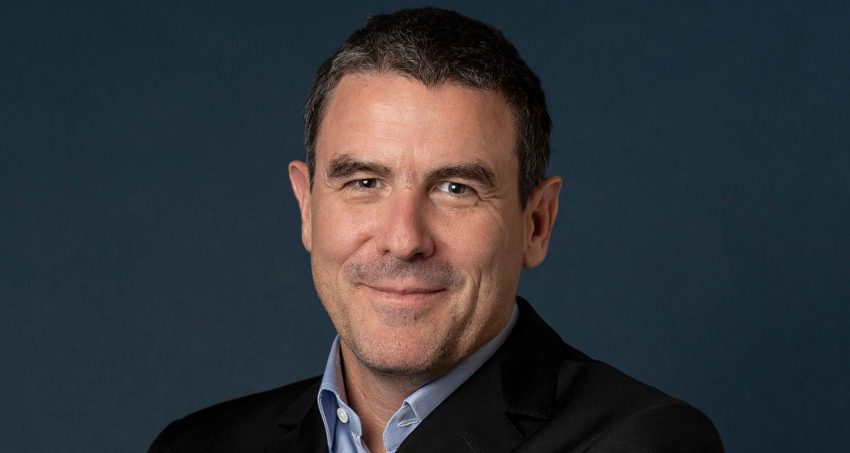
In a wide-ranging interview with TechCentral on Thursday, newly appointed MultiChoice Group CEO David Mignot confirmed that the company will not raise DStv prices in April, breaking with a long-standing tradition of annual April increases that had become as predictable as they were unpopular with consumers.
“No, we are not,” Mignot said, when asked whether MultiChoice would increase pricing in April as it has done every year for many years. “I want to give a clear answer, because we are building subscribers, so it’s not the right time to increase pricing.”
He added: “We are not planning, as we speak, any price increase.” He did not rule out the possibility of price adjustments later in the year, should they be necessary — for example, if the rand were to weaken sharply.
The decision marks a sharp departure from MultiChoice’s historical approach. As recently as April 2025, the company raised DStv satellite bouquet prices by between 2.1% and 7.9%, with DStv Premium’s satellite offering climbing from R929 to R979/month, and DStv Access – the entry-level satellite package – jumping by nearly 8%.
Mignot, a 30-year veteran of the pay-TV industry who took over as MultiChoice Group CEO following Canal+’s acquisition of the company in September 2025, said the priority is simple: “Stop the bleeding, get back to growth.”
The scale of MultiChoice’s subscriber crisis makes the pricing decision easy to understand. The group has been haemorrhaging customers at an alarming rate, losing 2.8 million linear broadcasting subscribers in the two years to 31 March 2025 – with about half of those losses coming from South Africa alone.
Financial toll
As TechCentral reported in June 2025, MultiChoice lost 1.2 million subscribers in the year to end-March, an 8% year-on-year decline that left the group with 14.5 million active subscribers. The year before that, it shed 1.6 million customers. By June 2025, Canal+ revealed that the decline had accelerated further, to 1.4 million year on year.
The financial toll has been severe. Revenue fell by R4-billion to R52-billion for the year ended 31 March 2025, while trading profit plunged 49% to R4-billion.
Read: DStv cuts decoder prices and adds cost-sharing feature
Mignot framed the subscriber decline as a failure of commercial execution rather than a content problem. “The commercial engines of MultiChoice, and it’s quite recent, have not been providing enough new subscribers into the portfolio,” he said.
He explained that in any consumer subscription business, a natural churn rate of 12-15% a year is inevitable as customers’ circumstances change. “People are moving, people are dying, people are losing their job, people are having other budget priorities,” he said. “That means, even if you are super good … if you don’t refill your portfolio of subscribers by 15% every year, whatever you’re doing, you will be bleeding.”
The content, he insisted, is not the problem. “Content is fantastic. I mean, if you take sport, for example … the depth, the range of content at MultiChoice – SuperSport and M-Net and Africa Magic and everything – is incredible. Investment in content is incredible. But the commercial engine is not powerful enough in order to sustain the equipped portfolio.”
Mignot said the good news is that the commercial machine was firing on all cylinders until relatively recently. “This commercial engine used to be super powerful, not only in South Africa but in all of Africa, up to like 2022, so it’s quite a recent situation.”
He pointed to Canal+’s experience in French-speaking Africa as evidence that a volume-driven, price-stable strategy can work. “On the French-speaking side of Africa, the pricing structure we have today has been exactly the same for almost 14 years now,” he said.
He described his approach as a “volume strategy” but stressed that it must be profitable. “It’s not volume for volume’s sake. Obviously, it has to be profitable growth.”
Asked whether he thought prices needed to be cut, he said: “Could be. I don’t know. Could be.”
The pricing freeze comes ahead of Canal+’s first set of combined financial results, due for release on 11 March, which will cover the year ended 31 December 2025. Mignot said the company will also outline its strategy in more detail at the results presentation.
He acknowledged that the subscriber situation he inherited was the most concerning finding post-acquisition. “We need to fix that.” — (c) 2026 NewsCentral Media
Get breaking news from TechCentral on WhatsApp. Sign up here.