


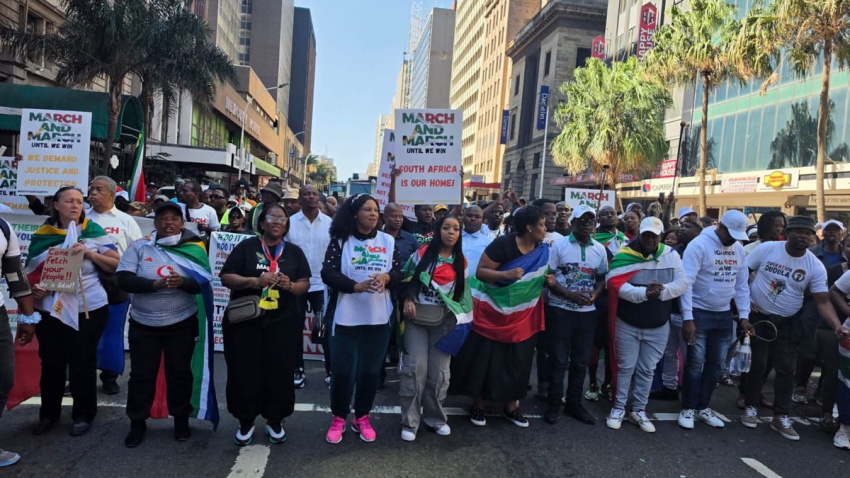
Policing the nationwide protests held on 30 June 2026 cost the South African Police Service more than R306 million, according to a parliamentary response from acting Police Minister Firoz Cachalia.
The protests were organised by anti-illegal-immigration groups, including March and March, after calls for undocumented foreign nationals to leave South Africa before 30 June.
Concerns about possible unrest prompted SAPS to allocate R600 million for peacekeeping operations linked to the demonstrations.
Overtime drove most of the cost
Cachalia said SAPS had spent R306,208,477 on deployments related to the protests.
The largest expense was overtime remuneration for police officers, which amounted to about R251.8 million.
Travel and subsistence allowances accounted for a further R49.1 million.
Reservist payments totalled about R3.2 million, while accommodation costs came to roughly R2.1 million.
SAPS said outstanding claims for reservist remuneration, overtime and travel were still being finalised.
KwaZulu-Natal recorded highest spending
KwaZulu-Natal recorded the highest provincial policing expenditure at about R57.6 million.
The Eastern Cape followed at R51.8 million, while Gauteng spent approximately R40 million.
Western Cape expenditure reached about R31.6 million, followed by the North West at R26 million and Free State at R25.7 million.
Other expenditure included R23.4 million in the Northern Cape, R16.2 million in Mpumalanga and R14.4 million in Limpopo.
National policing competencies accounted for another R19.4 million.
Remaining funds to support elections
The R306 million spent represents slightly more than half of the R600 million originally allocated for the 30 June operation.
Cachalia said the remaining balance would be redirected towards preparations and operational requirements for the upcoming local government elections.
The funds are expected to support expenses including fuel and vehicle maintenance to improve police visibility.
SAPS is also still processing outstanding claims linked to the June deployment, meaning the final expenditure figure could change once all payments have been completed.