
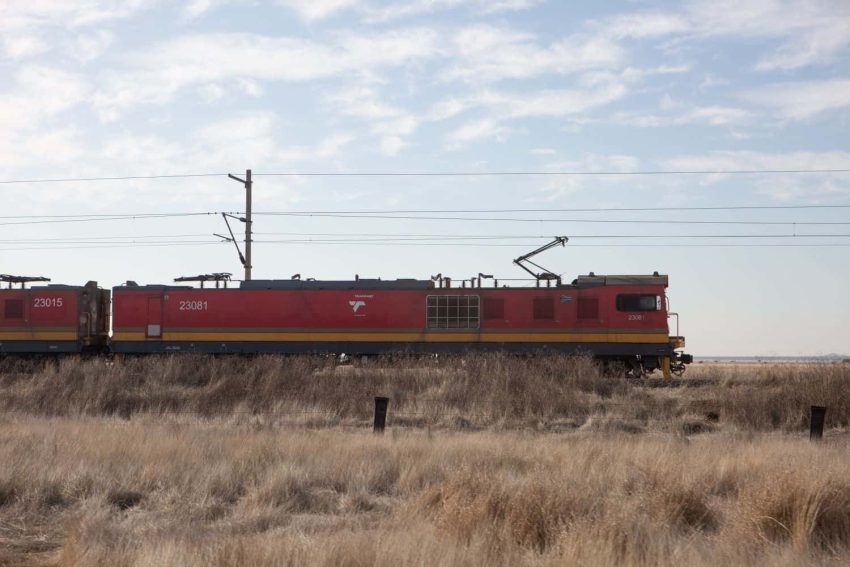
Transnet opens up rail sector to private participation as its long-standing monopoly winds down
State-owned logistics operator Transnet sees the entry of private operators into its monopoly on rail and ports in SA as an opportunity rather than a threat.
At a presentation in Sandton on Wednesday, 11 rail access agreements were concluded with train operating companies (TOCs), including ARC South Africa, The Railway Corporation, TLD Marine and Grindrod.
These agreements give private operators access to 41 routes across key corridors such as the iron ore corridor connecting Sishen in the Northern Cape to Saldanha Bay in the Western Cape, and the Cape Corridor connecting the Northern Cape to Cape Town.
This brings to an end more than 110 years of state monopoly on rail as management of the network passes to an independent Transnet Rail Infrastructure Manager (Trim), now responsible for allocating rail slots to both private operators and Transnet Freight Rail.
“This milestone represents more than just slot allocation; it signals the creation of a functional and competitive rail marketplace,” said Trim chief executive Moshe Motlohi.
“We have moved from policy design to practical implementation, enabling real private sector participation and investment in rail.”
Rail slots will henceforth be allocated on an annual basis, supplemented by ad hoc slot allocations designed to process rapid applications for rail capacity outside the annual cycle.
LeaseCo revival
Transnet has revitalised LeaseCo, its rolling stock leasing company, to lower capital barriers to entry for new private operators.
It will operate across the region by leasing locomotives and wagons to train operating companies as a way to promote market access and squeeze greater efficiencies out of the rail network.
This opens opportunities for private investors to benefit from the expected recovery in the rail sector, while train operators will focus on rail operations and LeaseCo takes care of the rolling stock and lifecycle management.
Wilson Mogoba, GM for business development at Transnet, says interest in the leasing service is high and new entrants will benefit from faster market access.
New locomotives can cost upwards of R60 million, depending on the specifications, while freight wagons can cost between R1.5 million and R3 million, creating a significant capital barrier for new entrants.
Transnet chief business development officer Yolisa Kani says the group intends to lower this hurdle by offering flexible and market-related leasing packages. This will be handled on a partnership basis, mobilising capital from both public and private participants.
Lease revenues will support asset maintenance, investor returns and reinvestment.
Manufacturing, attracting global partners
The leasing platform will be flanked by Transnet Engineering, which has the capacity to build around 300 locomotives, 4 500 rail wagons and 450 coaches a year.
It operates through six manufacturing plants and 143 maintenance depots nationwide. Although Transnet Engineering is an original equipment manufacturer (OEM) in its own right, it hopes to attract co-development arrangements with other OEMs keen to participate in the new era of liberalised rail.
Transnet has designed and developed three different rail engines – the Trans Africa Locomotive 2001, 2002 and 2003 – all of which have now entered service and can be manufactured on demand.
Transnet manufactures around 2 200 wagons a year, a fraction of the nearly 9 500 produced in 2013. The aim is to get production volumes back to previous levels, supported by rising demand from private sector partnerships (PSPs).
The number of locomotives produced last year was 44, down from a high of 177 in 2017, but an improvement on the three produced in 2020.
“What we’re trying to do is ‘Uberise’ the rail sector,” said Kani.
“They [private sector operators] don’t have to worry about raising capital or maintenance; all they have to worry about is getting the cargo to the port.”
The model is not dissimilar to e-hailing service Uber, which connects drivers with rental and purchase partners, but is more akin to aircraft and ship leasing models already in use around the world.
“We’re looking for partners with skin in the game,” adds Kani.
“They must be able to help us enter new markets domestically and in the region, and they must bring some innovation. It doesn’t even have to be rolling stock, but they must have some semblance of experience.”
Rail reform seen as key
Restoring rail efficiency is the backbone of an efficient economy, said Transnet CEO Michelle Phillips.
Transnet shipped roughly 160 million tonnes (Mt) of freight in 2025 and has a target of returning to 250 Mt by 2029, an ambitious target that will require massive investment of around R1.9 trillion over the next decade, according to the National Rail Master Plan.
Most of this will have to come from the private sector and could restore life to some 60% of the 23 540km rail network, which is currently underutilised or neglected.
Transnet is currently assisting in onboarding the new TOCs, some of which are expected to commence operations before the end of the year.
This collaboration has enhanced the bankability of rail projects by incorporating feedback from both operators and financial institutions, says the logistics provider.
The insights gathered in this process are being incorporated into the Network Statement Version 4, which is currently at an advanced stage of finalisation.
As Trim continues to refine its access framework through Network Statement Version 4, the focus remains on scaling participation, enhancing operational efficiency and unlocking further investment into the rail sector – building a modern rail ecosystem that is competitive, accessible, and aligned with South Africa’s economic growth ambitions.
The new-look Transnet aims to expand its regional footprint, which already provides technical and engineering support to rail operators in Zambia, eSwatini, Mozambique and Botswana.
‘Dangers’ of privatisation
The Competition Commission recently warned of the dangers of creating private monopolies through privatisation.
High market concentration is particularly evident in energy (Eskom) and logistics (Transnet).
“Reforms to energy and logistics, where state monopolies persist, provide the best means to inject competition and benefit from private investment, with support from competition law,” says the latest Economic Concentration Tracker report by the commission.
This article was republished from Moneyweb. Read the original here.