


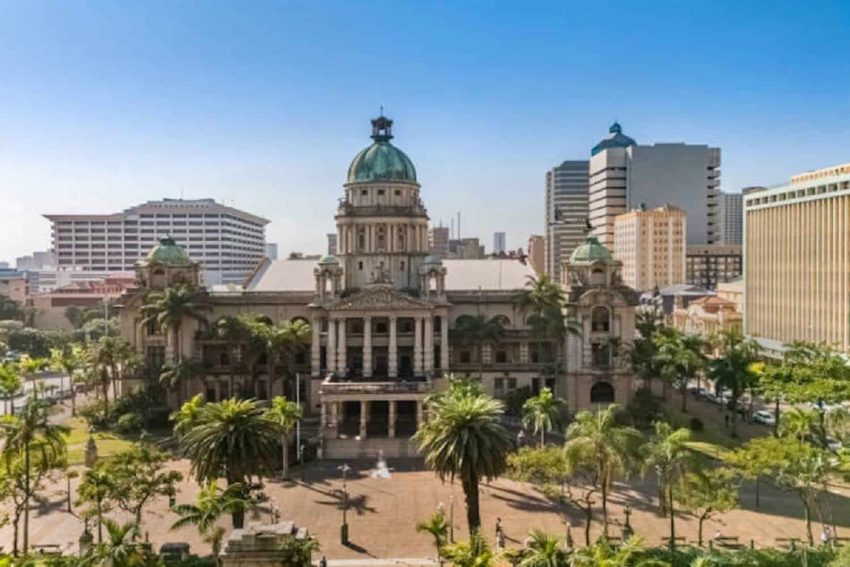
Proposed increases for electricity, water, rates and refuse compared …
The eThekwini metro (greater Durban) – spanning from King Shaka International Airport, Sibaya and Umhlanga in the north, through to the Durban CBD, and Umkomaas (south) and Hammarsdale (west) – has proposed the sharpest tariff increases from 1 July, with those being the highest in three of the five categories.
It says residential tariffs for water will rise by an average of 15%, while those for sanitation and refuse will jump by 13% each. Its proposed electricity tariff increase of 10.5% is the second highest (Nelson Mandela Bay has proposed an eye-watering 12.8% increase!).
The National Energy Regulator of South Africa (Nersa) has approved a 9.01% increase for Eskom’s bulk supply of electricity to municipalities from 1 July 2026. A further increase of 8.83% has been approved from 1 July 2027.
With the exception of Nelson Mandela Bay and eThekwini, the other five major metros will all increase electricity tariffs by less than the Nersa-approved amount.
| Metro (residential) tariff increases from 1 July 2026 | Electricity | Water | Sanitation | Property rates | Refuse |
| Cape Town | 6.67% | 4.5% | 4.5% | -10.2%* | 3.75% |
| Ekurhuleni | 9.01% | 14.0% | 8.35% | 3.7% | 3.7% |
| eThekwini | 10.5% | 15.0% | 13.0% | 5.0% | 13.0% |
| Johannesburg | 8.63% | 12.5% | 11.0% | 3.6% | 6.2% |
| Nelson Mandela Bay | 12.8% | 6.5% | 6.5% | 5.5% | 6.5% |
| Tshwane | 8.8% | 10.0% | 5.0% | 5.0% | 4.1% |
In public consultations and in its draft budget, the City of Ekurhuleni (CoE) says its proposed 14% increase in water tariffs is “subject to Rand Water tariffs” and highlights that this tariff is “out of CoE’s control”.
However, Rand Water finalised its tariff increase in December and, based on its internal inflation forecast, is proposing a 10% increase in bulk water tariffs for municipalities from 1 July.
The bulk of this is what it terms “multi-partnered uncontrollable costs”, which include the price of raw water, electricity prices and chemicals.
eThekwini Mayor Cyril Xaba says the 13% bulk water tariff increase from uMngeni-uThukela Water is the primary reason for its increase, which equates to practically five times consumer price inflation.
In addition to the 12.5% jump in water tariffs in Johannesburg, the city has also proposed a 65.6% increase for the water demand management levy, which every household needs to pay (the increase for businesses is 12.5%).
This is proposed to rise from R65.08 a month (excluding VAT) currently to R107.74 from July. This means the actual amount residents will pay for water will increase by closer to 14% on average (depending on their consumption).
Rates increases are far more modest, with none exceeding 5.5%. But this typically makes up only a small portion of an average utility bill from a municipality (with the exception being very large properties).
The City of Cape Town updated its General Valuation roll earlier this year and will decrease its rate-in-the-rand for rates by 10.2%, to offset the average increase of 17.1% in the value of properties.
Additional relief through increasing the rates-free threshold from R450 000 to R500 000, and extending this to properties valued up to R8 million (previously R7 million) will mean that, according to the city, “60% of residential properties will see either a decrease or no change in rates, despite higher property valuations”.
To calculate the typical impact that an upper middle-class homeowner will see from July, Moneyweb assumed a property valued at around R2 million, with tariff increases weighted to their average portion of a monthly bill.
Without a solar installation, electricity will generally equate to about half of the total bill, with roughly even splits between water, sanitation and rates.
Refuse is typically the smallest portion of a bill, although methodology changes where municipalities are using values of properties as a basis to calculate refuse removal charges (versus fixed charges) have started to change this.
| Metro (residential) tariff increases from 1 July 2026 | Weighted average increase |
| eThekwini | 10.9% |
| Nelson Mandela Bay | 9.5% |
| Johannesburg | 8.7% |
| Ekurhuleni | 8.6% |
| Tshwane | 7.6% |
| Cape Town | 4.9%* |
Using this weighting – and assuming no change in the rates bill of an average Capetonian (yes, there will likely be thousands of edge cases where this is not true) – it is clear that there is a very large divergence between the increases in residents’ bills from 1 July across the major metros.
This article was republished from Moneyweb. Read the original here.
Support Local Journalism
Add The Citizen as a Preferred Source on Google and follow us on Google News to see more of our trusted reporting in Google News and Top Stories.