


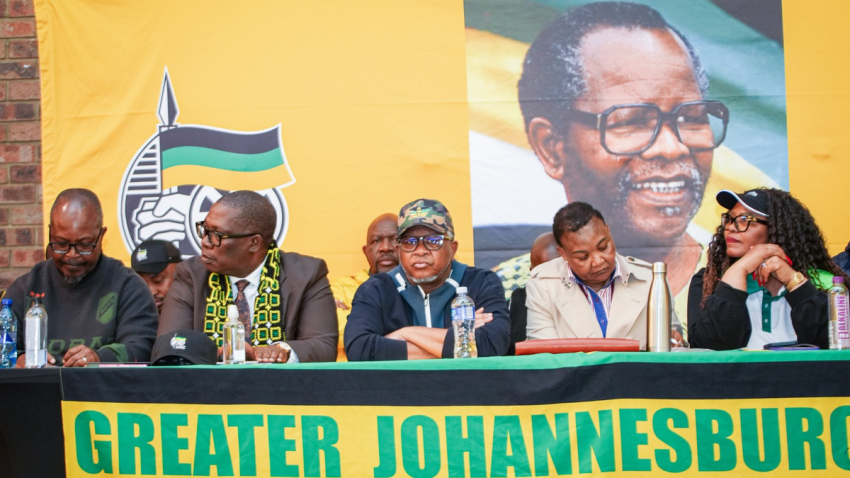
The ANC has fallen to 18% support among likely Johannesburg voters in a new opinion poll ahead of the 2026 local government elections.
The survey, conducted by The Common Sense and the Social Research Foundation, puts the DA well ahead on 42%.
The MK Party follows on 13%, while ActionSA stands at 10% and the EFF at 8%.
Respondents were asked which party they would support if a local government election were held at the time of the survey.
The results represent a major warning for the ANC as voters prepare to head to the polls on 4 November.
ANC falls 12 points since March
The ANC’s latest showing is substantially lower than its result in an earlier Johannesburg poll conducted by the same organisations.
In March 2026, the ANC recorded 30% support among likely voters.
The DA stood at 39%, while the MK Party had 8%. ActionSA was at 10% and the EFF recorded 4%.
That means the latest poll shows the ANC falling 12 percentage points while the DA gained three points.
MK support increased by five points and the EFF doubled from 4% to 8%. ActionSA remained unchanged.
DA opens commanding lead
At 42%, the DA now has more than twice the ANC’s measured support in Johannesburg.
However, the pollsters stressed that the figures should not be treated as a prediction of the final election result.
The Johannesburg survey included 504 registered voters and was conducted between 8 and 31 July.
It carries a margin of error of 4.4%.
Researchers weighted the sample to reflect the city’s registered voter population and applied a turnout model when calculating likely voter support.
Coalition battle could follow election
No party reaches the 50% mark in the poll, meaning Johannesburg could again face coalition negotiations if the results are reflected at the ballot box.
The Common Sense deputy editor Marius Roodt said several coalition combinations could emerge if current support levels hold.
These could potentially include combinations involving the DA, ANC, ActionSA, MK Party or EFF.
With less than three months until election day, the poll provides a snapshot of voter sentiment rather than a guaranteed outcome.