
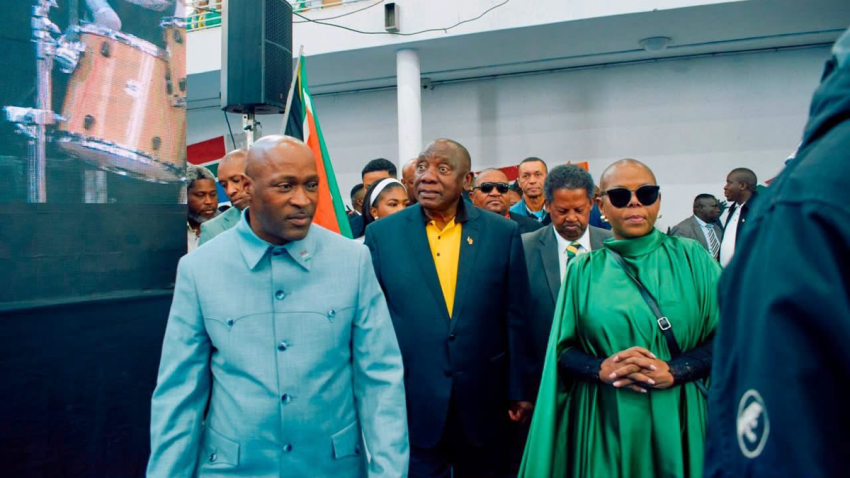
President Cyril Ramaphosa has called on South African men to take responsibility for ending gender-based violence (GBV), urging them to lead efforts to protect women from abuse, rape and assault.
Speaking during an ANC election campaign visit to Khayelitsha on Sunday, 18 October, Ramaphosa addressed members of the Salvation Church of the Revival of Faith.
According to Cape Argus, the visit formed part of the ANC’s two-day campaign in Cape Town ahead of the upcoming local government elections.
Men Must Lead the Fight Against GBV
Ramaphosa delivered a strong message to men, calling for an end to violence against women across South Africa.
He said men should be at the forefront of efforts to stop abuse, sexual violence and assault rather than leaving the responsibility to women.
The president’s remarks placed particular emphasis on men’s responsibility to help address gender-based violence.
He also highlighted the importance of religious institutions in confronting social challenges, saying churches have a responsibility to communicate messages that can help guide communities.
Education Remains a Priority
Beyond addressing gender-based violence, Ramaphosa encouraged parents to take an active interest in their children’s education.
He specifically urged young mothers to return to school after giving birth, stressing that pregnancy should not mean the end of their education.
“With an education, our young people stand a better chance of improving their lives,” he told the congregation.
Ramaphosa encouraged families to support children in completing their schooling and improving their future opportunities.
Young South Africans Urged to Shape Their Future
The president also used the gathering to speak about the importance of youth participation in South Africa’s future.
With the local government elections approaching, he encouraged young people to reflect on the country’s progress and recognise their role in determining its direction.
He urged the youth to take greater responsibility for shaping the country’s future.
His visit to Khayelitsha brought together messages about community responsibility, education and the need for men to take a more active role in preventing violence against women.

I’m a writer, editor and software developer at Newsroom ZA.
I build things, break them (on purpose), then turn the chaos into clean, readable stories. You’ll usually find me bouncing between breaking news, politics and entertainment.