
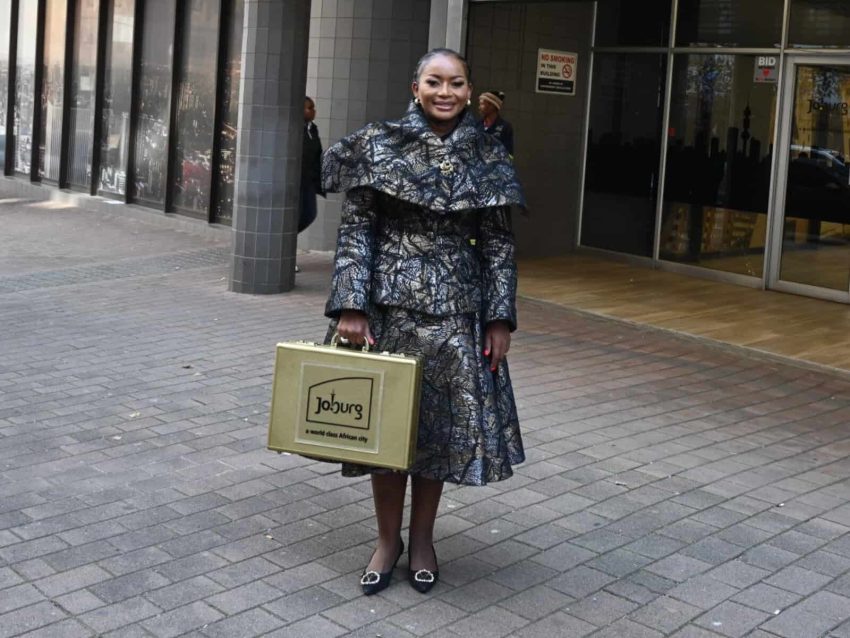
City of Johannesburg councillors have expressed their dissatisfaction with deputy mayor Masuku’s budget and its impact on residents.
Johannesburg politicians have taken the opportunity to counter deputy mayor Loyiso Masuku’s message of tough administrative love.
Masuku delivered the city’s budget speech on Wednesday, where she explained that the city would limit infrastructure development expenditure in favour of fulfilling existing obligations.
In what will be the last budget speech debate before the 2026 local government elections, the opposition highlighted the current administration’s failures and the gaps in its future plans.
Almost R100 billion budget
The deputy mayor and finance MMC stated that the city would have a 2026-27 budget of R97.1 billion – an operating budget of R88.3 billion and a capital expenditure budget of R8.8 billion.
Masuku noted that 99.3% of residents had access to water, 92% had access to electricity and 87% had access to waste removal services.
“These numbers reflect the deliberate efforts of successive ANC administrations since 1996 to improve the lives of residents and to expand services in an inclusive and transformative way,” said Masuku on Wednesday.
ActionsSA’s Mpumi Edward described Masuku’s budget speech as a campaign event, saying the “true crisis facing Johannesburg” was the ANC’s misaligned priorities.
“When did the serious responsibility of accounting for public money become an opportunity for political grandstanding and self-praising.
“Perhaps we should not be surprised, because when a government can no longer distinguish between governance and politics, it also begins to struggle to distinguish between public resources and political interests,” said Edward.
Infrastructure delays
The Democratic Alliance’s Chris Santana noted Masuku’s assertion that “some communities will not see new capital investment” as the city prioritised its recovery plan.
“Infrastructure is effectively being placed on hold in parts of Johannesburg because the city is paying for years of accumulated financial mismanagement.
Roads delayed, stormwater delayed, housing delayed, public environment upgrades delayed and community infrastructure delayed,” said Santana.
He added that the multi-year R10 billion wage deal with the South African Municipal Workers’ Union still had no defined funding source for the duration of the payment term.
“The deputy mayor openly admits that the city is still engaging the National Treasury and the minister of finance regarding the fiscal implications. The financial risk has simply been shifted into the future.
“A responsible government secures funding first and makes promises second. This administration has done the opposite,” said Santana.
Urgency or excuses?
African Heart Congress – founded in Ivory Park in 2020 and led by Moloko Mpolobosho – supported the budget but expressed its dissatisfaction with the quality of the city’s roads.
“I’ve got invoices in my car. My shocks are already damaged, my tyres are already damaged. I am going to hand over my invoices to the MMC of transport, then he must pay for me that one,” joked Mpolobosho.
Good Party’s Matthew Cook gave a measured assessment of the budget, commending Masuku for her forthrightness but lamenting that residents would be punished.
“Johannesburg deserves a budget rooted in honesty, and yesterday we heard an administration admit the scale of the crisis facing the city.
“But honesty alone is not enough. Residents do not live inside speeches, they live inside the daily reality of Johannesburg, and that reality remains one of frustration, decay, anxiety and exhaustion.”
Cook said the issues facing the city were glaringly obvious, asking councillors how they would use the last months in council before the elections.
“Five months in politics is not a lot of time, but this government of local unity has time to leave a legacy of urgency or a legacy of excuses, and I hope it will leave a legacy of urgency,” concluded Cook.