
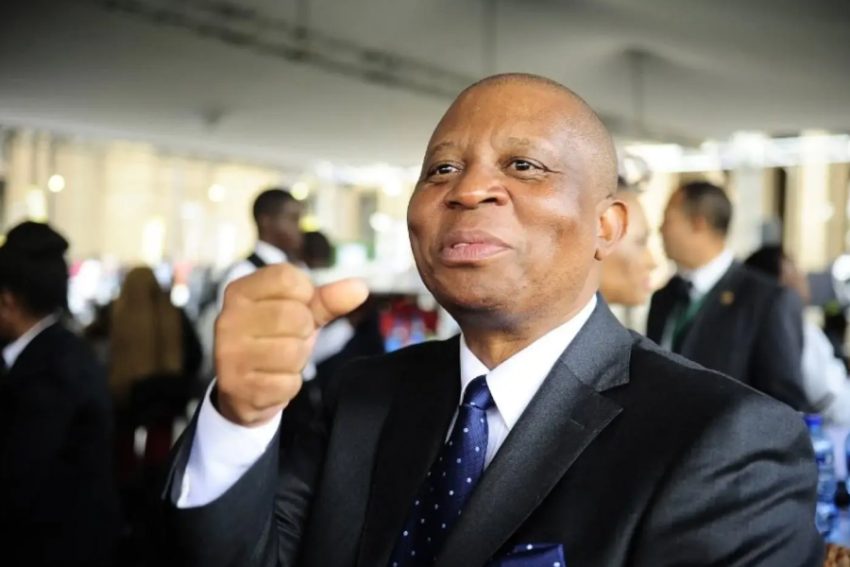
There are certain statements in politics that spark outrage not because they are false, but because they challenge narratives that many people have become comfortable with. When Herman Mashaba, the President of ActionSA, recently declared, “I don’t have a plan for Africa. I have a plan for South Africans,” the response was immediate.
I support Herman Mashaba’s position because it is grounded in a principle that exists in every successful democracy around the world. Governments are elected by citizens to serve the interests of those citizens.
There is a fundamental difference between immigration and illegal immigration. There is a difference between welcoming people who enter the country legally and contribute positively to society, and accepting a situation where immigration laws are routinely ignored without consequence.
South Africa is a sovereign nation, not a refugee camp for the continent. Yet, for years, our government has failed to manage immigration effectively. Border security remains weak. Documentation systems have been plagued by corruption. Deportation processes are inconsistent. Entire communities have lost confidence in the government’s ability to enforce the laws already on the books.
The demonstrations planned for 30 June 2026 must be understood within this context. South Africans have every right to participate in peaceful demonstrations. The Constitution guarantees freedom of assembly, protest and petition.
Violence cannot be tolerated. Intimidation cannot be tolerated. Looting cannot be tolerated. Targeting individuals based on nationality cannot be tolerated.
South Africa is not alone in having this debate. Across Europe, immigration has become one of the defining political issues of our time. In the European Parliament, migration policy continues to dominate discussions around border security, asylum systems and national sovereignty.
In Ireland, immigration has become an increasingly contentious issue, with demonstrations taking place in several communities where residents have raised concerns about housing shortages, pressure on local services and the government’s capacity to absorb growing numbers of arrivals.
Leadership begins at home. A government that cannot prioritise the needs of its own citizens will eventually fail everyone, including those who come here seeking opportunities.
As 30 June approaches, South Africans must remain peaceful, lawful and disciplined in exercising their constitutional rights. Their message should be simple: enforce the law.
It has always been about whether South Africa still has leaders willing to place South Africans first. That is why Herman Mashaba’s words resonate with so many people. Not because they reject Africa, but because they love South Africa enough to believe that its citizens deserve a government focused on their needs, their opportunities and their future.
As 30 June approaches, South Africans must remain peaceful, lawful and disciplined in exercising their constitutional rights. Their message should not be one of hatred or division. It should be a simple demand directed at those elected to govern: do your job.
Government’s first responsibility is not to foreign governments, international organisations or political narratives. Its first responsibility is to the people of South Africa. Citizens pay taxes, obey the law and place their trust in public institutions with the expectation that government will protect them, secure the country’s borders, uphold the Constitution and create conditions in which they can prosper.
When government fails to enforce its own laws, citizens lose confidence in the institutions meant to serve them. When border controls are neglected, communities feel abandoned. When crime rises, services collapse and unemployment deepens, people begin to question whether those in power are still fulfilling their constitutional obligations.
Accountability is not optional in a democracy. It is the foundation upon which public trust is built. South Africans have every right to demand answers from leaders who have presided over years of administrative failure, weak border management and declining public confidence.
The Constitution does not only guarantee rights; it also places obligations on the state. Government has a duty to protect the sovereignty of the Republic, safeguard public resources, maintain law and order, and ensure that the interests of citizens remain at the centre of public policy.
That is why Herman Mashaba’s message resonates with so many South Africans. It is not a rejection of Africa. It is not a rejection of immigrants. It is a reminder that every government has a primary duty to its own people.
South Africans are not asking for special treatment. They are asking for competent governance. They are asking for laws to be enforced. They are asking for safe communities, secure borders, functioning institutions and a government that places their interests first.
In any democracy, that should not be a radical demand. It should be the minimum standard by which leaders are judged.
If government truly wants to restore public trust, it must stop dismissing legitimate concerns and start delivering on its constitutional mandate. South Africans do not need more promises. They need protection. They need accountability. And, above all, they need a government that remembers who it was elected to serve.
Lebo Keswa is ActionSA member and Communication Specialist