
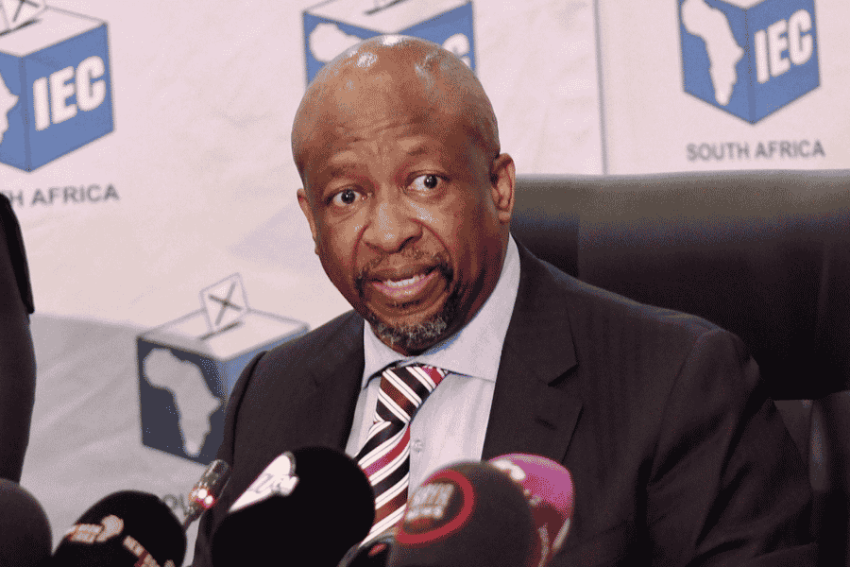
The Electoral Commission of South Africa says it is ready for the 4 November local government elections after certifying an unprecedented 136,790 candidates – almost 40% more than in 2021.
Chief Electoral Officer Sy Mamabolo announced the final numbers at a media briefing in Pretoria on Wednesday, saying the Commission had completed its statutory review of nominations that closed on 28 August.
“Out of these 136,790 candidates, 98,219 are nominated by parties to represent wards and 38,571 to represent parties in the Proportional Representation election. A total of 621 candidates are independents nominated to represent wards,” Mamabolo said.
The candidates will contest seats across eight metropolitan municipalities, 44 district municipalities and 205 local municipalities. In total, 10,526 seats are up for grabs – only marginally up from 10,478 in 2021 – yet candidate numbers have exploded from 95,427 five years ago to 136,790 now.
The surge reflects intense competition for local power ahead of what is expected to be the most fiercely contested local election since democracy, with coalitions now the norm and no party guaranteed outright control of major metros.
Mamabolo said the shift to digital nominations is now entrenched.
“The candidate nomination process closed on 28 August 2026 at 5pm, with candidates able to submit their documents either in person at Electoral Commission offices or through the Online Candidate Nomination Portal,” he said.
“Online submissions accounted for 84% of nominations, while 16% were submitted manually.”
It is that online system that is at the centre of the ANC’s legal woes.
The governing party claims a glitch prevented more than 180 candidates in six municipalities in KwaZulu-Natal, the Free State and the Eastern Cape from being captured.
The IEC denies any system failure, and the Electoral Court on Wednesday dismissed the ANC’s appeal, with registrar Lebogang Lengana confirming the party will not be on the ballot in those areas.
Mamabolo did not name parties but detailed the cleanup process that led to thousands of disqualifications.
“On 4 September 2026, the Commission issued notices to 221 parties and independent candidates to submit additional details in respect of 1,280 nominated candidates, who were given until 7 September 2026 to provide identification documents and completed acceptance-of-nomination forms,” he said.
“On 9 September 2026, the Commission issued notices to parties and independent candidates in relation to 550 candidates who had either been nominated as independent candidates and again by a party, or who had been nominated by more than one party.”
Following those reviews, including verification of deposits and proper nomination, the Commission disqualified 5,096 candidates.
“The Commission will later today publish the list of all candidates and political parties that will contest the elections on 4 November 2026,” Mamabolo said.
With 136,790 candidates cleared, ballot papers being finalised and the voters’ roll closed, the Commission is moving into logistics mode.