


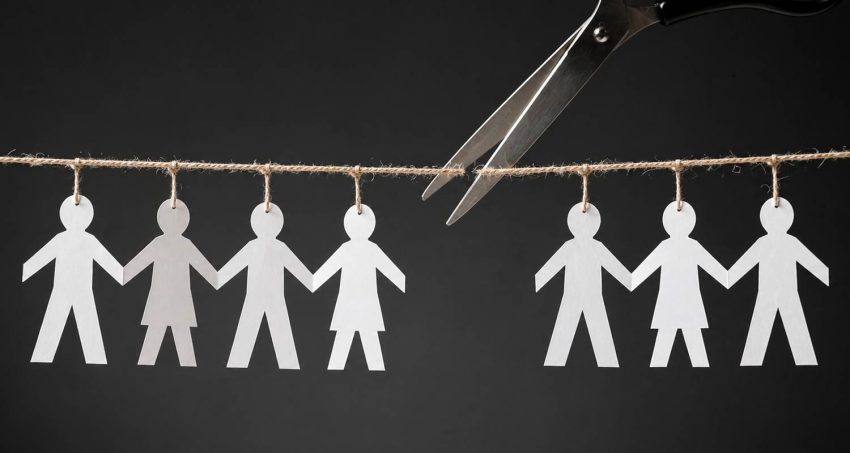

Snap cut a thousand employees in mid-April, about 16% of its workforce, after saying AI now writes more than 65% of its new code. It was the latest in a global wave of AI-linked job cuts.
In South Africa, where the official unemployment rate sat at 31.4% at the end of 2025 and youth unemployment at 43.8%, the shift may unfold differently: not through mass retrenchments, but through companies that grow their output without growing their headcount.
The concern is not dramatic announcements. It is the quieter shift already described by South Africa’s largest retail bank: vacancies stay frozen and AI takes up the workload. In a labour market where millions of South Africans, particularly younger and entry-level job seekers, are still waiting to enter the workforce for the first time, this is potentially devastating news.
AI-linked job cuts among global technology companies have accelerated sharply in 2026.
- Snap’s announcement followed Block, the fintech behind Square and Cash App, which cut more than 4 000 employees on 26 February, taking its workforce to just under 6 000. CEO Jack Dorsey tied the cuts to the growing capability of AI tools.
- Oracle cut an estimated 20 000 to 30 000 employees on 31 March, roughly 18% of its global workforce of about 162 000, to free up capital for AI infrastructure.
- Meta has announced it will cut about 8 000 employees, or 10% of its workforce, next month and will leave a further 6 000 open roles unfilled.
- Microsoft this week offered a voluntary retirement programme to roughly 7% of its US employees, around 8 750 people, though it has not directly tied the move to AI. According to tracking site Layoffs.fyi, more than 92 000 technology workers globally have lost their jobs in 2026 so far.
What distinguishes this wave is how openly companies now point to AI when announcing cuts. Earlier rounds cited restructuring, shifting market conditions or strategic realignment. Today firms increasingly blame AI for jobs cuts – a pattern critics call “AI washing”.
Molly Kinder, a senior research fellow at the Brookings Institution who studies AI and work, told the New York Times the framing sends a “very investor-friendly message” to markets, more so than admitting “the business is ailing”.
South Africa enters this transition without the labour market buffers that exist in other economies
Even OpenAI CEO Sam Altman conceded the point in February, telling India’s CNBC-TV18: “There’s some AI washing where people are blaming AI for layoffs that they would otherwise do [anyway].”
Block’s near-halving of its workforce drew particular scrutiny. Bloomberg News reported that Dorsey’s AI explanation aroused suspicions of AI washing, and Block still employed substantially more people after its 40% reduction (just under 6 000) than it did at the end of 2019 (3 835), suggesting the cuts were at least partly a correction of pandemic-era over-hiring.
A different risk profile
South Africa enters this transition without the labour market buffers that exist in other economies. The official unemployment rate sat at 31.4% in the fourth quarter of 2025, with youth unemployment at 43.8%, according to Statistics South Africa’s Quarterly Labour Force Survey. The expanded rate, which includes discouraged workers, is above 42%.
Previous waves of automation largely displaced industrial and manufacturing labour. Generative AI threatens banking, business process outsourcing, retail and white-collar administrative work – precisely the entry-level, process-heavy roles that have historically been the first rung on the career ladder for young South Africans, and the sectors least equipped to absorb a second displacement shock.
Read: South Africa ‘isn’t ready’ for AI-accelerated cyberattacks
The more immediate risk may not be formal retrenchments at all.
Capitec CEO Graham Lee told TechCentral last week that AI is improving productivity across the bank without reducing current staff numbers, while limiting the need for future hiring as the business expands.

“Our use of AI is making our people more effective,” Lee said. “It means we’ll be able to continue growing our business, including potentially taking it beyond our borders, without having to scale up in our headcount from here… The meaningful difference will be limiting growth in headcount from here and being able to serve more clients with more things with the people we have.”
Lee was clear that the strategy is not to reduce staff. But the effect on the labour market may be significant regardless.
Every role that goes unfilled as employees resign, retire or leave voluntarily is a position the market does not absorb. Multiplied across the financial sector and beyond, the cumulative impact on employment could be substantial without a single retrenchment notice being issued.
In South Africa, the first visible impact of AI on employment may not be mass layoffs but fewer opportunities for those trying to enter the market.
Labour lawyer Patrick Deale said the strategy Lee described sits on solid legal ground. Reducing staff through natural attrition – letting headcount shrink as employees leave voluntarily – is one of the lowest-risk options available to employers seeking to align labour costs with operational needs.
“This is a common way for an employer to right-size its headcount to align with its optimal output vs cost ratios,” Deale said. “Reduction of employees by natural attrition happens over time through resignations, retirement, etc. This is a passive option and the employer’s least risky way to achieve its operational objectives.”
What the law says
The legal risk rises only when a company moves to formal retrenchment. Under section 189 of the Labour Relations Act, employers must consult affected employees, explain the operational rationale for introducing AI, disclose which roles are at risk and explore alternatives – including voluntary retrenchment, reskilling and transfers – before proceeding.
That threshold is already met by AI-driven restructuring. Deale said the LRA’s definition of operational requirements includes “technological requirements” as a valid basis for retrenchment, meaning the legal barrier to AI-linked job cuts in South Africa may be lower than many workers assume.
Read: South African tech juniors squeezed as AI reshapes hiring
No AI-specific case has yet reached the CCMA or labour court that Deale is aware of. When the first one does, he said, the outcome will turn not on whether AI justified the change, but rather on whether the employer followed the section 189 process correctly.
Deale advises workers to be aware about whether their jobs could be done by AI tools. “If so, they need to proactively learn how to adapt or to diversify their skill sets.”

No South African company has held a press conference to announce AI-driven job cuts. The shift, if it is coming, will likely arrive without a formal announcement – in the form of hiring freezes, in graduate intake numbers that quietly shrink, and in vacancies that stay open a little longer and then quietly close.
For workers, particularly younger South Africans entering a labour market already under severe strain before this wave arrived, Deale’s advice carries more weight than any legal protection currently on the statute books. — (c) 2026 NewsCentral Media
Get breaking news from TechCentral on WhatsApp. Sign up here.