
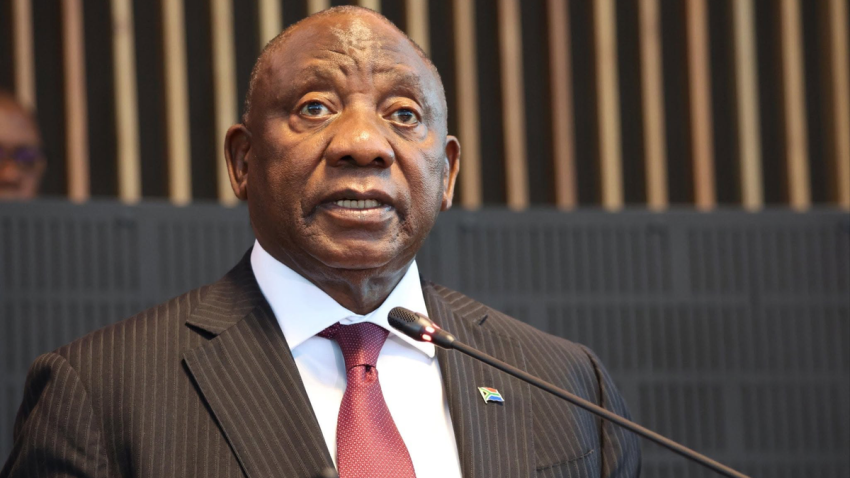
President Cyril Ramaphosa has approved a plan to establish a fully independent state-owned Transmission System Operator separate from Eskom.
The Presidency announced on Friday that Ramaphosa had endorsed the first-phase report of the Eskom Restructuring Task Team.
The proposed operator would own and control South Africa’s electricity transmission assets.
Government says the restructuring could increase competition, attract investment and strengthen the country’s energy security.
It is also intended to support economic growth and help reduce electricity costs over time.
Report finds restructuring feasible
The task team examined whether Eskom’s transmission assets could be transferred to an independent company without damaging the utility’s financial position.
According to the Presidency, the report found that the restructuring was feasible and aligned with international best practice.
However, it warned that growing municipal debt to Eskom remains a serious risk to both the utility and the wider electricity market.
The report also proposed immediate measures to prepare the sector for the planned separation.
NTCSA independence to increase
Before the new operator is established, government will strengthen the independence of the existing National Transmission Company of South Africa.
Its licensed activities will be ring-fenced from Eskom.
Eskom board members will also no longer automatically serve on the transmission company’s board.
The NTCSA board will be solely responsible for appointing its chief executive and senior management.
Decision-making involving market operations, finances and access to the transmission network will also shift away from Eskom.
Eskom Distribution will continue managing projects connected directly to its distribution network.
Detailed roadmap still coming
The restructuring follows disagreements over whether Eskom’s generation, transmission and distribution businesses should remain under one holding company.
Electricity Minister Kgosientsho Ramokgopa previously supported a model that would allow Eskom to retain ownership of the national grid.
Ramaphosa instead backed a completely independent state-owned transmission operator.
“This report shows how government can ensure that the architecture of the electricity sector can change as the sector continues to evolve,” Ramaphosa said.
The second phase of the task team’s work is expected within three months.
It will include a detailed implementation plan and timelines for completing the restructuring.