
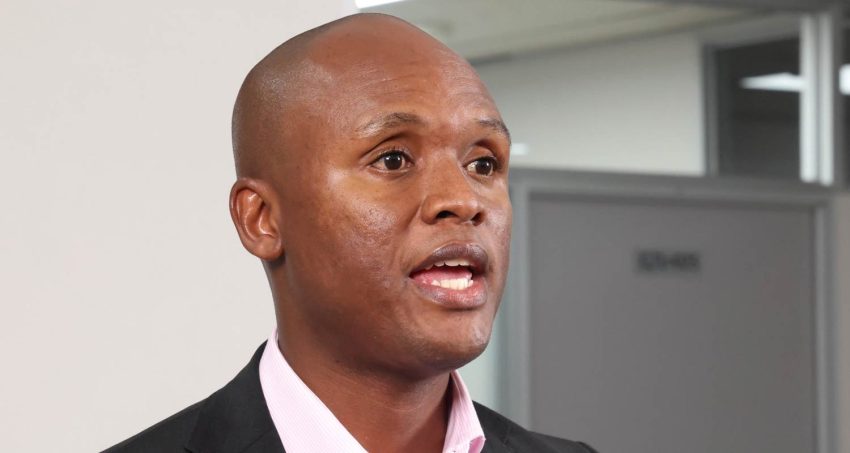
Communications minister Solly Malatsi is facing calls from across the political divide to withdraw South Africa’s draft national artificial intelligence policy after News24 revealed at the weekend that the document contains at least six academic citations almost certainly fabricated by an AI tool.
The 67-reference list at the back of the 86-page draft policy, gazetted by Malatsi on 10 April for public comment, includes articles attributed to academic journals that either do not exist or never published the work cited, News24 reported. Editors of the South African Journal of Philosophy, AI & Society and the Journal of Ethics and Social Philosophy independently confirmed to the publication that articles credited to their publications had never appeared.
The episode is a particular embarrassment for the DA, which entered the government of national unity in 2024 on a promise of sharper governance and accountability than the ANC had delivered in office. Malatsi is one of the party’s most senior figures.
In a post on X, Malatsi said he had asked the department of communications & digital technologies’ director-general to investigate and “take action against anyone found to be responsible for any wrongdoing”.
Khusela Diko, the ANC MP who chairs parliament’s portfolio committee on communications – and is, in effect, Malatsi’s most senior parliamentary overseer – took to X to demand the policy be withdrawn outright. She called on the minister to scrap the document, put it through a proper review without using ChatGPT this time, and re-release it for public comment only once the policy was a product he could fully stand behind. She accused him of hunting for “a scapegoat (or should we say a scape-bot?)”.
Public works & infrastructure minister Dean Macpherson, a fellow DA cabinet member, leapt to Malatsi’s defence, dismissing Diko’s intervention as “the very definition of grandstanding”. Diko retorted that DA ministers epitomised populism and would soon discover that governance was harder than they had assumed.
Tech illiteracy
Phumzile van Damme, Malatsi’s predecessor as DA national spokesperson before her acrimonious 2021 departure from the party – weighed in on Saturday with a lengthy post on X expressing fury at the state of the draft.
Van Damme, who served as the DA’s shadow minister of communications for more than five years and now consults internationally on disinformation and platform accountability, said the policy must be withdrawn.
She rejected the suggestion – implicit in Malatsi’s response – that responsibility could be pinned on a junior official, arguing the failure of due diligence sat squarely with both the department and the ministry. Van Damme called the affair another example of what she sees as the tech illiteracy of government, and warned it risked becoming a global story about the pitfalls of AI, invoking the recent scandal in which Deloitte was forced to refund the Australian government over an AI-assisted report containing fabricated citations.
Read: South Africa’s draft AI policy is a bureaucrat’s dream
The controversy comes after the draft policy document had already drawn heavy criticism on its substance. Technology investor Stafford Masie last week published an open letter arguing that the draft policy risked regulating away the conditions South Africa needs to participate in the global AI economy by proposing a sprawling new governance architecture before government has committed a rand to compute infrastructure.

The draft AI policy, approved by cabinet on 25 March and published in the Government Gazette on 10 April, proposes the creation of seven new institutions to govern AI in South Africa, including a National AI Commission, an AI Ethics Board, an AI Insurance Superfund and a National AI Safety Institute. Public comment closes on 10 June. – (c) 2026 NewsCentral Media
Get breaking news from TechCentral on WhatsApp. Sign up here.