





Every organisation that has suffered a significant breach shares one uncomfortable truth in hindsight: the path the attacker took was there all along. The misconfigured account, the unpatched service, the employee whose credentials appeared in a dark web dump three months earlier. None of it was invisible. It was simply never viewed as a connected, exploitable chain leading to a critical asset. It was a list of individual findings in a spreadsheet that nobody had the time or context to fully act on.
That gap, between knowing you are exposed and understanding how an adversary would weaponise that exposure, is precisely where most organisations lose the battle before it begins. Closing it is the entire purpose of continuous threat exposure management (CTEM).
The attacker does not see a list of vulnerabilities. They see a path. CTEM gives defenders that same view, continuously, before the breach rather than after.
What CTEM actually means in practice
Continuous threat exposure management is a structured framework, championed by Gartner and increasingly adopted by leading security programmes globally, that shifts the security function from reactive patching to proactive risk eradication. It operates in five phases: scoping, discovery, prioritisation, validation and mobilisation. Each phase builds on the last, and the cycle runs continuously, not once a year.
The scoping phase asks a question most organisations have never formally answered: which assets, systems and data, if compromised, would cause the most damage to the business? These are the crown jewels. The domain controllers, the financial platforms, the customer data repositories, the intellectual property. CTEM anchors every subsequent analysis to the risk of those specific targets being reached by an adversary. Everything else becomes context.
Discovery maps the full attack surface from which a threat actor could operate. Not just the internal infrastructure, but the internet-facing perimeter, the dark web for leaked credentials and exposed data, the human layer where phishing creates entry points and the supply chain where third-party integrations introduce risk beyond direct control. Prioritisation then ranks what was discovered not by severity score alone, but by exploitability, reachability and proximity to those crown-jewel assets.
| R49-million Average cost of a data breach in South Africa (IBM 2025) |
287 The average number of days to identify a breach without AI-assisted detection |
73% The percentage of South African organisations reporting a shortage of in-house cyber skills (Sabric 2025) |
Where AI changes the equation
The CTEM framework is conceptually sound. The challenge has always been execution at scale. Mapping how thousands of individual findings across an entire attack surface connect into viable kill chains has historically required a team of senior red teamers working manually. That is not a realistic model for most organisations, and certainly not for the South African market where that level of expertise is both scarce and expensive.
Artificial intelligence solves the scale problem. A modern AI correlation engine ingests signals from every pillar of the attack surface simultaneously: internal vulnerabilities, external exposures, leaked credentials, employee risk profiles and supplier weaknesses. It constructs a live, continuously updated attack graph where every node is an asset or identity and every edge is an exploitable relationship. A reachable port. A privilege delegation path. A leaked credential matched to an active account. The AI then simulates how an adversary, armed with the full Mitre Att&ck technique library, would traverse that graph from every possible entry point towards every designated critical asset.
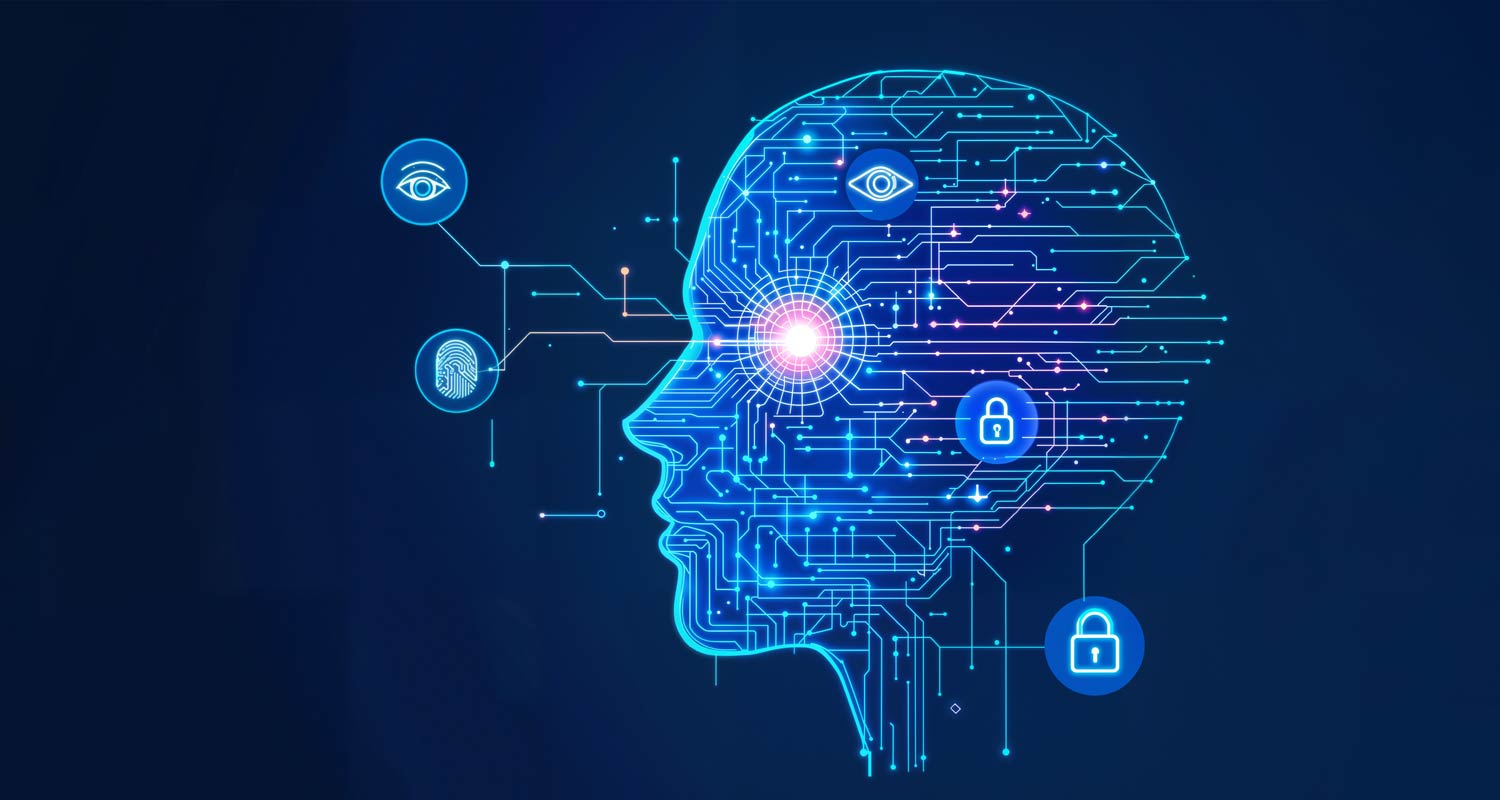
The output is not a ranked list of vulnerabilities. It is a map of kill chains: the precise sequences of exploitation steps that lead to real business impact, each scored by how likely it is to be executed and how damaging it would be. More importantly, the AI identifies choke points — the single nodes whose remediation would simultaneously sever the greatest number of attack chains. Fix one choke point and you may neutralise fifteen separate kill chains at once. That is leverage that no traditional vulnerability management programme can produce.
The AI does not just find what is broken. It reconstructs the attacker’s decision tree and shows you exactly which door to close to make the entire plan collapse.
Unified visibility: why partial sight fails
Kill chains do not respect the boundaries of your security tools. An attacker’s path often starts externally with a CVE on an internet-facing service, pivots through a credential leaked on a dark web forum, escalates via an over-privileged internal account and reaches the target by exploiting a misconfigured trust relationship between systems. Each of those steps lives in a different tool, managed by a different team, with no correlation between them.
Unified attack surface management is the capability that makes AI-driven kill chain analysis possible. When external exposure data, internal vulnerability findings, dark web intelligence, user risk scores and supply chain signals all feed into the same graph, the AI can build the complete chain. Remove any one of those inputs and the chain breaks, not in reality, but in your model of reality. You see a fragment and believe you are safe. The attacker sees the whole picture.
This is the core value that converged platforms deliver: a single, continuously updated model of your environment that is as close to the attacker’s view as technology can produce, without requiring your team to manually correlate data across six different tools and four different dashboards.
Accessible security for a market still maturing
For South African organisations, the significance of this convergence extends beyond capability. It extends to accessibility. A platform that automates kill chain discovery, continuously validates exposure across the full attack surface and delivers a prioritised remediation plan requires far less specialist interpretation than the traditional tooling stack. Security managers who understand the business can operate it. IT teams can execute the remediation guidance it produces. MSSPs can deliver enterprise-grade continuous threat exposure management across their entire client portfolio from a single console, without needing to dedicate a senior red teamer to each account.
The organisations that will reduce cyber risk most effectively over the next three years are not those that invest most heavily in headcount. They are the ones that achieve the clearest, most current picture of where they are exposed and channel their effort into the fixes that break the most attack chains. That combination of continuous intelligence, AI-driven prioritisation and unified attack surface coverage is no longer reserved for the largest enterprises. It is available now, deployable within days, and built to operate without a 50-person SOC behind it.

Harold van Graan of Solid8 Technologies said there has been a tremendous amount of interest from managed service providers and resellers in a cost-effective, integrated, AI-driven CTEM platform. For South Africa, this matters enormously, he said, as many companies have to operate within tight budget constraints while also being exposed to forex fluctuations. The landscape is changing, the cyber threat is real, regulatory pressure is growing and the depth of skilled resources is limited. CTEM, AI and unified exposure management do not eliminate those constraints, he said, but they make them more manageable and give organisations the ability to manage the threat.
About Redrok
Redrok delivers AI-powered threat exposure management to enterprise and MSSP clients. The Redrok 2.0 platform continuously measures, prioritises and mobilises the remediation of cyber risk, combining attack simulation, vulnerability intelligence, dark web monitoring, human risk scoring and supply chain visibility in a single unified platform. Learn more at www.redrok.io.