
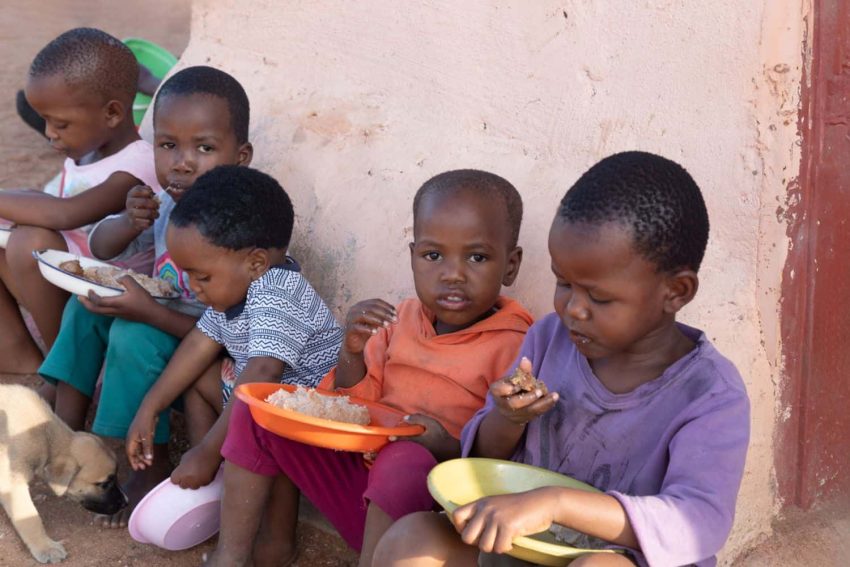
Imagine your food cupboards are empty and your children are hungry. This is the reality of about 18 million people in South Africa every day.
Although the more affluent consumers in the country have a feeling that the economy will strengthen and their finances will improve, the majority of South Africans still do not know where their next meal will come from, as food security worsens in the country.
Andy Du Plessis, managing director of FoodForward SA (FFSA), an organisation that collects edible food and distributes it to people in need, warns that food insecurity in South Africa is worsening, even among households already receiving food aid.
FoodForward SA’s State of Household Food Insecurity in South Africa Report 2026, produced with UCT’s Southern Africa Labour and Development Research Unit, shows that 70% of surveyed households face moderate-to-severe food insecurity, while one in four go entire days without food.
ALSO READ: Food Security Index: slight improvement, but people still going hungry
Children are suffering the most from food insecurity
Du Plessis points out that children are disproportionately affected, with one third living in severe hunger, while many adults skip meals so that their children can eat. “Hunger is not only a physical reality but an emotional one, with nearly 78% of parents speaking directly to children about the lack of food.
“This study shows, with painful clarity, that hunger is not occasional. It is a daily reality, even for families who already rely on food support.” The 2026 report exposes the scale and severity of food insecurity among households that already rely on local community kitchens for food support.
The Household Food Insecurity in South Africa Report is the result of an 18-month research partnership between FFSA and the UCT research unit that used internationally recognised tools, including the United Nations Food and Agriculture Organisation’s Food Insecurity Experience Scale (FIES), to turn early warning signs into hard evidence about how food insecurity is causing mounting anxiety.
The research is based on interviews with the heads of 796 households that regularly receive food through FFSA’s network of beneficiary organisations across the country. Du Plessis says the findings show that food insecurity is increasing and is severe and persistent, even with food assistance programmes in place.
ALSO READ: Why some go hungry while others have plenty: SAHRC launches national food inquiry
The tragedy of food insecurity: it is widespread, severe and chronic
According to the report, around 70% of surveyed households experience moderate-to-severe food insecurity, and roughly one in four households live in severe conditions where they go an entire day without food.
These patterns are reflected across the 12-month as well as the 30-day reference periods, indicating chronic, structural vulnerability rather than short-term shocks. Du Plessis points out that this is unfolding in a country that produces enough food overall, but where increasing prices, unemployment and stagnant incomes push families over the edge.
“This study shows, with painful clarity, that the food insecurity many South Africans live with is not occasional. It is a daily reality, even for families who already receive food support. Behind every percentage is a household juggling impossible choices between food, transport, medication and debt.”
There is no way that households could afford food, transport, medication and paying off debt. Nutritious food is often first to go off the shopping list.
ALSO READ: ‘Many households are food insecure’: Survey reveals ‘grim picture’ for ordinary, poor South Africans
Research shows how many people are food insecure in SA
Research on the levels and persistence of food insecurity showed that it spiked in 2023 and remained elevated relative to pre-pandemic baselines. Key findings for the years when Statistics SA collected food insecurity data show:
- In 2019, the number of food-insecure people in South Africa was approximately 24% of households, amounting to approximately 14.25 million people, while 5.2 million people were severely food-insecure.
- In 2022, the number of food-insecure people increased to 14.85 million, while 6.2 million were severely food-insecure.
- In 2023, the number of food-insecure people increased to 17.8 million, while 8 million people were now severely food-insecure.
Households with children, youth-headed households and those reliant on unstable or informal employment experienced higher severity and volatility of food insecurity.
Elevated levels of food insecurity were concentrated in parts of the Eastern Cape, Limpopo, and North West Province, as well as in low-income urban settlements.
The key drivers for food insecurity were found to be employment shocks and rising food prices. While cash transfers provided meaningful protection, they were insufficient to fully offset rapid food price increases.
ALSO READ: Food security in SA lowest in decade, child hunger a major issue – index
Children suffer most during years they need food to grow
Children are disproportionately affected, Du Plessis says. The data show that most children in the sample live in moderately food-insecure homes, with one third facing severe hunger.
According to the report, adults in many households report skipping meals so that children or their partners can eat. Sadder still, 77.8% of respondents say they speak directly to their children about the lack of food.
“Hunger is therefore both a material and emotional reality, shaping family conversations and children’s sense of security,” De Villiers says.
ALSO READ: Half of SA population will be food insecure by 2025
What can be done about food insecurity in SA?
The Household Food Insecurity Report 2026 is intended to guide government, donors and implementing partners in responding to this ongoing crisis, Du Plessis says. The research findings point to the need for:
- Child-focused interventions, including early-childhood nutrition programmes
- Geographically targeted support, such as community kitchens serving entire households
- Time-sensitive food or voucher assistance for the most vulnerable
- Protective safety nets that prevent food-related debt and safeguard wellbeing.
“If we are serious about protecting children and stabilising households, we must move beyond short-term relief to coordinated, evidence-based responses. This report gives us a clear baseline for the kind of targeted action South Africa now urgently needs,” says De Villiers.