


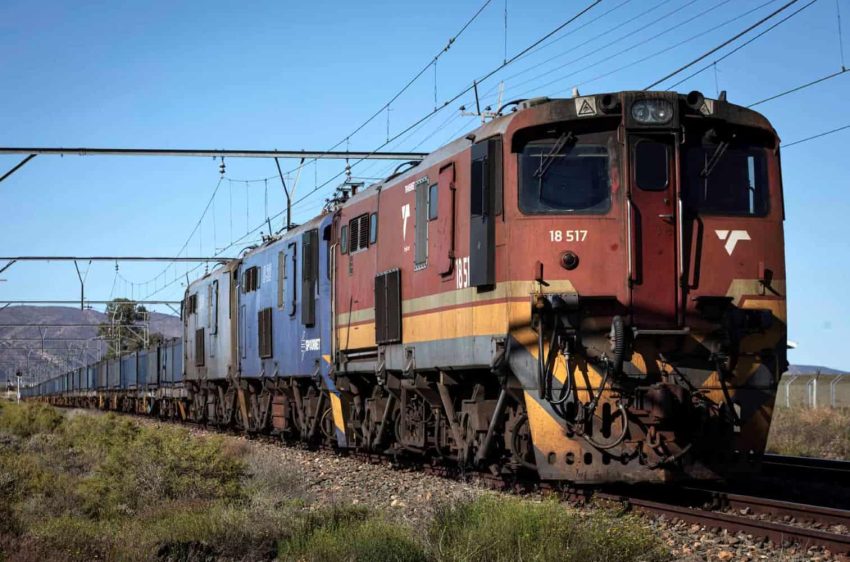
But risks remain, Futuregrowth warns.
South Africa’s listed credit market ended the fourth quarter of 2025 at about R50 billion, dominated by banks and financial services. This is according to Futuregrowth Asset Management’s latest listed credit report.
Transnet’s November auction of government-guaranteed paper, which attracted R42 billion in bids, was more than eight times oversubscribed.
The approximately R50 billion of gross term issuance recorded in the fourth quarter was slightly below the R53 billion raised in the previous quarter.
Beyond banks and financial services firms, corporates raised R13 billion, state-owned enterprises (SOEs) R12 billion and securitisations R4 billion.
Municipalities, however, remained absent from the market for a third consecutive year.
Futuregrowth attributes the continued oversubscription of auctions and tightening of spreads to a combination of strong and growing demand, constrained supply, less attractive alternatives such as government floaters, aggressive bidding by banks in certain auctions, and improving credit fundamentals among issuers.
ALSO READ: Transnet bailouts? Government bends with R94.8bn more in guarantees
Transnet market reception
According to Futuregrowth, Transnet’s November auction stood out not just for its scale but for the strength of demand.
The SOE raised R5 billion across five-, eight- and 10-year floating-rate notes, as well as a 10-year fixed-rate note.
This signals renewed investor confidence, but Futuregrowth head of credit Olga Constantatos cautions that the entity’s reform process could be compromised by conflicts of interest, just as private operators begin entering the rail network.
Speaking to Simon Brown on his MoneywebNOW podcast, Constantatos said Transnet’s decline has been nearly a decade in the making, driven primarily by governance failures that were exacerbated by state capture-era decisions that were not in the best interests of the company.
“There was massive capital expenditure, ballooning debt and shrinking operational performance,” she says.
Rail volumes collapsed, cash flows weakened and the balance sheet deteriorated sharply. Despite incurring significant debt, Transnet never resolved its operational problems.
Today, the group relies on roughly R200 billion in government guarantees to continue functioning.
Although the guarantees allow it to refinance and keep operating, Constantatos stresses that they do not address the underlying capital structure problems.
“Debt in itself isn’t necessarily bad,” she says, particularly when it is used productively. But in Transnet’s case, borrowing failed to fix core operational issues, leaving the company weaker rather than stronger.
ALSO READ: Government delivers R51 billion support to Transnet. Will it last?
Conflict of interest
There are tentative signs of reform, according to Constantatos, such as initiatives like Operation Vulindlela and the National Logistics Crisis Committee that have provided impetus for reform.
She describes the “direction of travel” as broadly positive, though she cautions that success will depend on the detail of the regulatory framework.
“There is forward momentum and broader government support, but there is still a lot of work to be done,” she says, adding that Transnet now has to claw its way back from near collapse.
One of the most significant shifts has been the gradual opening of the rail network to private operators. Transnet has already awarded 11 bids for access to 41 slots.
But Constantatos raises concerns about conflicts of interest in that Transnet is currently acting as both referee and player, setting the rules while also adjudicating the entry of future competitors.
“That’s where the conflict comes in,” she says, citing Eskom’s renewable energy procurement programme as a better example because it was handled independently and not by Eskom.
She says in Transnet’s instance an independent regulator would be more credible. Even so, the benefits of private participation will take years to materialise.
“We should have done this a long time ago,” she said. “But we are where we are.”
ALSO READ: S&P Global exposes Transnet’s operational crisis as it fails to meet targets
Deals should be bankable
Futuregrowth has been one of Transnet’s key funders although the group flagged governance red flags well before the rating agencies did, Constantatos says.
As a debt investor, the firm engaged directly with the entity and built protections into its funding structures.
Constantatos notes that there is no shortage of institutional capital for infrastructure in South Africa – but that money will only flow if risk-sharing frameworks are sound.
“We need to be sure the deals are bankable,” she says.
Strong covenants, transparent reporting, and independent oversight are essential.
ALSO READ: Transnet could run out of funds within three months — will the government step in to rescue?
SA’s new funding vehicle
This caution from Futuregrowth comes as government attempts to change how major infrastructure projects are funded.
At the centre of this shift is the newly announced Credit Guarantee Vehicle (CGV), developed by National Treasury and the World Bank to unlock private funding without relying on costly sovereign guarantees.
Bukiwe Pantshi, head of infrastructure at Investec Corporate & Institutional Banking, says in a statement the CGV is the most significant change to South Africa’s infrastructure financing framework in more than a decade.
It will first be used for Phase 1 of the Independent Transmission Programme, focused on expanding electricity transmission.
Government has committed about R1 trillion over the medium term to infrastructure under President Cyril Ramaphosa’s reform agenda, with a focus on energy, transport corridors, and water and sanitation.
But limited fiscal space has become a major constraint.
The CGV aims to derisk large-scale projects by providing guarantees through a dedicated “private insurance-style company with a top credit rating”, backed by Treasury, the World Bank, development banks and private investors.
This, Pantshi argues, should make projects more bankable and reduce the burden on the state.
Over the next five years, the aim is to raise about R43 billion, with Treasury contributing up to R10 billion, starting with R2 billion for electricity transmission.
Once operational, the CGV will be extended to transport and water projects – including rail corridor developments that have struggled to attract funding under existing structures.
This article was republished from Moneyweb. Read the original here.