


ANC secretary-general Fikile Mbalula has accused sections of the anti-illegal immigration movement of pursuing a political agenda under the guise of campaigning against undocumented migrants.
He warned that what began as a protest against illegal immigration is increasingly being used to mobilise support against the ANC.
Speaking during an ANC media briefing on Thursday, Mbalula said while government acknowledged that South Africans had genuine concerns about illegal immigration, crime, drug trafficking and border management, some organisers had shifted the campaign beyond migration and into party politics.
“You are no longer dealing with immigration. You are dealing with people with a political agenda,” Mbalula said.
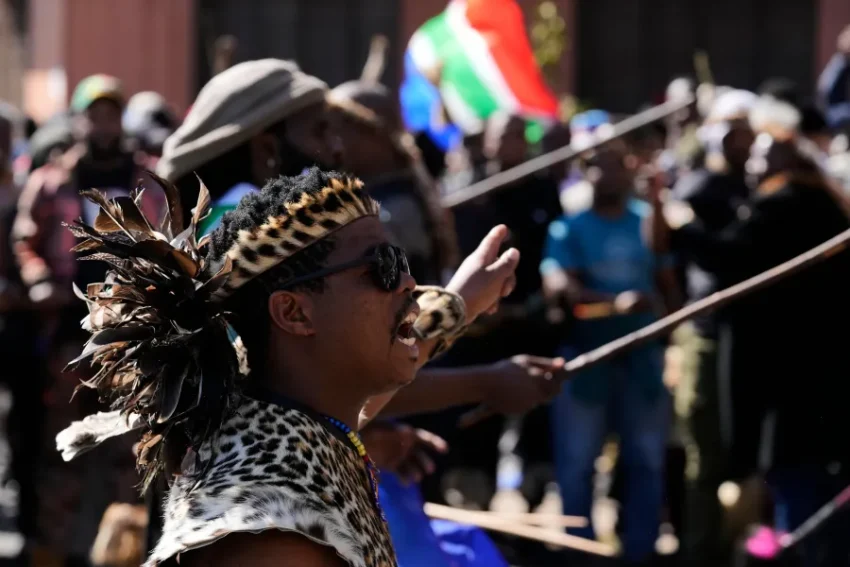
His remarks come days after nationwide anti-illegal immigration demonstrations were held across South Africa on 30 June, with thousands of protesters demanding tougher action against undocumented migrants. The protests remained largely peaceful, although isolated incidents of unrest and looting were reported in some areas.
Mbalula said government had no objection to engaging with anti-illegal immigration activists, pointing to recent meetings between President Cyril Ramaphosa, government ministers and protest leaders.
“It is never too late to engage anyone. When you are a government that listens, that’s what you do,” he said.
He welcomed what he described as a shift in tone from some protest leaders, saying they had increasingly emphasised peaceful demonstrations rather than violence.
“They have taken it as genuine… addressing the issue, but not advocating for violence, beating up of people and all of that. That in itself is very important,” he said.
However, Mbalula argued that some individuals had begun using the campaign to promote political messages unrelated to illegal immigration.
He claimed slogans calling for the removal of government and urging South Africans not to vote for the ANC demonstrated that certain activists were pursuing broader political objectives.
“When somebody says government has failed, government must go… and then in this election that is coming, do not vote for the ANC, vote for the following parties, you must be conscious that you are no longer dealing with immigration.”
Without naming specific organisations, Mbalula also referred to remarks allegedly made by anti-illegal immigration activist Nkosikhona “Phakel’umthakathi” Ndabandaba, claiming he had publicly encouraged support for the Inkatha Freedom Party.
“That truth will come. You’re going to see that this thing is not just a movement, it’s political,” he said.
“Mark my words, it is coming. Once this matter is addressed, the political party spirit for those who’ve got ill intentions and political intentions is going to come out.”
Despite his criticism, Mbalula repeatedly acknowledged that many South Africans were raising legitimate concerns about undocumented migration and the impact of organised crime in their communities.
Drawing on his experience as former police minister, Mbalula said he had personally witnessed communities affected by drug syndicates and criminal networks.
He stressed that many ordinary South Africans participating in the demonstrations were motivated by genuine frustrations rather than politics.
“Those people are not marching because they want to promote a political party. They’re genuinely there because they want this issue to be addressed.”
He cautioned, however, that government could not allow frustration over illegal immigration to descend into lawlessness or vigilantism.
“The Constitution gives us rights, but rights come with responsibilities,” Mbalula said.
He also defended government’s handling of migration, arguing that while progress had sometimes appeared slow, authorities were required to operate within the law and constitutional framework.
“We are hard at work now to address the very same issues they are talking about,” he said.
Businesses employ undocumented migrants
Mbalula also shifted some of the blame for illegal immigration away from undocumented migrants themselves, arguing that South African businesses were helping sustain the problem by employing people without the necessary documentation.
“It is not the fault of the undocumented. It is the fault of business,” he said.
He claimed that some employers, particularly in sectors such as the restaurant industry, preferred hiring undocumented foreign nationals over South Africans.
“They say people who come from outside, even if they are undocumented, are the most reliable, unlike South Africans. Particularly in the business of restaurants and so on. That’s what they say,” Mbalula said.
He argued that government needed to strengthen enforcement against employers who flout labour and immigration laws, saying jobs should be protected for South African citizens.
“The law must be very clear that those jobs are preserved probably for South Africans.”