



South Africa needs between R108-billion and R142-billion in investment to get all households connected to 100Mbit/s broadband internet by 2035, according to a new report by the Development Bank of South Africa (DBSA).
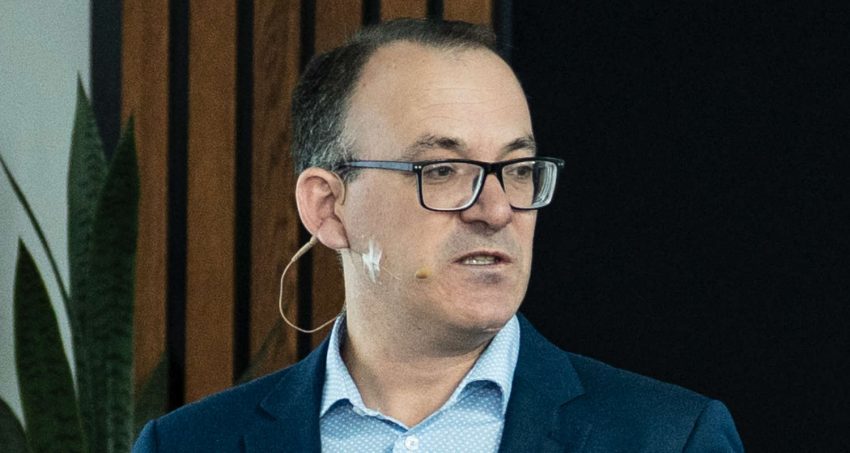
Speaking at the launch of South Africa’s Digital Infrastructure Investment Study (Sadis) at the DBSA’s offices in Midrand on Monday, Pieter Grootes, digital economy strategist at Networks Anonymous, said the 100Mbit/s mark is key to driving meaningful connectivity for South Africa’s population.
The report was commissioned by the DBSA in partnership with the National Planning Commission.
Grootes led the compilation of the report, which used data from various sources including telecommunications market intelligence firm Africa Analysis. The investment figures were derived using the World Bank’s Beyond the Gap methodology.
The study focuses on the period from 2026 to 2035, with 100Mbit/s as the universal service target – the same speed government’s SA Connect plan committed to in 2013. The total cost of infrastructure is broken down into three components: new build capex, replacement capex and operational expenditure.
Meaningful connectivity is a key focus throughout the report, driven largely by the observation that over 98% of South Africa’s population has 4G coverage but that a much larger usage gap exists.
Demand-side factors
Grootes said deploying infrastructure alone is not enough, but money must be spent on demand-side factors to ensure people want – and are empowered to – use digital tools to improve their lives.
Affordability was identified as the major constraint on usage, with most users reliant on a mobile connection typically making use of “buckets of data” to maintain connectivity. The high cost of devices also plays a restrictive role, with the report showing that the cost of a “decently capable” device is more than 16% of South Africa’s universal basic minimum wage.
“Now, if I need a new phone, am I going to spend almost 20% of my money on a new phone, or am I going to buy electricity? So, it’s not even the cost of services that are a bottleneck to participate in the digital economy; it’s the cost of the device,” said Grootes.
Read: South Africa puts data centres on par with energy, ports in big policy shift
This notwithstanding, there are policy constraints contributing to connectivity bottlenecks in South Africa.
The report cites fragmentation as a key dampener on growth, both at the national and municipal level. Nationally, digital infrastructure policy is spread piecemeal across varying mandates and institutions. Examples of this include the National Development Plan of 2012, the SA Connect programme from 2013 and the National Infrastructure Policy from 2014.

“We have all the policy, but implementation lags significantly,” said Grootes.
At the municipal level, fragmented regulation hampers implementation, with companies seeking access to wayleaves being “told different things by different parts of government”. Municipalities also inflate the cost of doing business through non-standardised fee structures for wayleaves and other permits. These costs eventually get passed onto consumers and contribute to higher rates of exclusion from the digital economy.
“The true meaning of meaningful connectivity is that you spend a maximum of 2% of your household income per month on high-speed broadband, and that high-speed broadband is always on, and that’s the key issue,” said Grootes.
DBSA CEO Boitumelo Mosako, who also spoke at the event, said the report highlights the fact that the major question around digital infrastructure investment is no longer about whether digital infrastructure matters, but about if South Africa is going to move fast enough to position itself effectively in the digital economy – or fall behind.
“Nations around the world are reorganising their economies around AI, data connectivity and digital platforms. Investment is flowing not only into roads, ports and power, but into fibre networks, data centres, the data economy and other digital capabilities,” said Mosako.
Read: GSMA coalition targets $40 smartphone to connect millions across Africa
“This means that investment decisions cannot be guided by coverage alone. A network that exists but cannot be used is not infrastructure, it’s just unrealised potential,” she said. – © 2026 NewsCentral Media
Get breaking news from TechCentral on WhatsApp. Sign up here.