
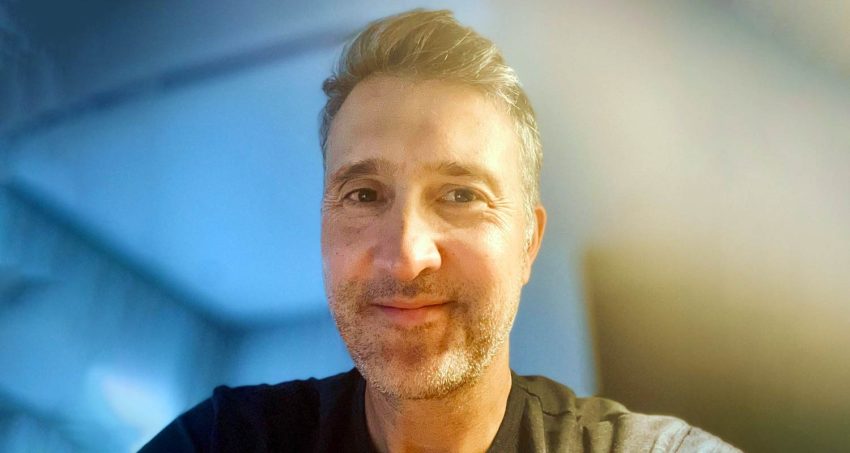
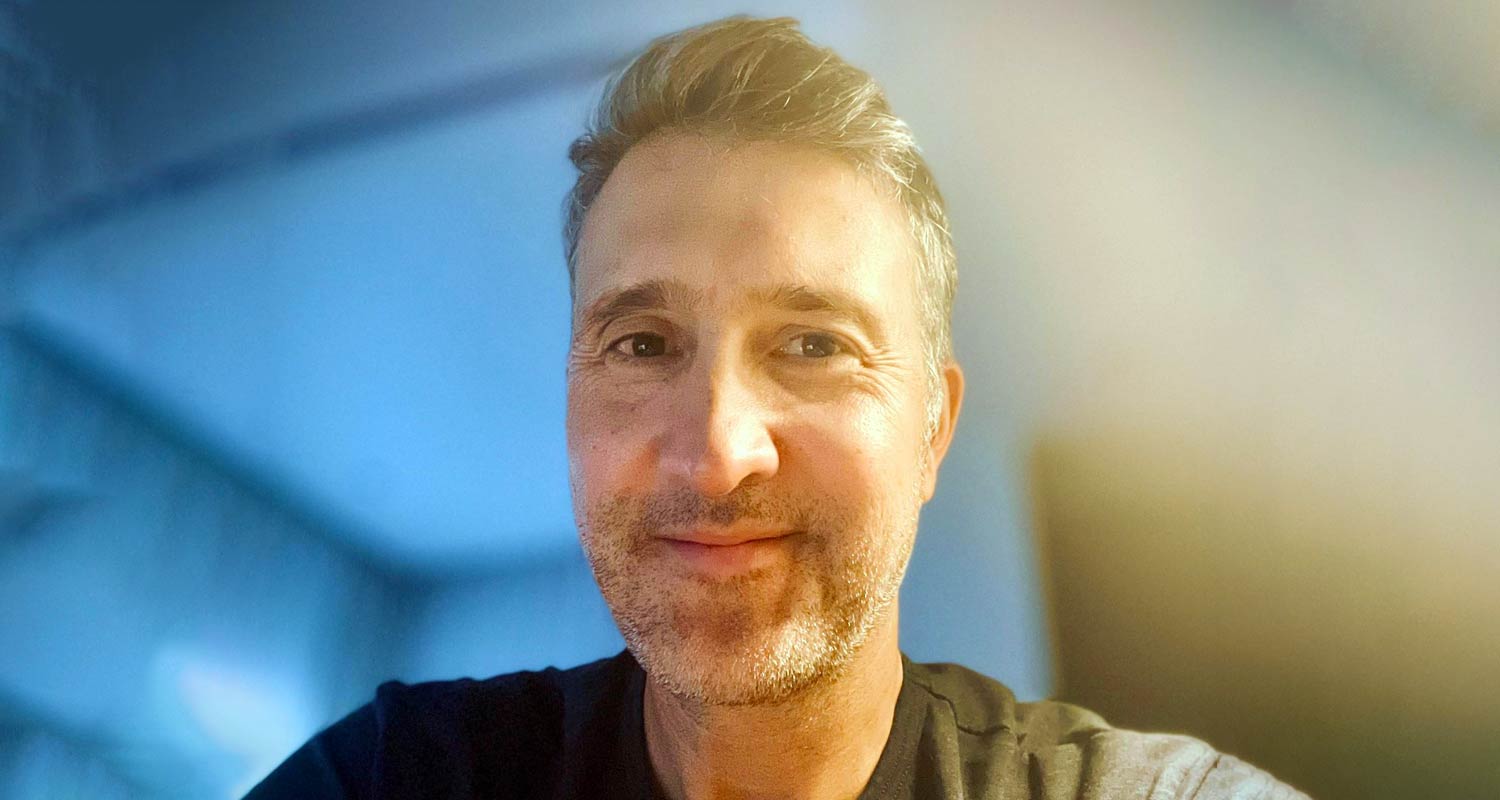
Donovan Marsh remembers the moment he realised his industry was “over”.
The South African filmmaker – whose credits include the Hollywood submarine thriller Hunter Killer with Gerard Butler and Gary Oldman, the hit Spud films and iNumber Number, the first South African film to sell remake rights to a Hollywood studio – was scrolling through his phone when he came across pre-release video clips generated by OpenAI’s Sora.
“I staggered out of my bedroom with this phone in my hand, just saying, ‘That’s it for my industry. It’s done. How could anybody ever go to conventional filmmaking again?’” Marsh told the TechCentral Show in an episode to be published later this week.
That was a few years ago. Since then, Marsh has become one of the most vocal advocates for AI filmmaking, co-founding Dragon Studios AI with South African internet pioneer and indie film producer Ronnie Apteker and London-based writer and video producer Steve Cholerton.
The studio has produced award-winning AI-generated short films, and Marsh believes AI-produced feature films of blockbuster quality will arrive by the end of this year.
Hunter Killer had a budget of US$40-million. It took 55 days to shoot, with a three-month pre-production phase. Post-production stretched to nearly two years because of the roughly thousand visual effects shots, each requiring two to six months to complete.
‘100 times less’
Marsh said he could make the same film today using AI for 100 times less money.
“Those thousand visual effects shots would be way better done with AI today,” he said. The remaining gap is in performance – getting AI-generated actors to deliver consistent, nuanced performances across 90 minutes. “That’s the final hurdle. And I don’t see why it shouldn’t be crossed at some point.”
Marsh said the AI generation tools that first caught his attention – OpenAI’s Sora and Midjourney’s image generator – have been overtaken. OpenAI recently announced it was shutting down Sora, but Marsh said the real reason was simple: “They just don’t have a competitive product and no one uses it that I know.”
Read: The last generation of coders
He said the leading tools are now Chinese: Kling and Seedance. Google’s Veo 3.1 is “a distant cousin at this point”. He uses between eight and 11 different tools on any given project, selecting each for its specific strengths.
Asked whether something fundamental is lost when films are not made by humans collaborating in a physical space, Marsh pushed back firmly.
“People think there’s some kind of magic to moviemaking, something transcendent that human beings have some magical access to,” he said.
He likened AI to working with a foreign cinematographer. “I pare my language down to the basics. I give them the absolute outline, and then I let this genius cinematographer go off and create me a beautiful shot. That beautiful foreign cinematographer is AI.”
Simpler prompts produce better results than detailed descriptions, he said. “The AI is the more creative one. You’re its source of will.”
Job losses are already here
Marsh was blunt about the employment implications, telling the TechCentral Show: “It’s already decimated jobs. There’s no need any more for graphic artists, storyboard artists or composers.”
Music generation, he said, has already crossed the quality threshold. “The quality is as high as you would expect to get from a top composer. And composing and licensing music is one of the most expensive parts of making a film.”
Eventually, he said, location scouts, on-set crews, actors, producers and even directors will be displaced. He envisions a future in which AI agents will generate personalised feature films on demand. “People like me will not be necessary.”
For South Africa, Marsh sees the disruption as a net positive.
“The South African film industry has been in the doldrums since I joined it,” he said. Local filmmakers cannot compete with international productions on budget or experience, and this feeds a cycle of uncompetitiveness.
“This tool, for the first time, allows us to compete. We can be making movies that look as amazing as the American big tentpole films, and then it’s down to talent,” he said. “The gatekeepers are gone, the keys are thrown out, and it’s each man for himself.”
‘Shocked’
Yet the local industry has been slow to respond. When Marsh recently lectured a group of third-year film students, he asked how many were using AI tools. “Not a single hand went up,” he said. “I was literally shocked to my core.”
His message to film schools is unequivocal: pivot entirely to AI or risk producing graduates who are unemployable. “My industry is growing. That other industry is shrinking.”
Read: How AI is transforming the machinery of war
Dragon Studios AI is in what Marsh describes as a proof-of-concept phase, producing short-form content while building towards AI-generated feature films. Apteker, who executive produced Jerusalema and Material, among many other films, was living in Kyiv when Russia invaded Ukraine and has since relocated to London for his family’s safety. Cholerton has produced documentary films for Reuters, Unesco and the World Economic Forum.
The studio’s first major project, Dragon Hunter – about a township boy who discovers a rare fossil worth millions – has its first 10 minutes available online and has picked up awards at AI film festivals (watch it above).
Among the projects closest to Marsh’s heart is an adaptation of Shakespeare’s Julius Caesar set in Jacob Zuma-era South Africa. “The parallels to South African politics are just extraordinary,” he said. “It’s a strange and wonderful creature that no one will ever really make. And I will make it with AI one day.”
Asked when AI-produced films will stand alongside Oscar winners in quality, Marsh said: “I predict this year, maybe next year. I think people are going to prefer them to the Oscar-winning films.”
Whether that proves to be overly optimistic or not, Marsh is betting his career on it.
Watch the full interview on the TechCentral Show later this week. – (c) 2026 NewsCentral Media
Get breaking news from TechCentral on WhatsApp. Sign up here.