


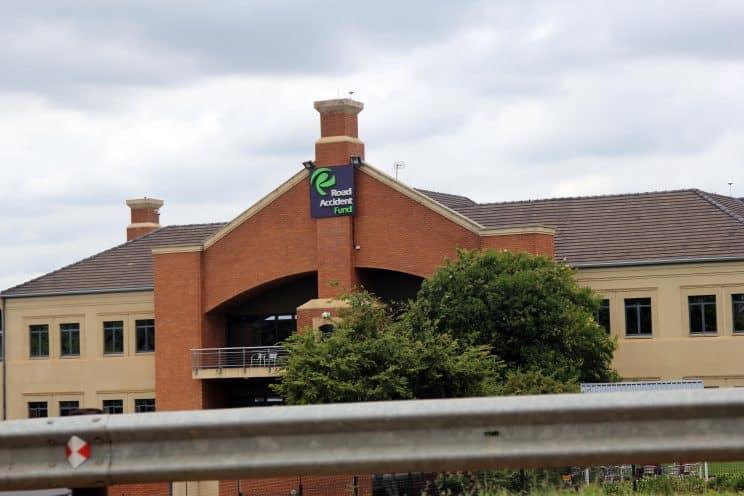
It has been estimated the RAF has about R500 billion in unqualified contingencies.
It appears increasingly likely the Road Accident Fund (RAF) will require a significant government bailout.
This follows the RAF receiving another bloody nose from the Supreme Court of Appeal (SCA), which on Thursday dismissed, with costs, its appeal against a high court judgment that declared a Board Notice and its RAF1 Form unconstitutional, unlawful and invalid.
It has been estimated the RAF has about R500 billion in unqualified contingencies, a portion of which is attributable to the fund rejecting claims that complied with the RAF Act but did not comply with the Board Notice and RAF1 Form.
Attempts at the weekend to obtain comment from RAF board chair Kenneth Brown and Songezo Zibi, chair of parliament’s Standing Committee on Public Accounts (Scopa), on the SCA judgment were unsuccessful.
Scopa is conducting an oversight inquiry into the affairs of the RAF.
‘Parallel claims system’
Gert Nel of Gert Nel Inc Attorneys, one of the major firms involved in assisting road accident victims in lodging RAF claims, said on Sunday the RAF created a parallel claims system because the fund did not register any claims that were not compliant with the Board Notice.
Nel said this did not stop attorney firms from lodging claims and getting default judgments on many of these claims, which the RAF does not currently have recorded in its register.
He said the RAF put those claims in envelopes and sent them back to the claimants/plaintiffs “as if they do not exist”, but the RAF Act permits claims to be lodged through registered post, which means there is proof that these claims were lodged.
Nel said if the RAF does not make an offer to settle a registered claim within 120 day, as prescribed by the act, the fund can be summonsed and the claim will follow a litigation process, which most attorneys have done.
“This is where the RAF liability based on default judgments comes from.
“That in itself is about R500 million at the moment and has created an immense immediate financial burden on the RAF,” he said.
Nel said his firm is currently running a book in excess of R100 million that the RAF has not yet paid, with default court orders in place for all of these matters, which were not compliant with the Board Notice but were lodged in terms of the act.
He said these claims have now become immediately payable and that is just one law firm.
“There are many more in the country that went through the same exercise, so the financial implication of this is huge.
“Treasury will definitely have to get involved with a bailout to cover these additional expenses.”
Treasury’s concern
The 2026 Budget Review said the total liabilities of social security funds at the end of 2024/25 were reported at R433.1 billion, of which the RAF accounted for 85.5%, equivalent to R370.3 billion.
The 2025 Medium-Term Budget Policy Statement released in November 2025 said the RAF remains a significant fiscal risk and its financial position is expected to deteriorate over the medium term.
It said the RAF’s liabilities are projected to increase from R369.7 billion in 2024/25 to R422.6 billion in 2027/28.
Board chair Brown told Moneyweb in an exclusive interview in November 2025 the RAF’s liabilities could increase by between R300 billion and R400 billion because of its decision to revert back to its previous South African accounting standard.
But he denied that the RAF has “hidden” liabilities of R230 billion from about 80 000 legitimate claims that have not been registered on the RAF’s system because of the use of RAF1 Form.
Brown said then that the RAF was continuing to use the RAF1 Form for claims and had a case pending at the SCA regarding its use.
He further confirmed there is another RAF liability of about R40 billion the fund needs to resolve, “a big chunk” of which relates to default high court judgments.
Court rulings
The SCA on Thursday agreed with a full court of the High Court in Pretoria judgment in November 2023 which ruled that the RAF exceeded its powers in issuing and applying the Board Notice without any statutory authorisation.
It also said the notice did not facilitate the efficient administration of claims, but rather reduced the number of claims by creating administrative hurdles to stop claims from being submitted.
SCA Judge Caroline Nicholls, with judges Keoagile Matojane, Raylene Keightley and Mpho Mamosebo, and acting judge Thandi Norman concurring, said on Thursday a section of the RAF Act empowers the minister, and not the RAF, to make regulations.
Nicholls said the minister may make regulations that are ‘necessary or expedient to achieve or promote the objects of the act’, but there is no evidence that any consideration was given to whether the regulation was necessary or expedient to achieve the purpose of the act, which is to compensate accident victims for damages suffered.
“To the contrary, the regulation, by introducing the new RAF1 form, placed substantial impediments in the way of accident victims’ claims through more stringent requirements,” she said.
Nicholls said that in the absence of an affidavit from the minister or reasons in terms of the Uniform Rules of Court, the evidence before the SCA suggests the minister agreed to gazette the form, not for legitimate public-interest considerations, but to side-step an internal dispute between the Department of Transport and the RAF.
“There is nothing before the court which is indicative of an independent decision-making exercise on the part of the minister.”
Nicholls ruled that the minister’s decision is fatally flawed for want of procedural fairness and there is, furthermore, no rational connection between the decision taken and the purpose for which the power was given.
She said rationality is a minimum threshold for lawful administrative action and ruled that the minister’s decision to approve and gazette the RAF1 form is unlawful and falls to be set aside in terms of both the Promotion of Administrative Justice Act (Paja) and the principle of legality.
Nicholls said the RAF complains that, while it cannot defend the decision of the minister, it would be unfair to force it to revert to the same ‘skeletal’ form that is causing backlogs in the RAF’s operating system.
She said the full court of the high court was aware of the implications of such a situation and addressed these in its orders.
Concerns over default judgments
Nel said his only disappointment with the SCA ruling is that it did not provide a clear course of action to be taken on default judgments.
He stressed RAF claims on which default judgment has already been granted cannot be relodged.
Nel believes it is essential the RAF allow a six-month window period in which attorneys and victims can register these court orders and get link numbers for them to be paid, because the fund covered itself with all the court applications it launched for something that “was unlawful to start off with”.
- The SCA last month dismissed with costs an appeal by the RAF against a high court ruling which found that the RAF Act does not exclude road accident victims who are illegal foreigners from claiming compensation for loss or damage.
- In March this year, the SCA ordered the RAF to pay Sunshine Hospital more than R92 million within seven days, following the hospital’s appeal against a June 2024 high court judgment that dismissed its application to enforce payment of a civil judgment granted against the RAF.
- In February this year, the SCA dismissed with costs an application by the RAF to appeal a judgment that criticised the fund for refusing to abide by 181 court orders in favour of Sunshine Hospital.
This article was republished from Moneyweb. Read the original here.