


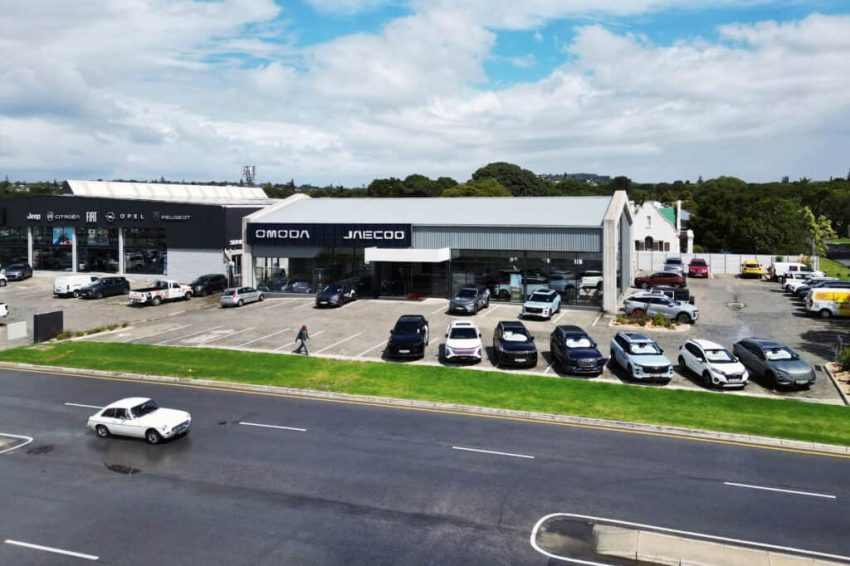
Quality may have caught up, but there’s a big unknown lurking for hundreds of thousands of South Africans.
The flood of ultra-competitive options from Chinese brands that have entered the market have seen consumers flock to these offerings, which include mainly SUVs from GWM, Chery, Omoda, Jaecoo, Jetour, MG, JAIC and BAIC.
The country’s largest seller of pre-owned vehicles, WeBuyCars, highlighted this in January, saying that the rise of these marques “has significantly influenced consumer behaviour and heightened competition”.
“These brands have captured notable market share through attractive pricing and compelling new vehicle offerings.”
Jebb McIntosh, CEO of Combined Motor Holdings (CMH), which operates 38 retail dealerships across the country, is a little more candid: “The days of buying an ‘inferior’ Chinese vehicle to save a little money have been replaced by the reality of favourably priced offerings with high quality build and superior specifications.”
Quality is no longer a major concern.
Writing in the group’s annual report, McIntosh adds: “The dominant feature of the national new-vehicle market continues to be the growing impact of the Chinese/Indian imports, and the unprotected pressure this is creating for the traditional local manufacturers.”
He points to the fact that vehicles sourced from India and China now make up 55% of the total sold in South Africa, with the former comprising 39% of total sales (mainly across Suzuki, Toyota and Hyundai cars) and the latter already at 16%.
McIntosh emphasises that: “It will be interesting to track how the Indian/Chinese vehicles fare when they eventually enter the used car market in high volumes.” This is the big unknown, one facing the hundreds of thousands of owners of these vehicles currently.
Resale value
According to Naamsa data, more than 160 000 vehicles across Chinese brands, together with Suzuki and Mahindra, were sold domestically last year.
While it is true that not all Suzuki models come from India, the bulk do. In addition, the sales of Toyota and Hyundai models from India is a significant portion of their respective bases.
CMH has one data point on Chinese/Indian vehicles, given that it owns First Car Rental, with a fleet of over 9 000 vehicles.
McIntosh says this business has “offloaded its 15-18-month-old units at favourable prices, but the resale value of high quantities of vehicles which are five to six years old has not yet been tested”.
Already, the dominance of these vehicles in the new vehicle market has distorted the used one.
“Generally,” says McIntosh, “used car prices rise in line with inflation in new car prices. Now, following a period of low or zero new car pricing [growth], customers have been forced to hold onto their used cars for longer, until the resale value and finance debt align.”
Impact on retailers
WeBuyCars felt the impact of the rise in popularity of new Chinese vehicles in this price bracket and had to adjust selling prices of its stock competing in this space “to maintain liquidity and ensure healthy inventory turns”. This has a negative impact on margins.
This has affected the luxury market too, with CMH saying this has “stabilised, albeit at lower volumes, but dealer network rationalisation continues”.
It has previously been reported that over the past two years, manufacturers serving this market – including BMW, Lexus, Volvo, Audi and Mercedes-Benz – have trimmed the number of dealerships.
Volvo’s pivot to an electric future saw the most extreme cuts, with 60% of its dealership network shutting.
CMH, which used to operate six Volvo dealers, trimmed this to four but also offset this by adding other non-competing brands to these dealerships.
It built its business over recent decades on the back of the Nissan, Ford and Volvo brands, and McIntosh says “both Nissan and Volvo have recorded an alarming loss of market share over several years”. Ford, by contrast, “has reinvented its model lineup after dropping its popular passenger models”.
Suzuki is now CMH’s top seller, with three other brands of Indian or Chinese origin (Foton, Mahindra, Haval/GWM) in its top six by volume.
This article was republished from Moneyweb. Read the original here.