
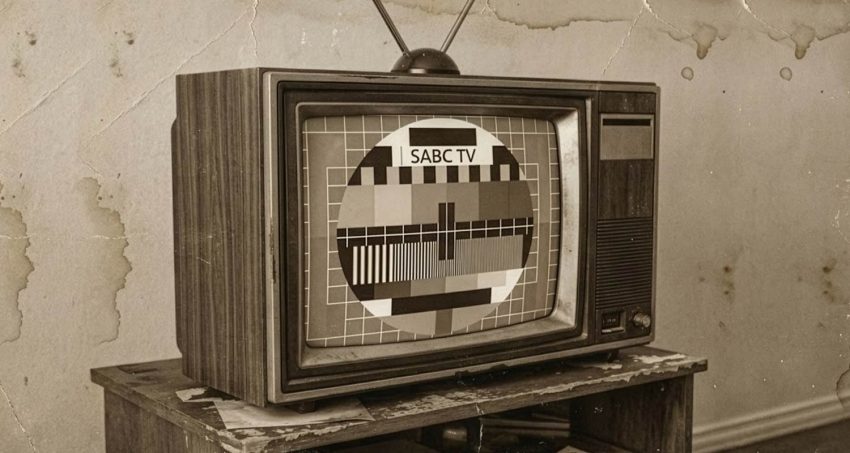
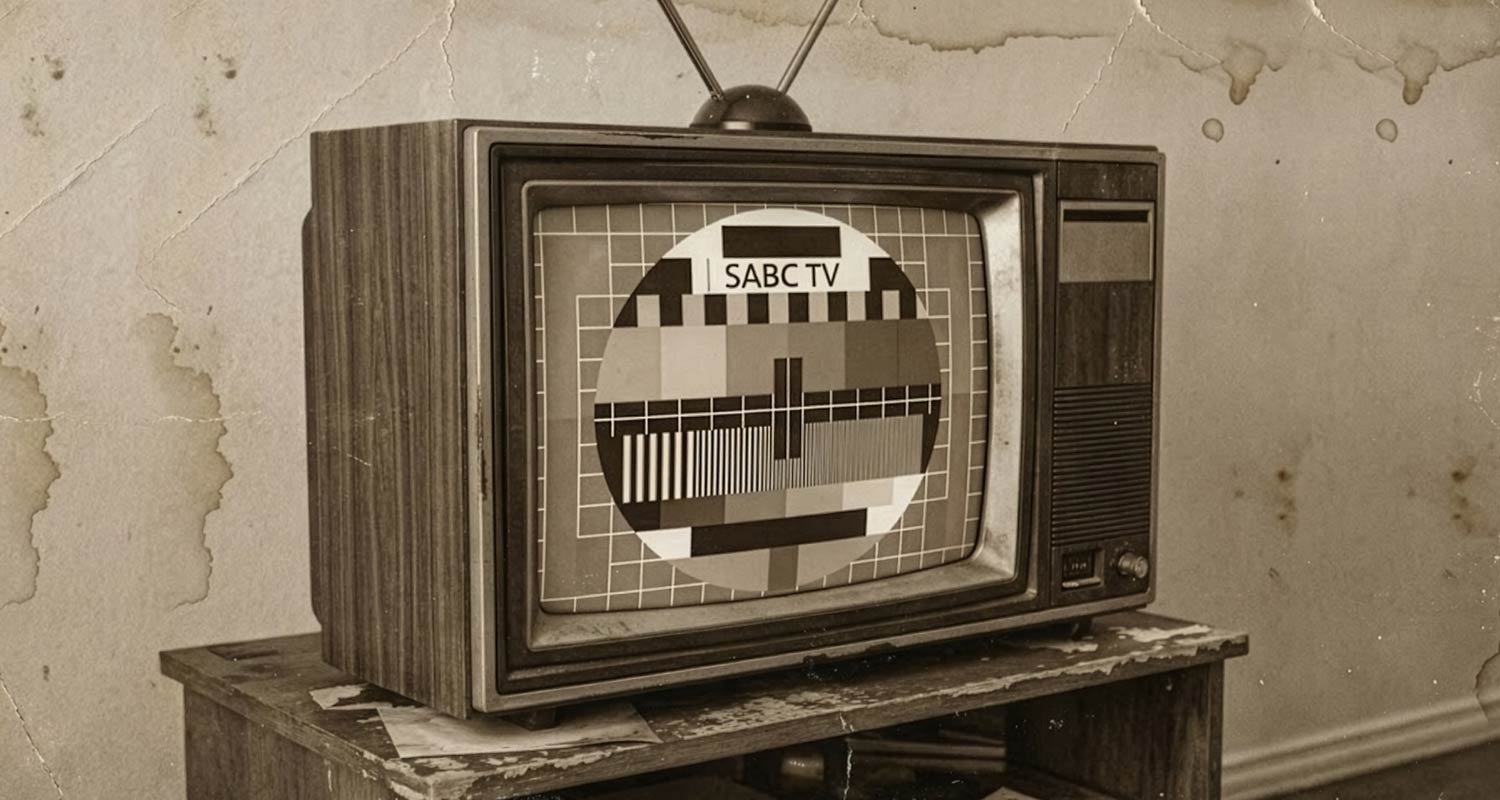
Today, 5 January 2026, South Africa marks 50 years since television was launched in 1976 – a milestone that invites a hard look at what television has been in this country: late to arrive, tightly controlled, briefly reimagined, then captured again, and now increasingly sidelined by streaming and smartphones.
This is the first in a series of articles TechCentral is publishing this week to mark the anniversary of the launch of television broadcasting in South Africa on 5 January 1976. Subscribe to our daily e-mail newsletter.
Television’s late arrival in South Africa was a political choice – anxiety about moral decay dressed up as “cultural protection”. While much of the world built television into the texture of everyday life after World War 2, the National Party government spent the 1950s and 1960s debating whether the medium was too dangerous to bring into white living rooms – and too uncontrollable to keep out of black ones.
The Nats’ hostility was explicit. Apartheid-era leaders publicly warned that television would corrupt the “spiritual” fabric of society, undermine Afrikaner nationalism and amplify English-language influence. Those arguments landed because the apartheid project depended on controlling the flow of information and policing cultural boundaries; television threatened to punch holes in both. Academic accounts of the period describe a mix of political, cultural and moral panic — alongside a stubborn insistence that costs outweighed benefits.
There was a practical fear, too: television’s persuasive power. Radio could be centrally managed and filtered through language services, while newspapers could be regulated and pressured. But television was vivid, emotional and arguably harder to contain. In an era of global anti-colonial movements, civil rights protests and televised conflict, the apartheid government understood – instinctively – that pictures travel faster and have more impact than policy statements.
State broadcaster
So, when the decision was finally made to proceed, it was not a liberation of South Africa’s airwaves. Rather, it was an expansion of the state’s communications apparatus.
Experimental broadcasts in major cities began in May 1975, with the national service commencing on 5 January 1976 – a bilingual (English/Afrikaans) channel that reflected the priorities of the apartheid state. From the outset, the SABC was not a public broadcaster in the modern sense; it was a state broadcaster – an institution designed to stabilise the apartheid government, legitimise its authority and normalise its worldview.
Read: The one area where the SABC is actually thriving
Indeed, the SABC was central to the maintenance of apartheid. Control wasn’t limited to television news bulletins; it ran through language policy and commissioning decisions.
By the late 1980s and early 1990s, as resistance intensified and the global tide turned, television’s importance grew even more. Apartheid could be debated in parliament and defended in print, but it was increasingly defeated on screen – by images of protest, repression and an ungovernable society. That paradox – that television was both a tool of the state and a window the state couldn’t fully contain – helped set the stage for what came next.
The democratic era
Democracy brought a foundational challenge: how do you take an institution built for propaganda and turn it into one that can serve a modern democracy?
The post-1994 settlement tried to do this through policy reform. Broadcasting policy work in the late 1990s explicitly framed the shift away from monopoly control towards a more diverse, multi-tier broadcasting environment – and it described the SABC’s own transformation as part of that project. The SABC’s public service obligations were later set out in legislation and regulation that emphasised universal access, language diversity and content reflecting South African life in its colourful complexity.

But that effort was always incomplete, undone at times by political pressure, governance instability and financial fragility. For a period, though, it felt right directionally. The aspiration was clear: the SABC should not be beholden to the ruling party of the day; it should belong to the public.
Then came the recapture.
Under Jacob Zuma’s disastrous presidency, South Africa’s institutions were undermined by patronage, factional control, and the normalisation of maladministration and political impunity. The SABC was an obvious target of this corrupt system.
Hlaudi Motsoeneng’s rise at the SABC became the clearest symbol of this period: governance processes bent around a (deranged) personality, with accountability treated as optional. The Public Protector’s 2014 report on maladministration and governance failures at the SABC (focused in part on Motsoeneng’s appointment and conduct) captured the scale of institutional dysfunction.
What followed was not just scandal but degradation: of management competence, of newsroom integrity and of the idea that the SABC could be trusted to act independently.
The damage wasn’t only reputational. The Motsoeneng years helped create a culture where rules were negotiable and where political alignment mattered more than the public mandate. Even after leadership changes, institutions struggle to “reboot” when talent has been lost, systems hollowed out and trust broken. The same was true at the SABC.
The broadcaster’s post-capture recovery has been slow, uneven and repeatedly interrupted by the same structural weaknesses: unstable boards, contested executive power and chronic financial stress.
The real crisis now: relevance
And yet, even if every governance issue were to be magically solved tomorrow, the SABC would still face an existential problem: old-school television itself has been dethroned. The SABC is trying to operate a legacy broadcasting model in a world where:
- Audiences are trained by TikTok to expect algorithmic immediacy;
- Netflix has normalised on-demand abundance; and
- YouTube has collapsed the barrier between “broadcaster” and “creator”.
The numbers behind SABC’s financial stress reflect this wider collapse of the “old bargain” (advertising plus licence fees plus mass audiences). The SABC’s financial results have highlighted continued losses and high levels of TV licence non-payment.
This is the new reality: the SABC isn’t only competing with e.tv or DStv anymore. Rather, it’s competing with everything – with a global entertainment industry whose scale South African broadcasters cannot match.
SABC television in the 1980s:
What should the SABC become? The company needs a redefinition that’s brutally honest about what it can’t do – and sharply focused on what only a public broadcaster should do.
A smaller SABC can be a stronger SABC – if it stops trying to be a sprawling “everything-to-everyone” broadcaster and instead concentrates resources on a few core public missions. This means fewer channels, fewer duplicated bureaucracies, fewer vanity projects and a leaner structure.
A reimagined SABC should be funded primarily through the public purse – through transparent parliamentary appropriations tied to measurable public outcomes (and thoroughly insulated from political interference).
The SABC doesn’t need to out-Netflix Netflix. It doesn’t even have to out-DStv DStv. What it needs to do is ensure that public-interest content goes where audiences already are: short-form clips for social platforms, a functional on-demand archive, podcasts, and partnerships that extend its reach.
Finally, any redesign that doesn’t anticipate future political capture is simply naive. The Zuma/Motsoeneng era showed how quickly governance can be subverted. A future SABC needs governance designed for adversity, including transparent appointments, robust editorial policies and hard limits on executive overreach.
In many ways, television’s first half century in South Africa mirrors the country’s political story: delay, control, liberation, capture – and now disruption.
Read: SABC warns its future is at risk as delays to key bill drag on
To survive another 50 years, the SABC needs to stop chasing scale, ratings and commercial relevance that it can no longer win, and instead embrace a narrower, harder and more honest mandate: to exist not as a bloated relic of the broadcasting age, nor as a poor imitation of global streaming giants, but as a lean, publicly funded institution focused relentlessly on the public interest. If it fails to make that choice, it will not be undone by politics but by something more final – public indifference. – © 2025 NewsCentral Media
Get breaking news from TechCentral on WhatsApp. Sign up here.