
Things are looking brighter for South Africa’s economy than they have in the last few years, and Standard Bank says this momentum could continue, but certain things need to keep happening.
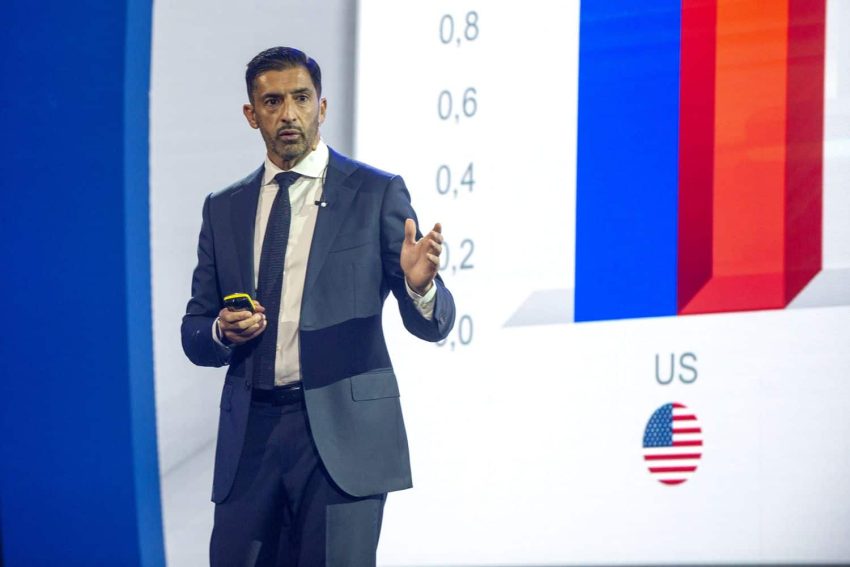
Goolam Ballim, Standard Bank chief economist, highlighted that the country hasn’t had a macroeconomic climate this supportive.
He was presenting the bank’s 2026 economic outlook on Tuesday morning, which was full of hope for the years ahead, even as political fragmentation remains a concern.
ALSO READ: Ramaphosa warns ‘no time to rest’ as SA progresses to economic recovery
SA’s current economic situation
Ballim’s optimism for the country’s economy stems from key milestones that SA achieved in 2025. This includes sovereign credit rating upgrades, inflation target, macro reforms and the country’s removal from the grey list.
When the country’s economy is doing well, this will be visible in households’ finances. Ballim’s presentation showed that there is a positive outlook on income growth, with growth reaching the same level of 2018.
One of the biggest challenges facing the country is its high unemployment rate. The latest Quarterly Labour Force Survey (QLFS) shows that unemployment fell in the fourth quarter of 2024, with 17.1 million people now employed.
Standard Bank’s outlook expects the employment momentum to continue, noting that there are now a million more jobs than before Covid.
Households’ credit
The presentation outlined that credit appetite among households has been growing as a result of the repo rate cut cycle. Late in January, the Monetary Policy Committee of the Reserve Bank decided to keep the repo rate unchanged at 6.75%.
Ballim emphasised that a drop in repo rates has also given people more spending power. He said they are hoping for more cuts this year, as the real rate remains high.
According to Standard Bank’s data, most people spend on services, followed by non-durable goods, durable good and semi-durable goods.
He highlighted that the rand has been bullish since late last year, a trend the bank forecasts will continue going forward. The rand has been outperforming commodity and emerging market (EM) currencies over three years.
ALSO READ: Economic activity slowly improving although economic pressure persists
Political fragmentation
There are a few key political events the country has its eyes set on; including the State of the Nation Address (Sona) and the upcoming local elections.
Ballim said political fragmentation is set to continue even after the local elections. He noted that even parties in the government of national unity will be going head-to-head in the local elections.
Local elections increasingly forecast national trends, with municipal outcomes shaping policy. The increase in smaller parties’ vote share highlights growing fractures in local government, creating governance challenges that could stall reform momentum.
Ballim said it is political fragmentation that has resulted in hundreds of service delivery protests – and this is a concern. According to their presentation, there were 229 protests, which is the second highest since 2004.
The highest number of protests was 237 in 2018. He noted that these protests are because of issues like water shortages, which is a persistent challenge in the country.
Socio-economic vulnerabilities
Ballim highlighted some of socio-economic vulnerabilities that need attention. According to the bank’s presentation, not much has been done to fight corruption. The country’s ability to reduce crime is also bad.
Improving the living standards of the poor is one of the categories that has been treated very poorly, and so is managing the economy.
Coming to the country’s GDP, Standard Bank forecasts 1.2% growth for 2025, 1.4% for 2026, 1.8% for 2027 and 2.1% for 2028.
Constraint in economic growth
Hannah Marais, chief economist at Deloitte, said the International Monetary Fund (IMF) has cautioned that the country is unlikely to exceed 2% real GDP growth before 2030.
The main constraint is the lack of significant investment, particularly in infrastructure. Although public-sector infrastructure spending has increased, GFCF (Gross Fixed Capital Formation) is expected to decline for a second year in 2025, even as infrastructure remains a policy focus.
“Consumer price inflation averaged 3.1% from January to September 2025 and is expected to settle at 3.3% for the year, at the lower end of the SARB’s 3% to 6% target band,” said Marais.
“With a lower inflation target rate, the SARB expects that the repo rate could fall to 6% by 2027. This could support business confidence and consumer activity from 2026, though risks remain, especially in anchoring inflation expectations at 3% given historically higher public-sector inflation.”
NOW READ: What phasing out the prime lending rate would mean for consumers