
SpaceX took the wraps off its IPO filing on Wednesday, laying bare for investors just how much Elon Musk is losing on AI while betting the company’s future on transforming the rocket maker into an AI powerhouse.
Much of its outlook relies on SpaceX dominating technologies and markets that do not yet exist – from Mars missions to AI data centres in space.
For many, Musk’s record turning Tesla into the most valuable car company in the world and developing the world’s first fully reusable rocket and largest satellite network is enough to justify investment.
The filing cements Musk’s tight control of SpaceX while giving shareholders little say over his decisions. It shows just how central AI has become following the February purchase of xAI, which drove most of the company’s spending and a majority of its losses in the first quarter.
The listing could become the first US market debut above US$1-trillion and would immediately make SpaceX one of the world’s most valuable publicly traded companies.
Of SpaceX’s three divisions, only the connectivity segment powered by satellite internet unit Starlink was profitable in the first three months of the year.
Losses
While Starlink generated an operating profit of $1.19-billion, it wasn’t enough to prevent the company from booking a total operating loss of $1.94-billion in the first quarter on $4.69-billion in revenue. Its AI division alone accounted for $2.47-billion in losses on $818-million in revenue.
Musk’s purchase of his social media and AI company xAI gave SpaceX new capabilities and opportunities but a staggering amount of spending, accounting for 76% of its $10.1-billion in capital spending in the first quarter, as well as fresh losses.
The company’s plans rely on technology that’s not yet been built for much of its future revenue stream, including operating data centres powered by solar power in space, to reach a potential market of $28.5-trillion, according to the filing.
Read: Icasa caught in the political crossfire over Starlink
SpaceX has grown into the world’s largest space business since its founding in 2002 by launching thousands of Starlink internet satellites. Its pioneering use of reusable rockets has transformed the economics of space, forcing competitors like Jeff Bezos’s Blue Origin to play catch-up.
A successful share sale could value the company at a record-setting $1.75-trillion, which would put its founder on track to become the first trillionaire in history. Musk will also retain 85.1% of the combined voting power of the company, the filing showed.
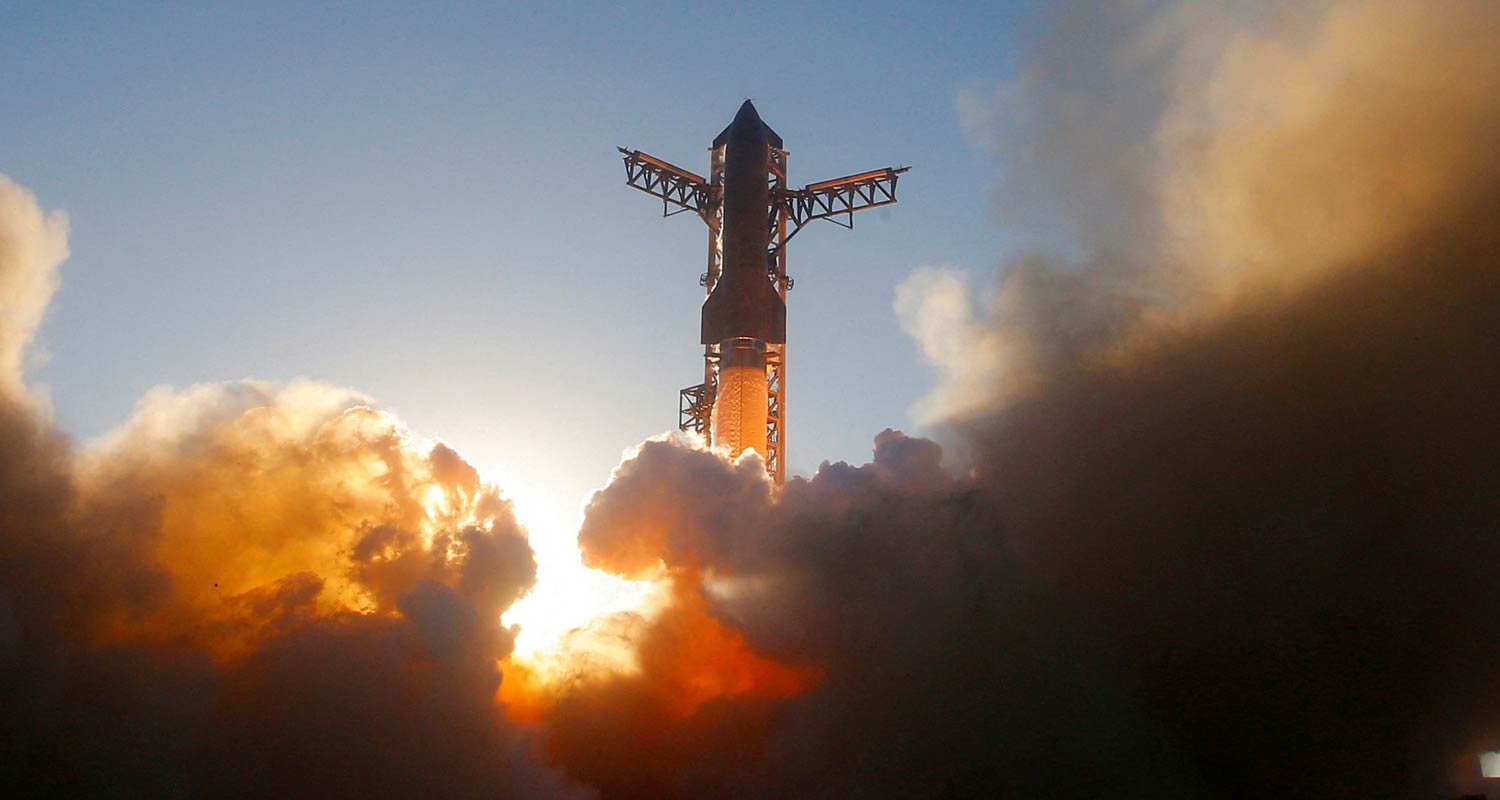
The company’s regulatory disclosure comes during a critical week for the rocket maker, which is preparing to launch a test flight of its next-generation Starship rocket on Thursday.
The board has given Musk control over the company, but has tied much of his compensation to audacious targets of establishing a permanent human colony on Mars and building space data centres with compute capacity powered by the equivalent of 100TW.
SpaceX is aiming to list its shares as early as 12 June, with a roadshow launch targeted for 4 June and the share sale expected as early as 11 June.
The $1.75-trillion valuation target, if achieved, would eclipse Saudi Aramco’s 2019 offering, which set a record for the world’s biggest IPO when it debuted on Riyadh’s exchange at a value of $1.7-trillion.
SpaceX will use a dual-class share structure that gives class-B shareholders 10 votes each, concentrating control with Musk and a handful of other insiders, while class-A shares sold to public investors will carry one vote each, the prospectus showed.
The company has adopted numerous provisions that, taken together, severely limit shareholder rights, forcing legal claims through arbitration, restricting where cases can be filed and protecting Musk from being fired by anyone other than Musk.
Race to commercialise
The race to commercialise space has intensified as private companies led by SpaceX and Blue Origin compete to slash launch costs, deploy satellite networks and secure government contracts.
SpaceX’s revenue is driven by Starlink, the world’s largest satellite operator. The network of about 10 000 satellites offers broadband internet to consumers, governments and enterprise customers.
But the company’s expanding footprint across aviation, maritime and enterprise markets is helping turn capital-intensive space projects into a recurring revenue engine.
Read: Starlink wait set to drag on as Icasa flags legal hurdle
The company is expected to list on the Nasdaq and Nasdaq Texas under the ticker symbol “SPCX”. — Echo Wang and Manya Saini, (c) 2026 Reuters
Get breaking news from TechCentral on WhatsApp. Sign up here.