





The acquisition by Open Access Data Centres (OADC) of seven facilities belonging to NTT Data (previously Dimension Data) is a sign of a broader market trend, reflected both locally and internationally, which will lead to further consolidation in the data centre infrastructure market.
Speaking to TechCentral at a ribbon-cutting event held by OADC parent company Wiocc Group in Johannesburg on Tuesday, Joshua Smythwood, chief strategy and M&A officer at Wiocc, said mergers and acquisitions are a core strategic capability that build stronger platforms, unlock synergies and accelerate ecosystem development.
“The digital infrastructure market is entering a phase of consolidation. Scale matters, integration matters. Our customers and clients are increasingly requiring platforms that can deliver connectivity, data centre solutions and cloud access seamlessly,” said Smythwood. “Fragmentation slows this innovation. Strategic consolidation accelerates it.”
In December 2025, OADC was given the green light by the Competition Commission to acquire seven co-location facilities belonging to NTT Data. These facilities are in Bloemfontein, Cape Town, East London, Bryanston and Parklands in Johannesburg, Gqeberha, and Umhlanga (Durban). NTT Data keeps its Johannesburg 1 facility, managed at group-level by the infrastructure division of its Japanese parent company.
For Wiocc, the move bolsters its end-to-end strategy comprising vertically integrated operations across international subsea cabling, large-scale data centres serving as landing stations, long-haul terrestrial fibre, regional data centres and smaller edge facilities.
Smythwood explained that while the vertical integration does give some cost advantage to Wiocc and its customers, the bigger benefit comes from being able to give customers end-to-end solutions that fragmented services providers specialising in one aspect of the value chain are not able to.
Asset-light model
For NTT, the sale of the assets completes a strategic move towards an “asset light” business model focused on managed services and software-based solutions to enterprise customers. Martin Springer, senior director for infrastructure solutions at NTT Data, said it allows NTT to focus on its core strengths while allowing for a player focused on local infrastructure investment to do the heavy lifting.
“What this represents is an opportunity for somebody who’s going to invest in these data centres more readily than we are. It makes sense for us to pass this over to someone who’s going to be able to operate them clinically with investments. But NTT Data and our business unit are not exiting the co-location market. We are committed to the clients that are in these data centres and to selling co-location solutions,” said Springer.
Read: Wiocc subsidiary OADC cleared to buy NTT data centres in South Africa
The conclusion of the AODC deal with NTT Data comes not long after the Competition Tribunal approved a deal for Stanlib to acquire Africa Data Centres from parent Cassava Technologies. Wiocc’s Smythwood said he expects even more M&A activity to take place across the market.
One factor driving this is the forward-looking nature of infrastructure investments that requires service providers to predict accurately when demand will rise and build capacity ahead of time. According to Smythwood, those who get the timing wrong might find themselves with unused capacity when investors demand to see returns, giving rise to M&A opportunities.
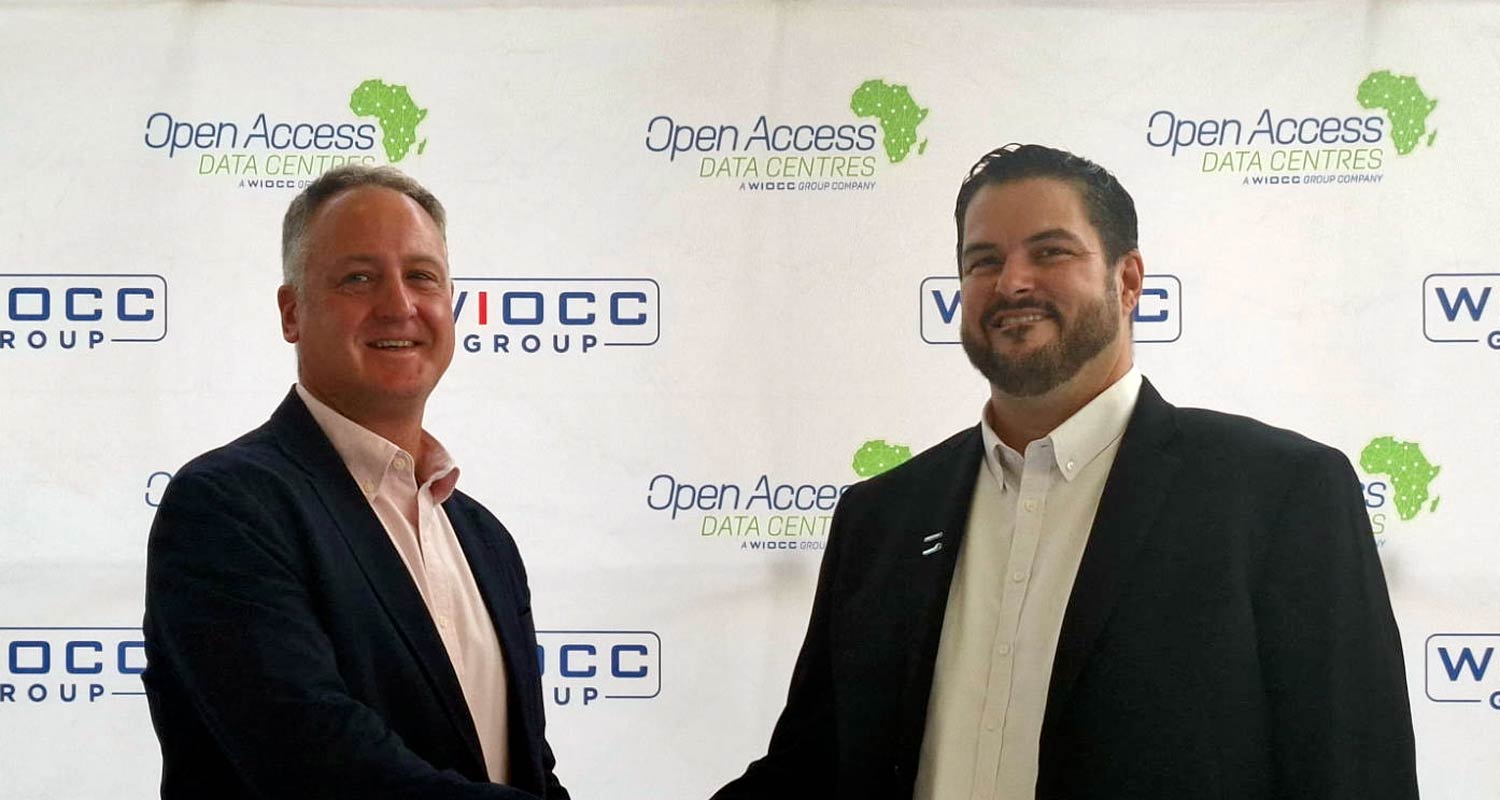
“There is an opportunity to take advantage of a lot of investments that have been made in the past, get them in at fair market value or even below, and then transform them in a way that they weren’t being managed before,” he said.
The AI infrastructure boom requires a similar outlook, since demand for AI compute is expected to rise at some point, even though it is unclear when. Smythwood said emerging markets like South Africa are not seeing the massive investments that US and Asian markets are because the training of AI models is largely contained to those regions. However, as local enterprises and consumers get used to AI tools, their demand for computing resources will require inference capability be moved closer to the “edge”.
Read: Wiocc lands R1.1-billion in debt funding for data centre, fibre expansion
“We will continue expanding our platform, investing strategically and building open, interconnected infrastructure designed for the next generation of digital transformation. Today is not the finish line. It is a milestone of a much larger journey and a creation of a truly integrated, open digital infrastructure platform,” said Smythwood. – © 2026 NewsCentral Media
Get breaking news from TechCentral on WhatsApp. Sign up here.