



Astronomers using South Africa’s Southern African Large Telescope (Salt) near Sutherland in the Northern Cape have solved a cosmic mystery surrounding one of the most extreme stars ever observed.
WOH G64, located in the Large Magellanic Cloud, a satellite galaxy of the Milky Way, is famous for being one of the most luminous, coolest and dustiest red supergiants known. Such stars represent a late evolutionary stage of massive stars before they explode as supernovae.
In recent years, however, WOH G64 behaved in ways that puzzled astronomers. The star faded dramatically, its pulsations weakened and its spectrum changed, becoming dominated by emission from ionised gas rather than the cool molecular features typical of red supergiants. The discovery of a new dust cloud surrounding the star in 2024 added to speculation that it had evolved into a short-lived yellow hypergiant phase – potentially signalling an imminent supernova.
To uncover what was really happening, a research team led by Jacco van Loon of Keele University and Keiichi Ohnaka of Universidad Andrés Bello turned to Salt. Using the telescope’s Robert Stobie Spectrograph, the team collected detailed optical spectra between November 2024 and December 2025.
The observations revealed a decisive clue: molecular absorption bands from titanium oxide – a clear signature of a cool red supergiant atmosphere.
“WOH G64 was claimed to have turned into a yellow hypergiant, which could signal a pre-supernova phase,” said van Loon. “But our Salt spectra show that while a hot companion star is present, the primary star is still a red supergiant – and may never have stopped being one.”
Hot companion
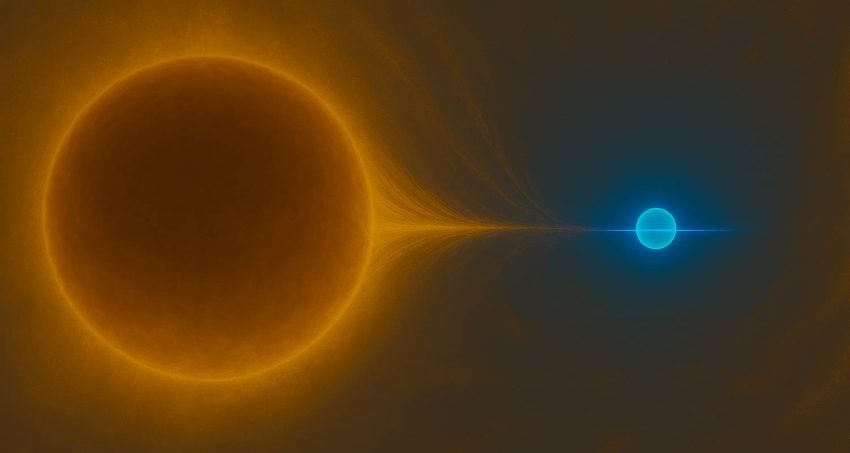
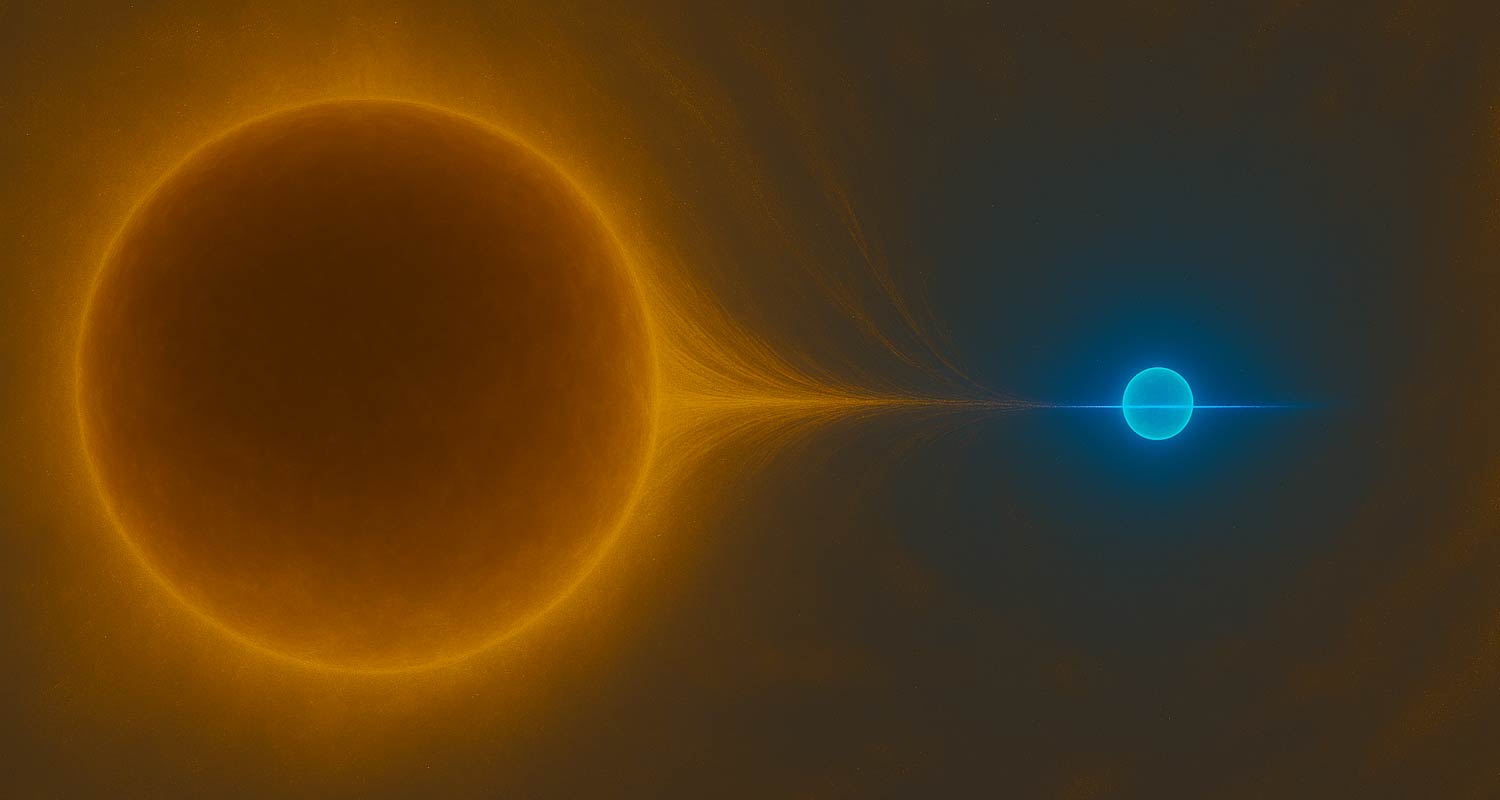
The researchers believe the star’s unusual behaviour is best explained by interaction with a nearby hot companion. As the companion moves closer, its gravity may be stretching the red supergiant’s vast atmosphere, triggering intense mass loss and the formation of dust that temporarily obscured the star from view.
Rather than dying, the team suggests, WOH G64 is enduring a turbulent phase – “a phoenix rising from the ashes”, as van Loon put it.
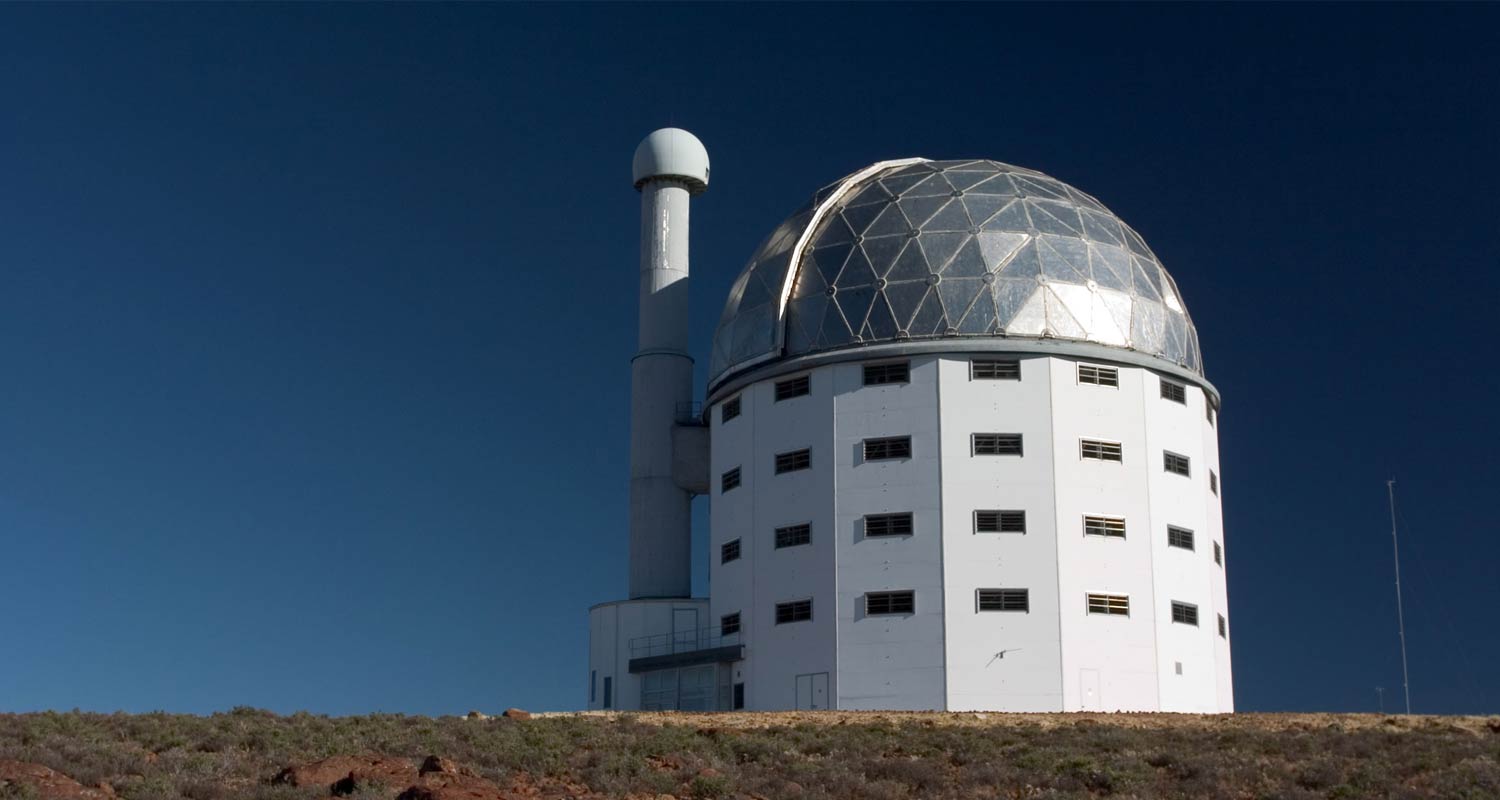
The findings underscore the importance of long-term monitoring using large-aperture telescopes like Salt to understand how massive stars evolve in the final stages before they explode. The research has been accepted for publication in the Monthly Notices of the Royal Astronomical Society. – © 2026 NewsCentral Media
- Top image is an artist’s impression of the WOH G64 system, composed of a red supergiant (at left, in orange) and a smaller hot star (at right, in blue). New observations using Salt suggest that the hot star may be causing the atmosphere of the red supergiant to spread out. Some of it may fuel a disc of gas around the hot star. The image, which is not to scale), was created by Jacco van Loon using Copilot