
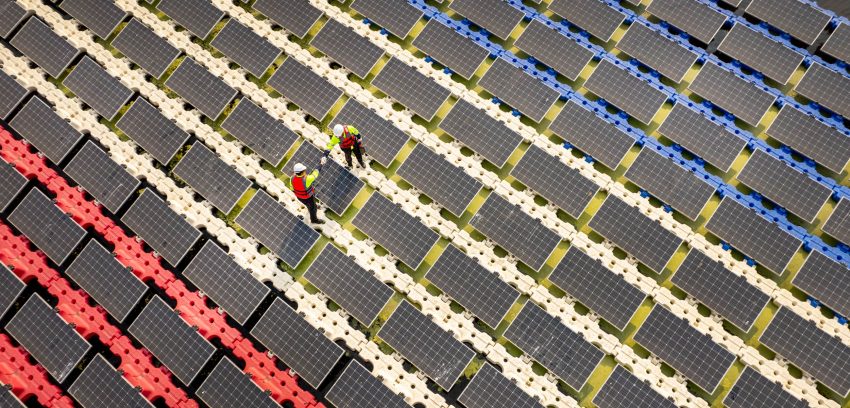
For many years, electricity in mining was treated purely as a cost to be managed and was not considered a strategic lever. But this thinking has changed significantly, with mining companies investing in large-scale renewable energy projects.
The onslaught of Eskom’s aggressive tariff hikes, grid constraints and rising global decarbonisation pressures now means that renewable energy is being embedded in the planning and operations of mines.
Energy security has become a top priority for South Africa’s mining industry. Key discussions at this year’s Mining Indaba centred on how to ensure reliable and uninterrupted access to energy, grid expansion and flexible power systems.
According to Christian Teffo, deputy head of techno economics at the Minerals Council South Africa, mining companies are shifting from small pilot projects to large-scale solar and wind facilities exceeding 100MW. They are also signing long-term power purchase agreements (PPAs) with independent producers and wheeling power across the grid to multiple sites.
He said that based on estimates, there is around 1.5GW of mining renewable energy projects installed out of the estimated 7GW of distributed renewable energy in the country. With energy regulator Nersa having registered about 18GW of renewable energy projects, many more projects are in the pipeline.
“Mining companies are taking new steps to manage their energy needs. Many are creating special teams inside the company to focus on energy and even setting up energy trading desks,” Teffo told TechCentral.
Digital tools
“Some mines are now planning their production schedules so they can use energy when it is most available, especially from sources like solar or wind. They are also using digital tools to keep track of how much energy they use and to control their energy loads more efficiently.”
With renewable energy now part of long-term mine planning, he said energy management has become crucial and is now central to mining strategy.
Teffo said that while there has been significant progress over the past five years, mostly due to government reforms from Operation Vulindlela and changes in energy policy, big challenges remain. These include limits on grid capacity in important mining areas and prolonged timelines for securing grid connections.
Read: How liberalisation is rewiring South Africa’s power sector
Other concerns are that tariff rules are sometimes confusing and municipalities can make wheeling difficult due to their lack of experience. Upgrades to transmission lines are also “very expensive”.
But by adopting renewables, mines are able to secure lower and steadier electricity rates, minimise vulnerability to sudden tariff increases, safeguard marginal sites and smelters, and enhance their position in international cost rankings.
“This is especially crucial for energy-intensive industries such as gold, chrome and platinum. High electricity prices could force many operations to shut down if they lack access to renewable energy. Therefore, renewables are about much more than ESG (environmental, social and governance); they’re essential for survival and long-term viability.”
Teffo said many renewable energy projects demonstrate payback periods ranging from five to eight years. However, this may vary depending on electricity tariffs and project financing structures. Some mines leverage third-party financing arrangements, such as PPAs, to ease capital requirements and accelerate the transition to green energy.
Renewable energy platform and integrated electricity integrator Lyra Energy will soon wheel power directly to industrial off-takers, including mines, across the country after being awarded a Nersa trading licence last year.
Liesel Kassier, Lyra Energy senior business developer, told TechCentral that renewables are changing mines from passive electricity buyers into active energy managers.
Behind-the-meter solar and storage – combined with wheeled renewables – allow mines to reduce exposure to tariff hikes, improve cost predictability and cut scope 2 emissions, which are indirect greenhouse gas emissions from the generation of purchased energy consumed by a company.
Operational shifts help smooth peak demand, support uptime and reduce reliance on emergency measures.
She said that as South Africa progresses towards a more tradable market through the development of the South African Wholesale Energy Market (Sawem), which will be launched in April, mines that can actively manage load and contract intelligently are best positioned to capture value and reduce risk.
Control
The liberalisation of the energy market has fundamentally expanded mining houses’ options from “one supply model” to multiple procurement and risk pathways, she said.
“The biggest change is control: mines can tailor tenor, volume shape, risk allocation and reliability mechanisms to their actual load profile rather than accepting a standard product. As Sawem develops, this becomes even more powerful – because markets create more price signals and more tradable products, and mines can use contracting and portfolio design to actively manage cost, carbon and operational exposure,” Kassier said.
Read: Billions flow into renewables as South Africa races to fix its grid
She said that buying power (a service) rather than plants (assets) typically lowers risk and preserves capital. This helps mines avoid construction, performance and technology obsolescence risk. It also keeps capex for core mining needs and transfers availability and output risk to specialist developers or operators – while still locking in long-term price and renewable attributes.
Another advantage of going green is that fixed-tenor PPAs lock in a known price or price path for a defined period, stabilising energy costs instead of dealing with volatile utility or municipal tariffs.
One of the most recent mines to sign a PPA for the procurement of wheeled renewable energy is Sibanye-Stillwater, with Etana Energy.

Under the 10-year agreement inked earlier this month, Etana Energy will supply 600GWh per year of renewable electricity, equivalent to approximately 220MW, from solar and wind projects.
The wheeled electricity will be delivered to the mine using the national electricity transmission network.
Etana said in a statement that once operational late next year, the renewable electricity is expected to reduce greenhouse gas emissions by approximately 648 000 tCO₂e per annum.
With energy emerging as a central topic at the Mining Indaba, Teffo said the mining industry has agreed on actionable and practical solutions rather than theoretical approaches.
There is clear consensus that there is a pressing need to expand and modernise the grid to support new and existing energy demands. And as renewable penetration increases, the next major area of development will be storage solutions and flexible power systems to maintain stability and efficiency.
The Minerals Council’s priorities are ensuring fair and equitable access to the electricity grid for all participants; advocating for cost-reflective electricity tariffs to promote efficiency and sustainability; supporting the development of a competitive electricity market; and providing targeted support for energy-intensive sectors within the industry.
Read: Big solar and energy storage projects going live across South Africa
“There was notable alignment between industry stakeholders and the government on the need for ongoing reforms. The prevailing message emphasised that, while South Africa has made tangible progress, the speed of implementation and the ability to deliver reforms now represent the greatest challenges,” said Teffo. – © 2026 NewsCentral Media
Get breaking news from TechCentral on WhatsApp. Sign up here.