


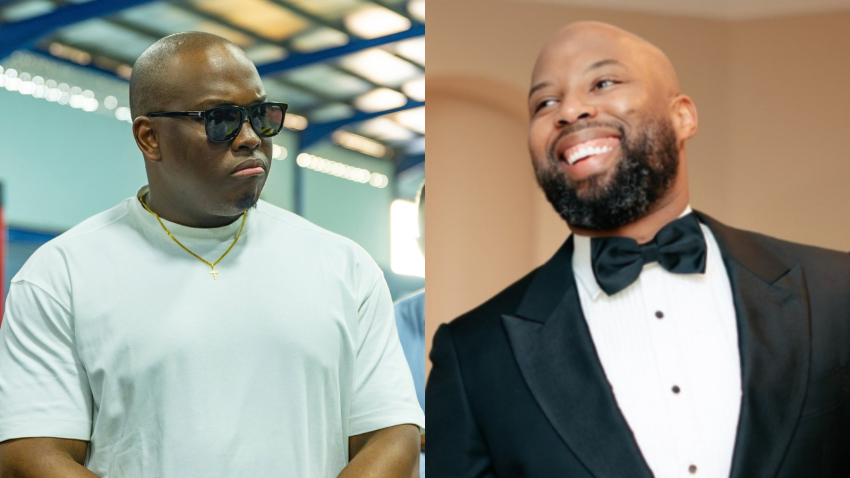
Businessman, author and motivational speaker Vusi Thembekwayo has suffered a legal setback after the Pretoria High Court dismissed his application seeking to stop media personality Sizwe Dhlomo from publishing what he perceived to be defamatory statements about him.
The judgment, delivered on Friday, also rejected Thembekwayo’s request for an order compelling Dhlomo to remove previous social media posts, issue a written apology and retract comments he had made about him.
In papers before the court, Thembekwayo sought a final interdict restraining Dhlomo from posting, disseminating or publishing what he described as false and defamatory statements about him on any platform, including social media. He further sought an order directing Dhlomo to remove all “defamatory” publications within seven days of the order and to provide an unconditional written apology and retraction.
Thembekwayo told the court that he had spent more than two decades building a reputation as a business leader, keynote speaker, mentor and author. He said he commands an online following of approximately five million people and that his reputation is closely linked to his business interests, mentorship programmes and the livelihoods of between 20 and 50 employees.
According to court papers, Dhlomo made a series of posts between 2020 and 2024 in which he referred to Thembekwayo as a “punk”, a “fraud”, “the worst kind of opportunist” and claimed that “everything about him is a scam”. Dhlomo also alleged that Thembekwayo had scammed people, copied content from Radio 702 and stated that he believed Thembekwayo was assaulting his wife.
Thembekwayo argued that the statements were false and had caused serious damage to his reputation, dignity and business interests. He also complained that Dhlomo continued making the statements even after receiving a letter of demand from his attorneys in September 2024 calling for a retraction, apology and undertaking not to repeat the allegations.

Dhlomo did not deny publishing the statements. Instead, he argued that many of the comments amounted to opinions on matters of public interest and were therefore not unlawful. He also contended that some of the allegations related to issues already in the public domain, including criminal assault charges that had previously been brought against Thembekwayo by his former wife before the case was later thrown out of court.
The radio presenter further argued that the application was procedurally flawed, saying claims involving defamation, apologies and retractions should ordinarily be pursued through action proceedings rather than motion proceedings.
In her judgment seen by Africa Daily, Acting Judge M Petersen agreed that the matter had been brought through the wrong legal process.
The court relied on previous Supreme Court of Appeal rulings which held that remedies such as apologies and retractions are compensatory in nature and generally require oral evidence to be tested during a trial.
The judge found that before a court could order the removal of allegedly defamatory posts or prohibit future publications, it would first need to determine whether the statements were in fact defamatory. Such findings, the court said, are generally unsuitable for determination solely on affidavit evidence where disputes of fact exist.
The court also rejected Thembekwayo’s request for an interdict, finding that many of the statements had already been published and were in the public domain.
“A prohibitory interdict cannot undo what has already occurred,” the judgment noted, adding that preventing future publication of material already in circulation would amount to an impermissible form of prior restraint.
Importantly, the court did not rule on whether Dhlomo’s allegations were true or false, nor did it determine the merits of the various disputes raised by either party. Instead, the judge said those issues would be better ventilated in a different forum.
The court ultimately dismissed the application with costs.
While the ruling marks a victory for Dhlomo, it does not amount to a finding that his statements were justified. Instead, the judgment centred on the appropriateness of the legal remedy sought by Thembekwayo and the procedure he used to pursue it.
The decision leaves the door open for Thembekwayo to pursue the dispute through action proceedings should he choose to continue the legal battle.
When contacted for comment Dhlomo said he was unable to comment because he was not aware of the judgement.
Thembekwayou had not responded to our questions at the time of publication.