
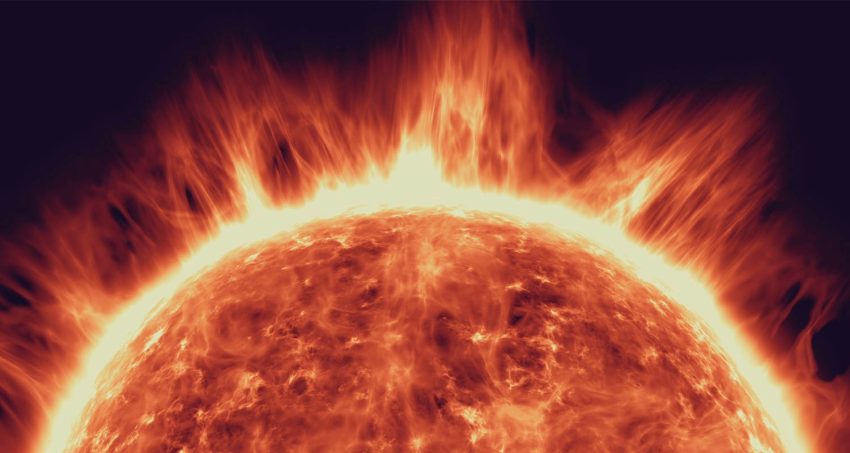
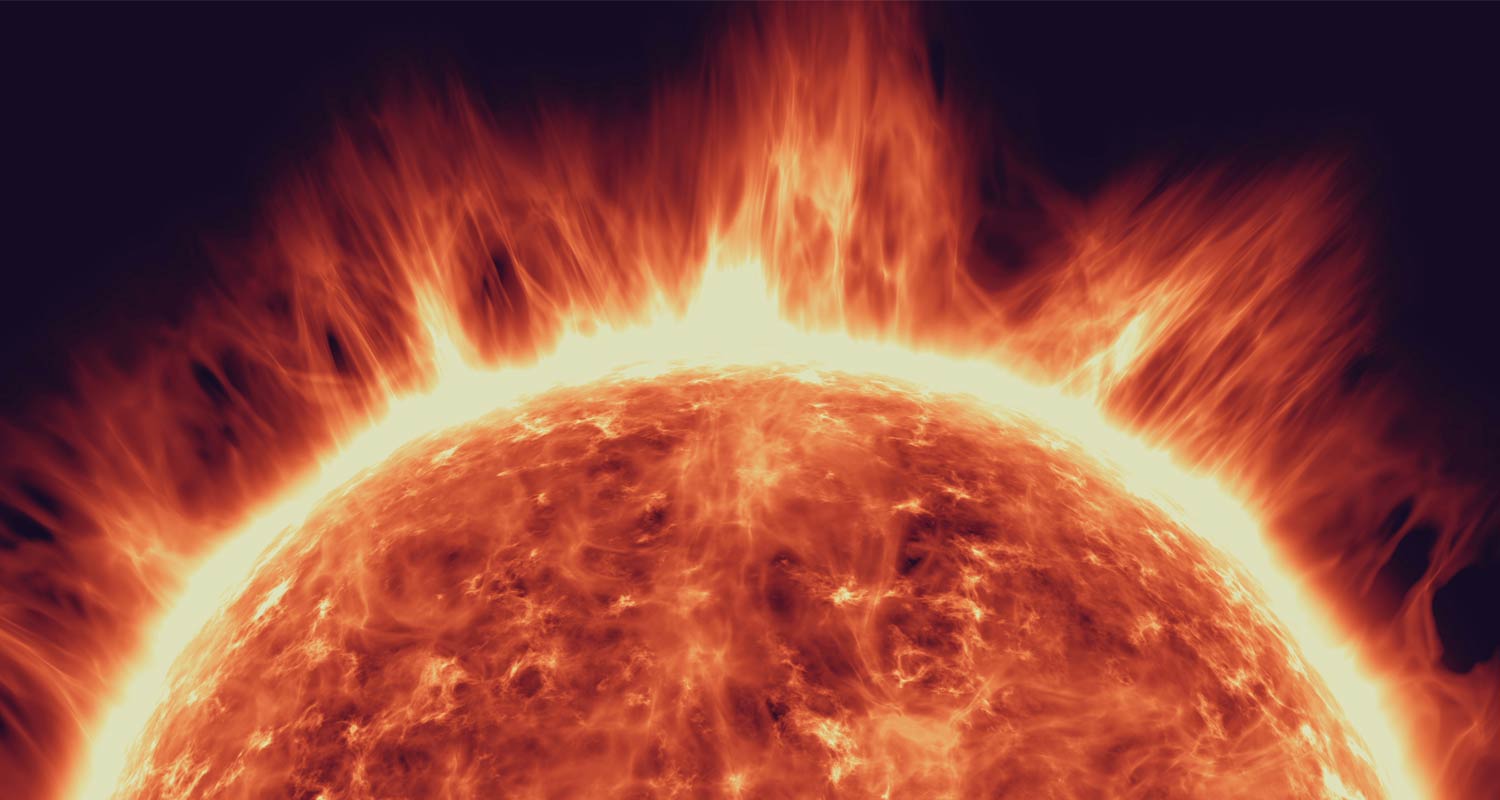
The South African National Space Agency (Sansa) has warned that geomagnetic storm activity is expected to intensify over the next 24 hours following a powerful solar eruption that sent a cloud of charged plasma towards Earth.
According to Sansa’s Space Weather Centre, the disturbance was triggered by a long-duration X1.9-class solar flare that erupted from the sun on Sunday evening, followed by an Earth-directed coronal mass ejection (CME). The CME is expected to reach Earth from the early hours of Wednesday, where it will interact with the planet’s magnetic field.
Sansa said the resulting geomagnetic storm could reach G4 (severe) levels, depending on how strongly the solar plasma couples with Earth’s magnetosphere.
Solar flares are classified according to their intensity, with X-class flares being the most powerful. While the initial flare caused high-frequency radio disruptions over parts of the Pacific, Africa was largely unaffected as the event occurred during nighttime, outside the flare’s direct impact zone.
The greater concern now is the arrival of the CME itself. Geomagnetic storms are ranked on a five-point scale, from G1 (minor) to G5 (extreme). Sansa said conditions are expected to range from G1 to G2, with G3 (strong) storms likely and G4 (severe) conditions possible.
Although geomagnetic storms are not typically visible to the public, they can have significant impacts on technological systems. Satellite navigation, radiocommunication and electricity networks are particularly vulnerable, while industries such as aviation and drone operations may experience disruptions due to degraded navigation accuracy.
K-index
Sansa advised operators of critical systems to monitor the K-index, a global measure of geomagnetic activity that indicates how disturbed Earth’s magnetic field has become. The agency operates a local K-index measurement station in Hermanus, which provides real-time data for the region.
The agency monitors space weather around the clock from its Space Weather Centre in Hermanus, using a network of ground-based instruments across Africa, the Southern Ocean and Antarctica. Sansa also collaborates with international space weather centres and is accredited by the International Civil Aviation Organisation as a regional space weather monitoring centre.
Read: South Africa’s giant SKA telescope clears major technical hurdle
Sansa said it will continue to provide updates as the geomagnetic storm develops. – © 2026 NewsCentral Media
Get breaking news from TechCentral on WhatsApp. Sign up here.