



For two consecutive days, viewers trying to follow live coverage of the Vusimuzi “Cat” Matlala criminal trial at the Johannesburg High Court struggled to see or hear the proceedings on SABC’s broadcast.
On 2 September 2026, SABC’s coverage of the trial was disrupted to the point that little of the day’s proceedings reached viewers at all.
The following day, 3 September, coverage resumed but was marred by persistent picture quality problems and audio that cut in and out throughout the broadcast at points making it impossible to hear the judge.
This publication watched the 3 September broadcast directly and observed the same problems being described in real time by viewers watching alongside it.
In the live YouTube chat accompanying the stream, comments came in steadily complaining about the sound and picture, one viewer wrote that the sound was “crap”, another one complained that the broadcast amounted to a “south african broken camera.”


Another viewer asked SABC to fix their camera.
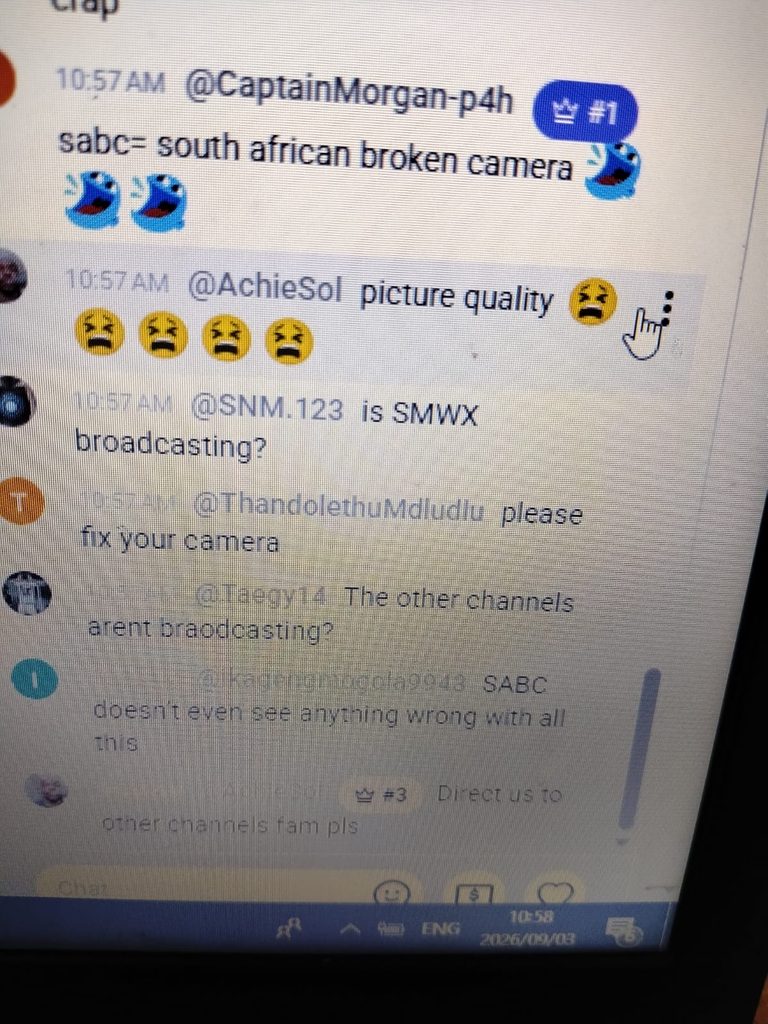
One comment summed up a broader frustration, suggesting the public broadcaster does not “take us serious.”
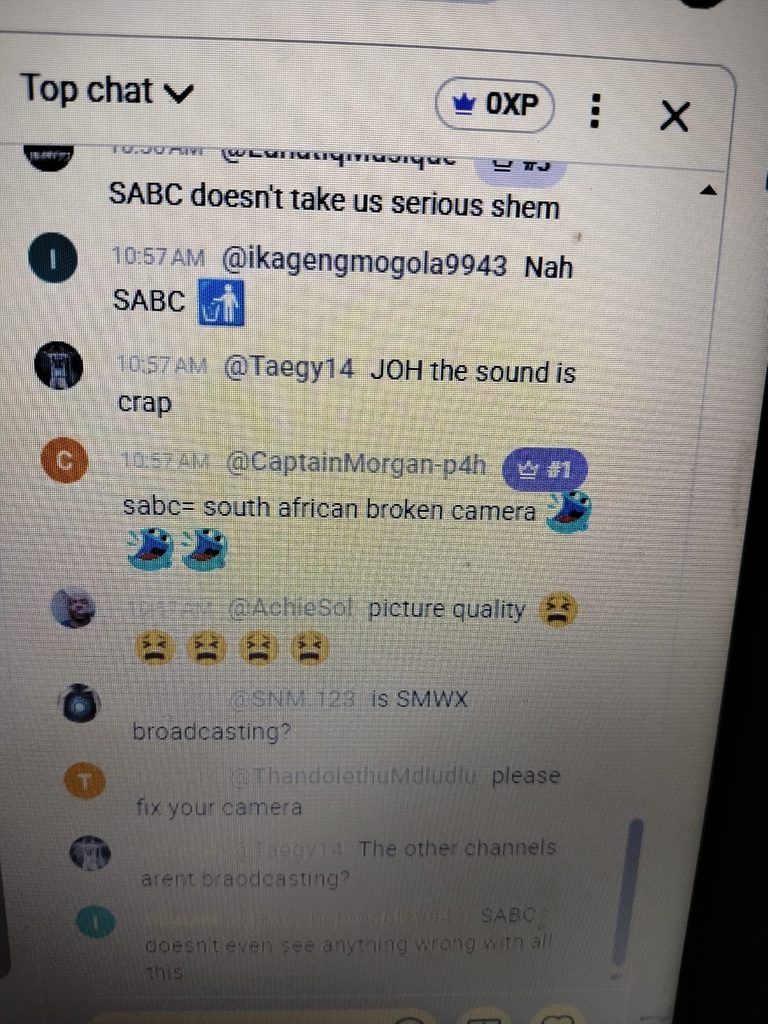
These were not isolated complaints from a single dissatisfied viewer. Across the space of a few minutes, multiple different viewers raised the same two problems independently, unusable audio and degraded picture quality, on a broadcast covering a trial of significant public interest.
This publication wrote to SABC asking it to confirm the extent of the disruption on both days, explain what caused it, and clarify whether the broadcast signal is SABC’s own equipment or a feed shared with or provided by the Johannesburg High Court’s own audio-visual infrastructure.
Africa Daily also asked whether SABC had received viewer complaints, what steps it had taken or planned to take to resolve the issue before further hearings, and whether it considered the quality of its coverage to have met the standard the public should expect from a broadcaster covering live court proceedings of this significance.
Given that parts of the proceedings were inaudible to viewers, this publication asked whether SABC intended to make that missing content available in any other way.
This is not a request for comment on a contested allegation requiring internal deliberation. Every question put to SABC was a request to confirm or explain something SABC itself would already know, whether its own broadcast failed, why, and what it intends to do about it.
A national public broadcaster’s inability or unwillingness to answer straightforward operational questions about its own coverage, raises its own question about how seriously technical failures affecting public access to a high-profile trial are being treated internally.
The Matlala trial has drawn sustained public attention, and SABC’s coverage is, for many South Africans without access to a courtroom seat, the only way to follow proceedings as they happen.
Two days of degraded or largely absent coverage is not a minor inconvenience, for viewers who could not hear the judge, it was a direct barrier to following a criminal trial of public importance in real time.
At the time of publication SABC had not responded.