
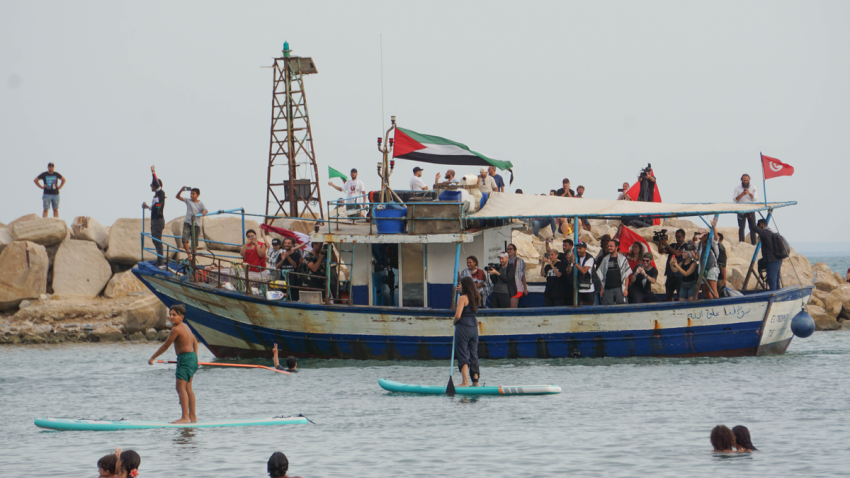
South Africa has strongly condemned the seizure of the Gaza-bound Global Sumud Flotilla, saying the reported detention of its citizens in international waters amounts to a serious violation of international law and human rights. The Department of International Relations and Cooperation said it was responding with “grave concern” after reports that Israeli forces intercepted the civilian aid vessel on Monday, 18 May.
Among those on board was South African humanitarian ambassador Faizel Moosa, who was travelling with the flotilla as it attempted to deliver aid to Palestinians in Gaza. Pretoria said the vessel was part of a peaceful civilian-led mission intended to highlight the severe humanitarian crisis in Gaza and bring relief to people living under what it described as occupation and genocide.
South Africa demands release of those detained
Dirco said the safety, dignity and physical well-being of everyone on board, including South African citizens, were of paramount importance. It warned that the forceful detention of unarmed participants on a humanitarian mission in international waters could not be treated lightly.
The department said it would engage relevant stakeholders and organisations linked to the flotilla in an effort to secure the safe and immediate release of those affected. It also said families would be kept informed as the situation develops.
That response places the matter firmly in the diplomatic arena. South Africa is not only protesting the interception itself, but also signalling that it sees the incident as part of a wider legal and humanitarian crisis.
Humanitarian mission becomes diplomatic flashpoint
The Global Sumud Flotilla is the latest in a series of activist attempts to challenge Israel’s blockade on Gaza. Another convoy was intercepted last month. This time, the presence of South African nationals has drawn Pretoria directly into the matter.
Dirco called on the international community and all relevant parties to uphold international law and ensure the safe and unimpeded passage of humanitarian missions. That appeal reflects South Africa’s long-running position on Gaza and its insistence that humanitarian access cannot be criminalised or blocked by force.
For South Africa, the issue now goes beyond one intercepted vessel. It is about whether aid missions can operate safely, whether civilians can act in solidarity without detention, and whether international law still has force when humanitarian crises deepen.
Pretoria’s message is clear: the seizure must be condemned, the rights of those detained must be protected, and South African nationals must be released without delay.