


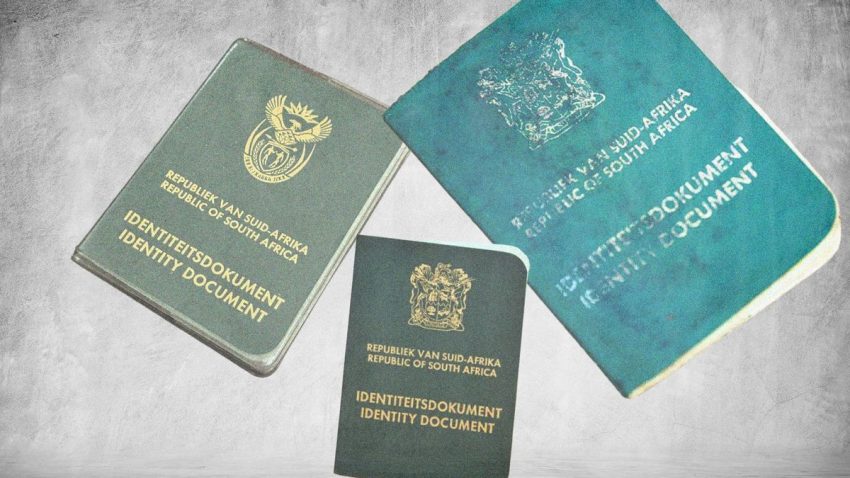
President Cyril Ramaphosa announced on Sunday evening that South Africa will progressively phase out green ID books. The decision forms part of a broader government plan to strengthen identity management and address concerns over illegal immigration.
Speaking from the Union Buildings in Tshwane, Ramaphosa tied the move to recent public protests and rising tensions around foreign nationals. He stressed that the root causes of many challenges lie in slow economic growth and unemployment, not immigration itself.
Ramaphosa announces phase-out of green ID books
In his national address, the President outlined plans to replace the current system with modern digital tools. “We are establishing an Intelligent Population Register that contains biometric data for every person in the country, laying the foundation for a Digital ID,” he said.
“At the same time, we will progressively discontinue the green ID books, which have enabled identity theft by undocumented immigrants and criminal syndicates,”
Ramaphosa added.
The Department of Home Affairs will now set a clear date after which green ID books will no longer be recognised. This step aims to close loopholes that have allowed fraud and strengthen overall identity verification across government services.
New rules to stop misuse of traffic registration numbers
Ramaphosa also moved to end the abuse of traffic registration numbers. Foreign nationals sometimes use these numbers to register or buy vehicles, but the system has been exploited as a form of identification.
“The Department of Transport will issue new regulations to align with the identification laws of our country within the next three months,” the President stated.
These changes will tighten alignment between transport and home affairs systems and reduce opportunities for misuse.
Comprehensive migration reforms and enforcement
The announcements form part of a Comprehensive Approach for Migration Management adopted by Cabinet. Key measures include dedicated courts to speed up deportations of undocumented migrants and the phased recruitment of 10,000 labour inspectors by the Department of Employment and Labour.
The Border Management Authority intercepted and stopped over 450,000 people attempting to enter South Africa illegally in the past year. Government will also increase penalties, including possible imprisonment, for employers who hire undocumented foreign nationals in violation of the law.
Ramaphosa rejects xenophobia and calls for state-led enforcement
Ramaphosa made clear that only authorised government officials may enforce immigration laws. He warned against vigilantism and stressed that citizens cannot demand documents from foreign nationals on the street.
“We know that South Africans are not xenophobic as there is no space for xenophobia, racism, sexism, Afrophobia or any other forms of intolerance in South Africa,” he said.
The President urged South Africans to focus on economic solutions. Faster growth, greater investment, infrastructure development and job creation remain the priority to address unemployment and poverty, he noted.


Hey, I’m Spencer, your go-to journalist and video wizard at Newsroomza. From local drama to world-shaking stuff, I mix in some cultural flair and throw in my cheeky takes on sports – because who says news can’t be a laugh?