


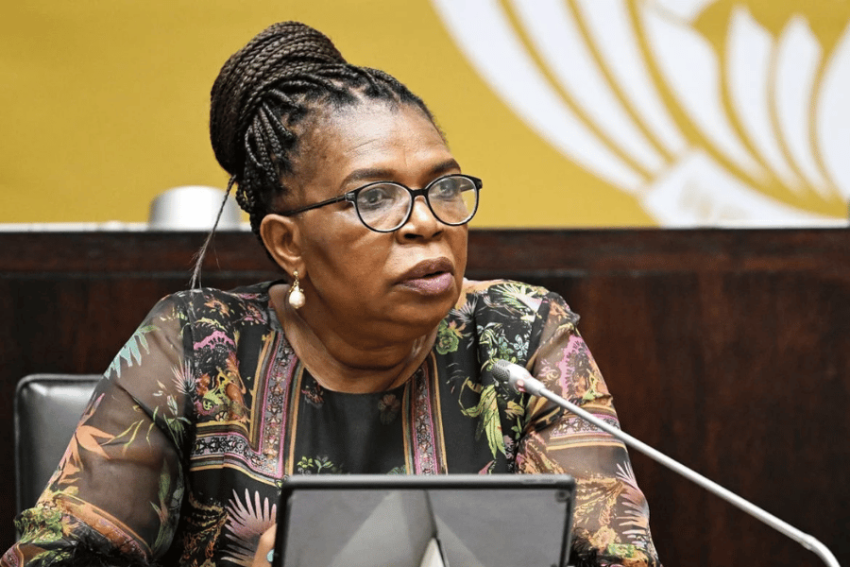
Facing mounting complaints over long queues and confusion surrounding grant reviews, Social Development Minister Dina Pule unveiled a turnaround plan for the embattled South African Social Security Agency (SASSA), aiming to improve service delivery while tightening oversight of the country’s social grant system.
The plan includes reviewing more than 350 000 grants this financial year, recruiting over 1000 frontline workers, expanding digital services and strengthening anti-fraud measures.
Delivering her first media briefing since President Cyril Ramaphosa reappointed her as Minister of Social Development, on Tuesday, Pule said she had accepted the position “with humility” and would focus on improving service delivery rather than dwelling on criticism surrounding her return.
“I accepted it with humility and I’m going to do my job to the best of my ability,” Pule said.
“Criticism comes with the work that you do. When people criticise you, they want you to improve. Therefore, I’m willing to do that.”
Pule explained that she was still receiving detailed briefings from senior management across the department and had deliberately chosen to focus her first public engagement on Sassa because of the growing concerns raised by grant beneficiaries.
“So far I have been taking briefings from senior management on many pertinent issues and I appreciate that I have officials who have been there for years and have experience in this work. I am still completing those briefings, which is why today we only spoke about SASSA,” she said.
“I have received so many questions from older persons, young people and communities across the country. We thought we should start there.”
“I will use this position to restore the aspirations, confidence and dignity to all our social grant beneficiaries and communities who are facing long queues and frustrations in most of our offices.”
Addressing growing concerns around SASSA’s grant review process, Pule defended the programme, saying it was a legal requirement aimed at ensuring beneficiaries continued to qualify for social assistance while protecting public funds from fraud and abuse.
She said the reviews were conducted in line with the Social Assistance Act and required beneficiaries to report any material changes to their financial or personal circumstances.
“Social grant reviews help ensure that the right grant is paid to the right person, at the right time,” Pule said.
“They also protect the system against fraud, abuse and incorrect payments.”
According to the department, SASSA completed about 150 000 grant reviews during the previous financial year, while approximately 160 000 beneficiaries failed to present themselves for review.
During the 2026/27 financial year, the agency intends reviewing more than 350 000 grants, with projected savings of about R1.5 billion that government says could be redirected to other priorities.
This year marks 20 years since the establishment of SASSA, which currently administers about 19 million permanent social grants every month.
Pule said the agency had grown from supporting just over 10 million beneficiaries when it was established in 2006, making it one of the largest social protection systems on the African continent.
Pule also highlighted measures aimed at strengthening the integrity of the grant system, including biometric verification technology integrated with the Department of Home Affairs and the continued rollout of electronic life certification for beneficiaries.
She said the technology had already strengthened identity verification, reduced identity theft and duplicate claims, and contributed to an increase in arrests linked to grant fraud.
The electronic life certification programme, she added, would particularly benefit older persons, people living with disabilities and beneficiaries in remote communities by allowing them to verify their continued eligibility without repeatedly travelling to SASSA offices.
To improve service delivery, Pule spoke on a series of interventions designed to reduce waiting times and improve the customer experience.
These include the recruitment of more than 1 000 contract workers across the country to assist with grant applications, reviews and beneficiary enquiries, the expansion of digital services through SASSA’s online platforms, WhatsApp and mobile application, as well as extending operating hours at selected offices experiencing high demand.
The department also intends strengthening its home visit programme for beneficiaries over the age of 75 and those who are frail or unable to travel to SASSA offices.
“We are committing to leverage the digital front to make services more convenient, more secure and more accessible,” Pule said.
Responding to questions about criticism surrounding her return to Cabinet, Pule declined to revisit past controversies, saying her focus remained firmly on delivering results.
“I usually don’t want to dwell much on the past,” she said.
“There is always a saying about a bakkie parked under a tree. Dogs go and sleep under it. Once it starts moving, people notice it. When people criticise you, they want you to improve. Therefore, I’m willing to do that.”
Pule said she would begin visiting SASSA offices across the country in the coming days to monitor implementation of the new interventions and engage directly with communities.
“As the Minister of Social Development, I want to assure every eligible beneficiary that government remains committed to safeguarding social grants and continuously improving the systems through which they are delivered,” she said.
“These interventions will assist in restoring dignity and respect to the people who consider social assistance as their lifeline, and achieving that remains non-negotiable.”
Beyond SASSA, Pule outlined several governance priorities she intends implementing in the coming months as she settles into office.
These include facilitating the appointment of a permanent Director-General for the department, appointing the Executive Director of the Inspectorate for Social Assistance, finalising the National Development Agency board and chief executive, appointing SASSA’s Chief Information Officer and filling outstanding regional executive manager vacancies.
She said strengthening governance, internal controls, accountability, transparency and consequence management would be central to rebuilding confidence in the department.
Pule also committed to improving relationships with stakeholders across the social development sector, including organisations involved in child protection, substance abuse interventions, HIV programmes and other community support initiatives.
She further emphasised the importance of communication, saying the department would engage more regularly with the media and the public to improve transparency and responsiveness.
“I want us to communicate with you from time to time so that we become transparent, remain accessible and are responsive to the service delivery that we have to provide to vulnerable people,” she said.