


Plans to block cellphone signals inside South African prisons remain delayed as the Department of Correctional Services turns to other technologies.
Correctional Services Minister Pieter Groenewald’s office said signal jamming had been considered as part of efforts to stop inmates from communicating with criminal networks outside prison walls.
However, the department said legislative and regulatory requirements, high costs and the possible impact on surrounding communities had limited its viability.
The response comes about a year after Cape Town Mayor Geordin Hill-Lewis called for cellphone-blocking technology at Pollsmoor Prison.
Hill-Lewis raised concerns that extortion and other crimes were allegedly being coordinated from inside correctional facilities.
Detection technology already operating
The department confirmed that signal detection technology was already installed at some prisons.
Unlike jamming equipment, detection systems can help officials identify unlawful cellphone activity without disrupting legitimate signals in nearby communities.
DCS is also introducing two-way radios for correctional officials through a phased rollout.
Under the plan, staff members will be required to leave their personal cellphones at designated access points before entering secure areas.
The department said the measures formed part of a wider strategy to create cellphone-free correctional facilities.
More than 37,500 phones confiscated
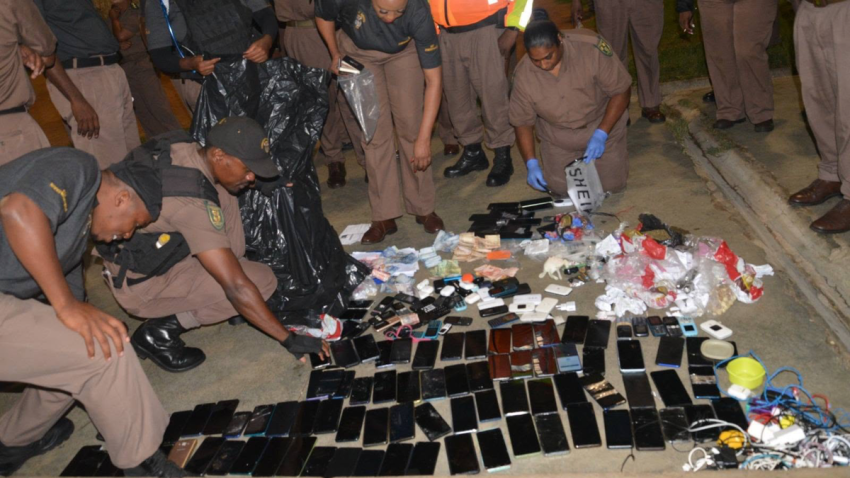
Groenewald recently announced that prison raids had increased from 466 to 1,406.
Those operations resulted in the confiscation of more than 37,500 cellphones and other prohibited items.
The minister’s office said the seizures reflected intensified security operations rather than a failure to control prisons.
It also encouraged communities to report suspected cellphone activity linked to correctional facilities.
Officials believe information from the public could help identify and disrupt illegal communication networks.
Criminal communication remains a concern
Calls for stronger controls intensified after reports that people outside Pollsmoor had allegedly received threats from incarcerated crime figures.
Hill-Lewis previously offered the City of Cape Town’s assistance with intelligence-sharing and technical support.
The mayor also called for more raids to remove cellphones and other contraband.
For now, signal jamming remains under consideration rather than approved for widespread use.
DCS is instead relying on searches, detection systems, staff cellphone restrictions and two-way radios to reduce illegal communication from inside prisons.