



South African astronomers have detected the most distant and powerful natural radio laser ever observed. The signal comes from a galaxy more than eight billion light years away and was detected using the MeerKAT radio telescope in the Northern Cape.
The discovery, led by the University of Pretoria, sets a new record in radio astronomy and allows scientists to study how galaxies collided and evolved when the universe was less than half its current age.
The object is known as a hydroxyl megamaser, a rare burst of strong radio energy produced when two gas rich galaxies collide. During these collisions, oxygen and hydrogen molecules are squeezed together, causing them to release intense radio waves. The process works like a laser, but produces radio signals instead of visible light.
In this case, the signal was so strong that researchers classified it as a “gigamaser”. A gigamaser is at least 10 times brighter than a megamaser, meaning it releases far more radio energy and can be detected across much greater distances.
The radio waves detected on Earth were emitted when the universe was about 5.8 billion years old, making this both the most distant and most luminous hydroxyl maser system ever found.
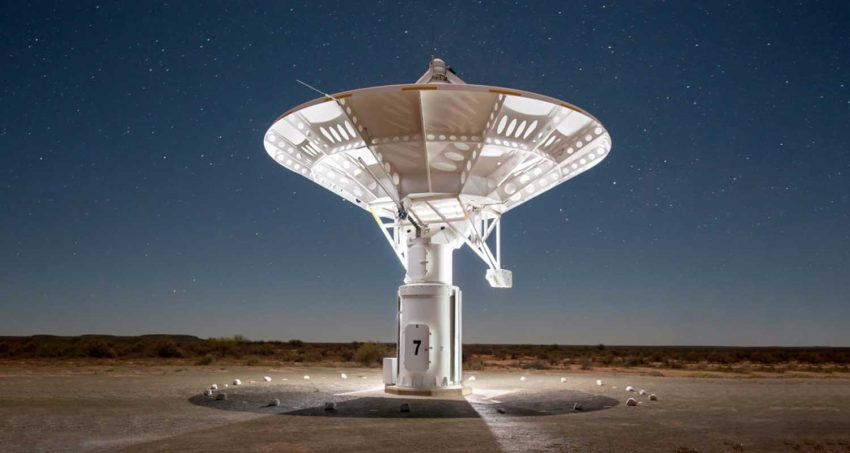
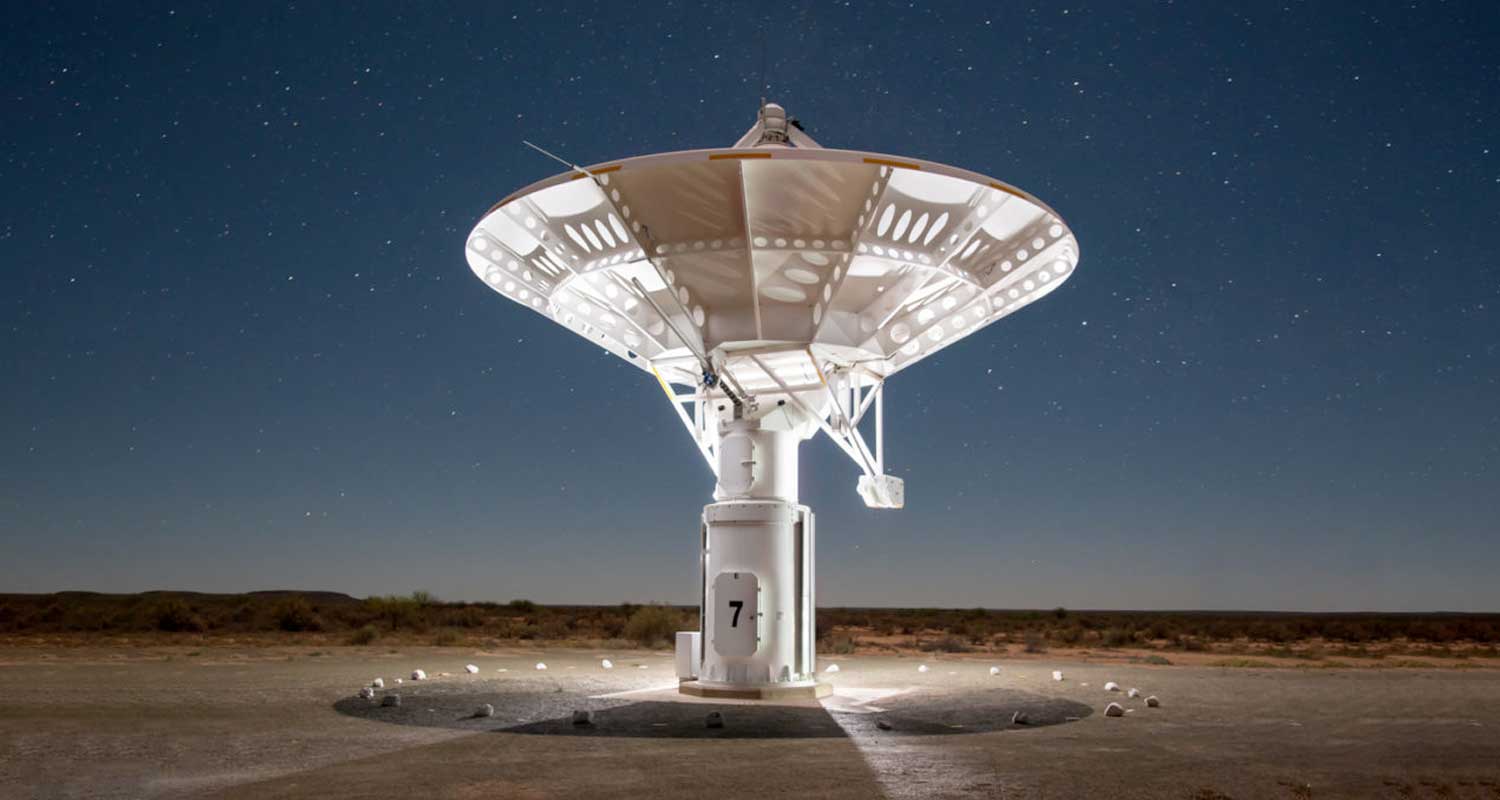
Detecting a signal this faint from such a distance required two factors working together. MeerKAT, a network of 64 radio dishes in the Karoo, is designed to pick up extremely weak radio signals. In addition, a separate galaxy positioned between Earth and the source acted as a natural magnifier. Its mass bent and boosted the radio waves as they travelled towards Earth, strengthening the signal before it reached MeerKAT. This effect is known as gravitational lensing.
Halfway across the universe
“We’re seeing the radio equivalent of a laser halfway across the universe,” said Thato Manamela, lead author of the study and a postdoctoral researcher at the University of Pretoria. “The signal was further strengthened by a perfectly aligned foreground galaxy.”
Hydroxyl megamasers are rare and are linked to the most violent galactic mergers. These events drive rapid star formation and feed the supermassive black holes at the centres of galaxies. Finding them at extreme distances allows scientists to study how these processes unfolded during an earlier period of the universe, when galaxy collisions were more common.
The research team built purpose-built software pipelines capable of handling terabytes of raw data, developing this computational infrastructure alongside the astronomical work itself. Systematic searches using MeerKAT are expected to uncover many more of these objects over time.
Read: South African telescope solves mystery of ‘doomed’ giant star
The work feeds directly into preparations for the Square Kilometre Array, the next-generation radio telescope that South Africa is co-hosting with Australia. MeerKAT serves as a key test platform for the technologies and data systems required for that project. – © 2026 NewsCentral Media
Get breaking news from TechCentral on WhatsApp. Sign up here.