


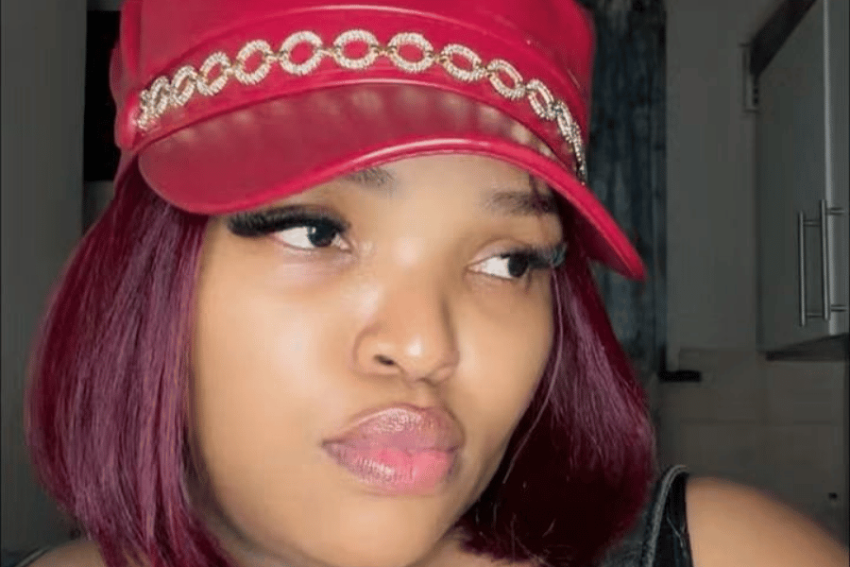
Maskandi personality Ngcengani Angie ‘Mashudula’ Shezi has apologised to Maskandi artist Khuzani Mpungose over a social media post she wrote about him five years ago.
The original comment dates back to January 2021 and resurfaced this week, dragging back into public view a spat that had largely been left in the past.

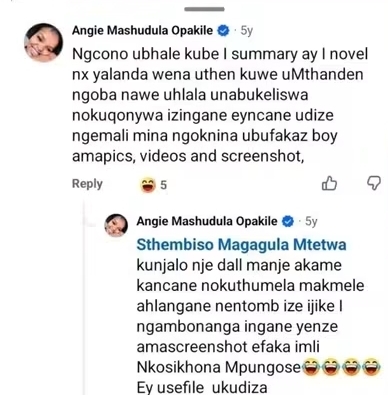
At the time, Mashudula wrote: “Rather write a summary, not a novel. Why do you keep going on about it? What did Mthandeni ever do to you? You sit there being fed nonsense, and you chase after young girls, luring them with money. I have the proof, pictures, videos and screenshots.”
In a follow-up comment she added: “That’s exactly it, dali. He should hold off on all that sending. I have never seen a girl take screenshots and sign them Nkosikhona Mpungose. Ey, he is finished with all that flirting.”
To understand why two comments from 2021 still carry weight, one has to go back to the rivalry that shaped Maskandi for the better part of a decade. Khuzani
Mpungose and Mthandeni “Igcokama Elisha” Manqele were once on good terms, with Manqele moving in Mpungose’s circle in his early career.
As the younger artist built his own following, the relationship curdled into the genre’s defining rivalry a contest over record sales, radio play, awards and, above all, the unofficial title of King of Maskandi.
The bickering was rarely subtle. In November 2020, both men were preparing to launch new albums and both announced they would reveal their CD covers on the same day.
When Manqele did not release his, Mpungose seized the moment, unveiling an album titled Isipoki Esingafi whose cover featured a ghost in a red hat, a nod to his rival’s signature look and a track called Thula Dunudunu, using a nickname long deployed in the Maskandi scene to belittle Manqele.
At that time Manqele, said he had never intended to release a cover at all, and had simply expected his rival to take the bait.
Traditional leadership had already tried to intervene.
In 2017 the Mdletshe Tribal Authority brokered a truce between the two men, but it did not hold.
The feud spilled well beyond the artists themselves and hardened into rival supporter blocs, each policing the other’s every move online.
It was in that atmosphere, weeks after the CD cover episode, that Mashudula’s comments were posted.
Old photographs of Mashudula and Manqele also resurfaced alongside the comments, sharpening the perception among Mpungose’s supporters that she had picked a side.
It is not clear what prompted the material to circulate again, but the response was immediate. Mpungose’s fans took turns criticising her, with several stating publicly that they were unfollowing her.
Facing that pressure, Mashudula acknowledged the matter and apologised to Mpungose, signalling an attempt to close the chapter.
The apology comes at a point when the rivalry itself has softened considerably.
In September 2024, Manqele publicly promoted Mpungose’s collaboration with Jumbo, Noma Ungavala, urging fans to stream it, a gesture that startled a fan base accustomed to open hostility.
Mashudula has meanwhile remained a prominent figure in the genre’s entertainment ecosystem, working as an MC at major Maskandi events and appearing among the listed presenters at the Mother of All Maskandi Festival alongside other well-known personalities.
Her more recent social media activity shows her engaging with Mpungose and his work, underscoring how quickly alignments within the Maskandi space can shift.
The resurfacing of the 2021 comments has nevertheless reopened debate among fans, with some questioning why the matter has returned to the spotlight five years later, and others arguing that the apology should settle it.
For now, attention has moved from the original dispute to whether Mpungose will respond publicly.
The episode is the latest reminder of how long old social media posts can linger in South Africa’s closely followed Maskandi scene and how easily they can be revived long after the artists at the centre of them appear to have moved on.