
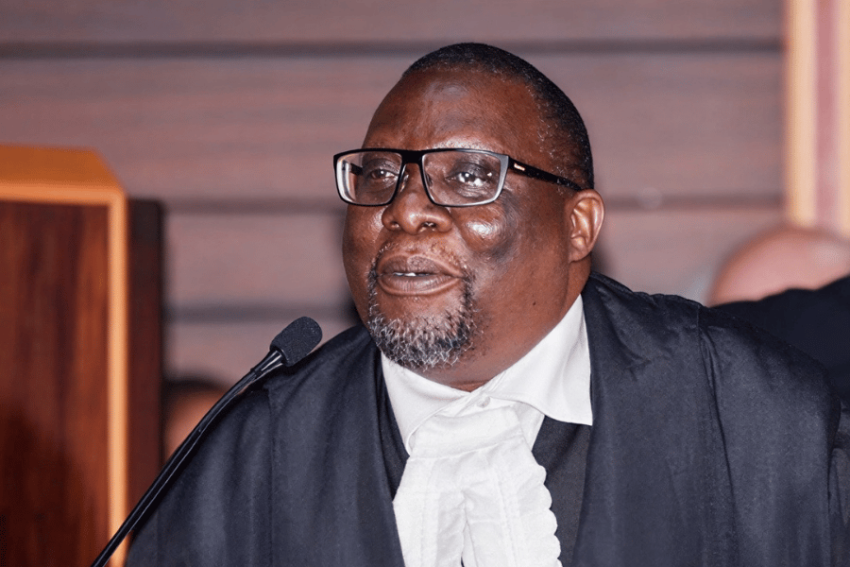
Advocate Madonsela SC has rejected President Cyril Ramaphosa’s objections to his appointment as Chief Evidence Leader in the Section 89 impeachment inquiry, arguing that he has no real or perceived conflict of interest that should prevent him from taking up the role.
The Section 89 Impeachment Committee resolved on 5 August 2026 to recommend Madonsela for the position. Ramaphosa subsequently wrote to Parliament on 18 August, asking that the appointment not be confirmed because of concerns about Madonsela’s previous involvement in matters connected to the impeachment process.
In his response, Madonsela said the concerns raised by the President were not new and had already been disclosed to Parliament before the committee voted on his appointment.
He said he had written to Parliament’s Senior Parliamentary Legal Adviser on 27 July, confirming that he met the requirements for the position while disclosing two matters that could potentially raise questions about a conflict of interest.
The first related to Ramaphosa’s designation of Madonsela to the Judicial Service Commission in March 2020. Madonsela’s tenure ended in March 2022 when Ramaphosa replaced his designated members.
Madonsela rejected the suggestion that his removal could have left him with a grievance against the President.
He said he had no direct dealings with Ramaphosa during his two years on the JSC and that replacing designated members was an ordinary constitutional process that required no reasons.
He also pointed to a letter he sent to Ramaphosa at the time, in which he thanked the President for the opportunity to serve and wished him success.
The second disclosure concerned legal work Madonsela briefly performed after receiving a brief from Mongezi Ntanga Attorneys on 5 June 2026.
He said he participated in only two opinions, with his role limited to overseeing drafts prepared by another advocate. One opinion dealt with Parliament’s procedural options in Ramaphosa’s application for an interdict, while the other concerned whether the National Assembly’s rules should require members to be fit and proper persons.
Madonsela said he was released from the brief on 5 July and was not privy to the merits or underlying facts of the Section 89 allegations.
He further argued that the role of an Evidence Leader should not be treated in the same way as that of a judge or other adjudicator.
According to Madonsela, the Chief Evidence Leader does not vote, make findings or decide whether the President should be removed. Instead, the Evidence Leader assists the committee by identifying and presenting relevant evidence, while committee members make the necessary decisions.
He relied on a Supreme Court of Appeal judgment which held that the role of a prosecutor could not be equated with that of a magistrate or judge and that prior involvement in related matters did not, without more, justify removal.
Madonsela also rejected concerns that his previous legal advice to the ANC created a conflict. He noted that the ANC had disclosed the matter to Parliament but had stated that its disclosure did not constitute an objection to the committee’s decision and did not question his integrity or independence.
He argued that the President could not raise an objection on behalf of the ANC when the party itself had not done so.
The committee had previously agreed that counsel who had participated in litigation relating directly to the matter would be regarded as conflicted, while advising a political party or the President in unrelated matters would not automatically constitute a conflict.
Madonsela said his disclosures were before the committee when it voted nine to seven to recommend him.
He maintained that the President’s concerns were based on speculation rather than evidence of actual bias and said the Constitution and National Assembly Rules did not give Ramaphosa the power to veto the committee’s choice of Evidence Leader.