
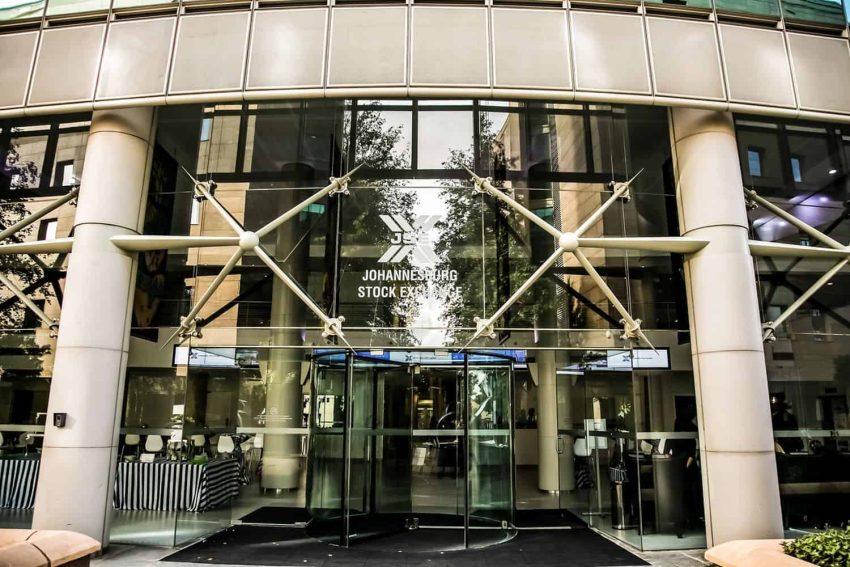
Gold and platinum shares account for more than 25% of the JSE’s benchmark index, which adds a ‘significant amount of risk’ to the bourse.
No index globally is static. Indices change over time, and just as the S&P 500 is now heavily weighted to technology stocks, so too, the FTSE/JSE All Share Index (Alsi) has seen relative weights of its constituents shift.
As at February 2026, the so-called ‘Magnificent Seven’ (Nvidia, Alphabet, Apple, Microsoft, Amazon, Meta and Tesla) represent 34.3% of the S&P 500, up from just 12.5% a decade prior.
Locally, as Anchor Capital points out, gold and platinum shares account for more than 25% of the Alsi (with gold at about 17% at the end of 2025 from only 2% in 2022, and platinum at around 10%) – which adds a “significant amount of risk” to the JSE, “not just from a forecasting perspective, from a volatility perspective as well”.
ALSO READ: Top stock of 2025 plunges 47% in one day
SA’s economy diversify away from mining
Research from Allan Gray shows that as South Africa’s economy has diversified (away from mining) over time, so too has its markets.
“The top 10 shares have always dominated the Alsi, but the market leaders and sector compositions have shifted over time,” writes Matthew Patterson.
“In 1990, the market leaders were resource companies with a few industrial heavyweights.”
At that time, all of the top 10 with the exception of Richemont, SA Breweries, Sasol and Rembrandt were resources shares. Dimension Data’s entry in 2000 was a result of the dot-com boom (the bubble burst a year later). This also explains Nedcor’s appearance at the time as it held 8% of Dimension Data at its IPO in London.
10 largest companies on the JSE
These days, the “10 largest companies by market capitalisation still account for about half of the market, but with greater sector diversification and much fewer cross-holdings”.
Patterson says the composition of the 10 largest shares changes regularly, but within a relatively small group.
“Of the top 10 in 1990, only Anglo American has remained a consistent member of this elite group. Since the modern Alsi was launched in 2002, only 24 unique shares have featured in the top 10.”
Patterson says the “the Alsi’s evolution is not just about individual companies; it also reflects dramatic sector shifts”.
“Resources fell from 85% of the index in 1960 to under 10% by 2015, replaced by industrials, banks and consumer stocks.
“More recently, this trend has partially reversed, with resources rebounding to 30% of the index … driven largely by the gold bull market.”
ALSO READ: And the best share in 2025 was …
Banks, gold miners, technology dominate
A decade ago, the “Alsi was dominated by global multinationals and diversified miners, while today, banks, gold miners and technology giant Naspers/Prosus lead the index … Capitec has grown from a rounding error” to more than 4% of the index.
Those multinationals have shrunk from nearly a third of the index to less than 10% (around 7%) “due to delistings, fraud [given that Steinhoff was a major part of the index in 2015] and index methodology changes”.
The asset manager argues that the composition of the index “reflects the shifts in the economy, in regulation and in global capital flows”, with the JSE’s recent harmonisation project seeing the shareholder-weighted Swix being discontinued (in December) and this methodology being applied to the Alsi.
ALSO READ: JSE breaches 107 000 for first time as gold stocks shine
Significantly, this process reduces offshore weighting distortions from dual-listed shares that are traded far more (and held by a greater proportion of investors) on other markets, such as the London Stock Exchange.
“When you hear that the Alsi is up or down, ask: What has actually moved underneath?” writes Patterson.
“The details matter. Investors who assume the Alsi is still dominated by large rand-hedged firms may be surprised to find that it is now driven by local banks, gold miners and Naspers/Prosus.”
This article was republished from Moneyweb. Read the original here.