


Picture: Supplied
For the better part of a decade, South Africa’s creator economy operated on a straightforward transactional model.
Digital talent cultivated online audiences across platforms like Instagram, YouTube, and TikTok, subsequently monetising that attention through sponsored posts, brand ambassadorships, and gifted product placements.
Also see: Top creators celebrated with awards and luxury prizes at DStv Content Creator Awards
While lucrative for top-tier influencers, this dynamic relegated creators to rent-seekers within corporate marketing funnels, leaving their long-term financial security at the mercy of unpredictable algorithm changes and fluctuating agency budgets.
However, a fundamental structural evolution is underway across Mzansi’s digital landscape. South African creators are systematically transitioning from traditional influence to equity and ownership.
The economic mandate behind equity over ad spend
The shift toward ownership is primarily driven by the inherent instability of traditional brand deals.
While brand integration fees offer immediate liquidity, they fail to generate compounding asset value or passive revenue streams. Industry analysts point out that as the local influencer market matures, corporate marketing budgets face heightened scrutiny, prompting brands to demand stricter conversion metrics that often squeeze individual creator margins.
To counter this fragility, South African creators are applying corporate media strategies to their personal brands, with in-house production and IP retention, direct-to-consumer (D2C) brand building, and ventures and equity partnerships.
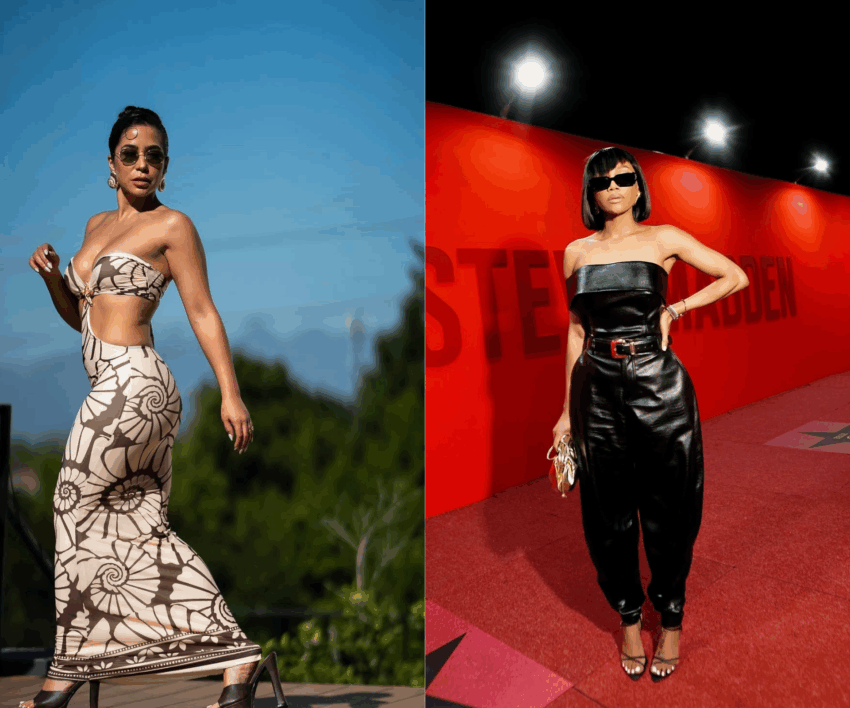
Nadia Jaftha and Bonang Matheba
To counter this fragility, South African creators are applying corporate media strategies to their personal brands.
Pioneer media personality Bonang Matheba provided an early blueprint for this transition, moving beyond luxury brand endorsements to launch her own luxury beverage venture, House of BNG, while securing executive producer credits across televised and digital properties. By retaining commercial control over her product lines, Matheba transformed her cultural influence into scalable enterprise value.
Similarly, award-winning creator Nadia Jaftha has evolved from viral comedy clips to corporate ownership.
Alongside her fiancé and business partner Reece Meyer, Jaftha co-founded ACE Labs, a specialised creative agency that bridges digital storytelling with data-driven social strategy.
Recognised as an official TikTok Global Partner and Creative Exchange Partner, ACE Labs operates internationally out of Cape Town and Dubai, proving that local creators can build global B2B enterprises directly from their personal brand equity.
Also see: Nadia Jaftha’s Ace Labs represents SA at exclusive TikTok summit in New York
Redefining media power dynamics in Mzansi
This migration toward ownership is reshaping the broader South African media and marketing ecosystem. Traditional advertising agencies and corporate legacy media houses no longer hold an absolute monopoly on audience distribution or cultural influence.
By controlling both content creation and distribution infrastructure, independent creator-led businesses can iterate products and launch campaigns at a fraction of the cost and time required by legacy corporate structures.
Furthermore, this evolution holds profound implications for local economic empowerment and creative sustainability. By converting digital attention into tangible corporate assets, South Africa’s digital pioneers are not merely surviving the gig economy; they are building resilient, multi-generational media enterprises that employ local production crews, logistics networks, and creative teams across Mzansi.
Also see: Bonang Matheba drops bold new Steve Madden Collection teaser
Be the first to know – Join our WhatsApp channel for content worth tapping into. Click here to join!