


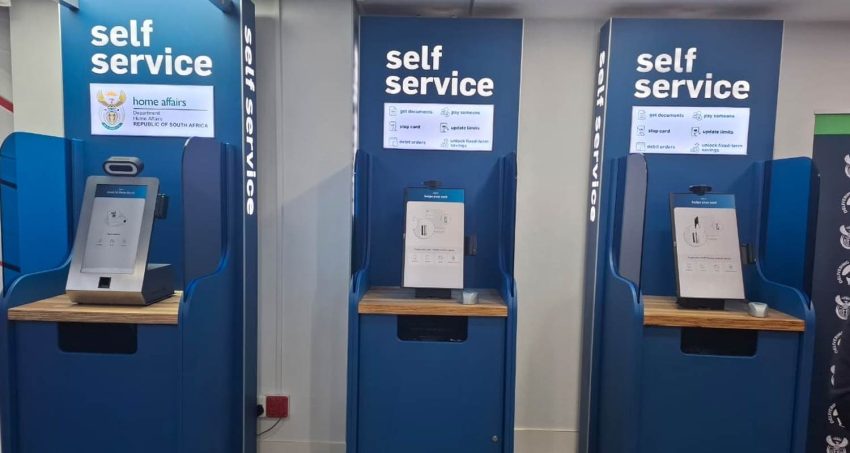
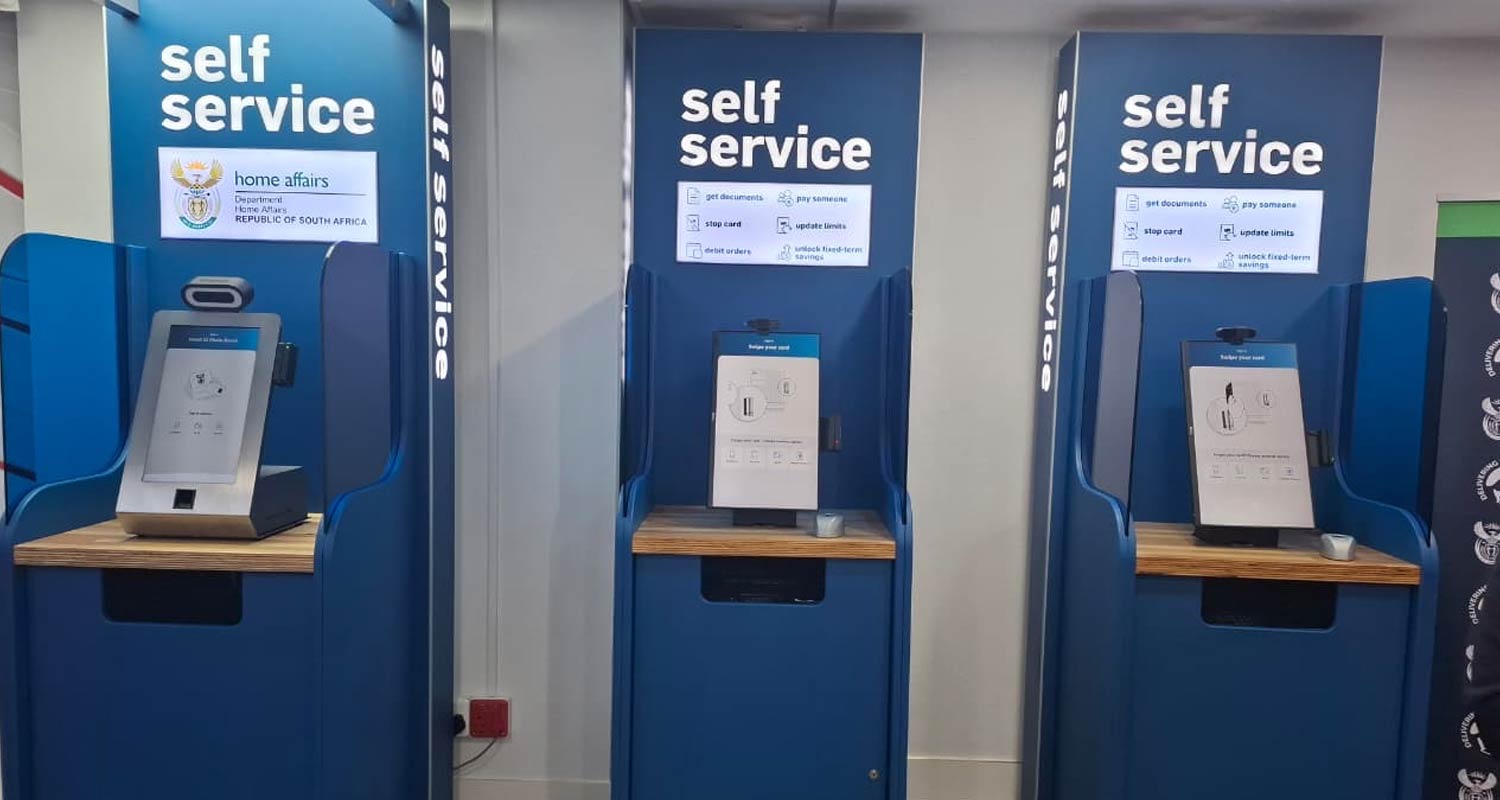

The department of home affairs plans to expand its smart ID rollout to 750 bank branches by year-end – including self-service terminals at Capitec branches – citing the early success of an eight-week pilot that has processed more than 118 000 applications.
Speaking during his department’s budget vote in parliament on Friday, home affairs minister Leon Schreiber said removing officials’ discretion from the application process had eliminated opportunities for corruption that had hobbled the system in the past.
“Through this new model, the smart ID application process has been completely digitalised. Gone are the days of spending a whole day in a queue. There is no official discretion, completely sealing the system off from manipulation and fraud by relying on the power of biometric technology. It is therefore little wonder that, within just eight weeks, a total of 118 434 smart ID applications have already been successfully processed through this new system,” said Schreiber.
Biometric systems are not entirely immune to spoofing or data-integrity failures, but the bank-branch model does remove the official discretion that has historically been a key vector for ID-related fraud at home affairs.
In total, 167 branches have come online in the eight weeks since the digital partnership went live, expanding access to smart ID replacement services by 47%, according to the minister.
So far the roll-out has focused on replacements for South Africans switching from the green ID book or replacing lost cards. Schreiber said first-time smart ID and passport applications would be added through the same channel “over the next few weeks”.
Doorstop delivery
Home affairs also plans to introduce doorstep delivery of IDs and passports for the first time. “South Africans will shortly have the option of having their enabling document securely couriered right to their own doorstep, without the need to travel anywhere just to do a collection,” the minister said.
The expansion is central to the department’s plan to retire the green ID book, which Schreiber described as “the most defrauded document on the African continent” and the foundation for much of South Africa’s identity theft and financial fraud. About 16 million people still use the green ID. The minister said the bank roll-out gave home affairs “a clear road map” to migrate every remaining holder onto a smart ID – a step that would let the department finally end the recognition of the green ID as valid identification.
Read: Capitec, home affairs launch self-service smart ID machines
The bank partnership is one of three flagship digital reforms under home affairs’ “@home” programme. The other two are the Electronic Travel Authorisation (ETA), which has processed more than 75 000 visa applications from tourists in China, India, Mexico and Indonesia using biometric and machine-learning checks, and a planned digital ID system whose draft regulations are open for public comment until 6 June.
The bank-branch model began rolling out earlier this year. In March, home affairs and Capitec launched South Africa’s first self-service smart ID terminals at a Capitec branch in Orange Farm, south of Johannesburg. FNB, Standard Bank and TymeBank have all signed similar agreements, with TymeBank set to use its thousand-plus retail kiosks in addition to its banking app.

Schreiber said routing simpler services through banks would free up home affairs branches to focus on more complex work, including the documentation of an estimated 4.5 million South Africans who are not on the national population register. — © 2026 NewsCentral Media
Get breaking news from TechCentral on WhatsApp. Sign up here.