
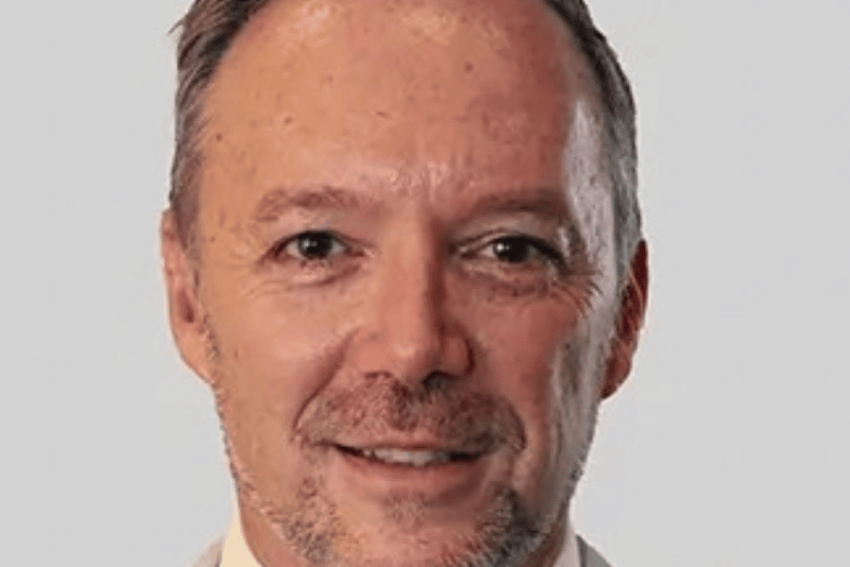
GOOD Party mayoral candidate Brett Herron says Cape Town does not need to be rebuilt from scratch – it needs to finally use what it already has to confront the crises it has ignored for too long.
Herron, who is gunning for the mayoral chain in the November local government elections, said the metro has all the fundamentals to be one of the greatest cities in the world, but those fundamentals are being squandered.
“Cape Town has the basic fundamentals in place to be one of the greatest cities in the world. But, we have crises that the fundamentals could be leveraged to address. We have an affordability crisis, a housing crisis, an inequality crisis and a relentless crime and violence crisis,” Herron said.
For Herron, a former City of Cape Town Mayoral Committee Member for Transport and Urban Development and now GOOD’s Secretary-General, the city’s biggest failure is that it has become liveable for visitors and unliveable for its own people.
“There isn’t one single issue – we have a combination of big issues that all residents need to navigate everyday. Cape Town is super-affordable for international visitors, increasingly difficult for ordinary suburban households, and completely unaffordable for many of the people who were born here,” he said.
“There are a number of obvious steps to create more balance. A GOOD government would introduce fairer rates and tariffs, raise the rates-relief threshold, protect prepaid electricity users and establish a Rental Fairness Compact to keep rental increases within reasonable limits.”
If elected, Herron said his first 100 days will be defined by three non-negotiables that signal a sharp break from the DA-led administration.
“One, a moratorium on the sale of all public land. Two, restructuring the City’s 2027 budget to eliminate waste and excess and reduce costs of property rates, electricity and water tariffs. Scrap the water pipe levy,” he said.
“Three, youth hub site search: Social Development to begin assessing vacant council facilities for conversion into the first three Roots of Safety youth hubs – where young people will be safe, receive employability skills training and have access to social services.”
Herron said the plan will not cost ratepayers more, but will force the City to spend smarter.
“The moratorium on the sale of public land has no direct cost implications. Restructuring the city’s rates and tariffs will commence in November 2026 but come into effect from the 2027 budget. The ability to reduce the taxes and tariffs comes from reducing non-essential expenditure and implementing zero-based budgeting. This will be cost-neutral,” he said.
“Youth hubs will be funded from restructuring the current budgets for ‘Safety and Security’ and ‘Community Services’ directorates.”
With no party expected to win an outright majority in Cape Town, Herron said GOOD will consider a coalition – but not at any price.
“Yes, if no party has an outright majority after the elections we will consider forming a coalition government. A coalition government is a compromise government and no party gets everything they want. But we have some non-negotiables: affordability, housing, inequality and a social safety plan must be a priorities in an agreed coalition government agreement.”
He wants to be judged after one year on verifiable delivery, not rhetoric.
“Full Land & Property Audit completed and published in full, not a summary, by Day 90, including the geo-mapped register. Council votes on the future public land disposal policy, parcel category by parcel category, based on audit findings,” Herron said.
“First People’s Market, to address our food security and employment crises, pilot store opens or breaks ground; second site shortlisted. A Rental Fairness By-law is adopted and a pathway confirmed following public comment. Three Roots of Safety youth hubs open. Inclusionary Housing Policy is adopted and implemented. Municipal budget continues to be restructured for year 2 of my administration with affordability front and centre. Indigent households have real access to indigent support.”
Herron said what sets him apart is honesty about the trust deficit between the City and its residents.
“We start by acknowledging and addressing the trust deficit between government and communities. Public consultation that is incapable of changing pre-determined outcomes is a sham. And we reject the idea that unaffordability is an unavoidable consequence of success, that poverty should be managed rather than defeated, and that inequality is an acceptable outcome of competent governance.”
“We can have both a City that works and a City that cares. A City that attracts investment and protects its residents. A City that welcomes tourists without pricing out the people who call it home. A City that celebrates rising prosperity without abandoning those who have not shared in it.”
His single, accountable promise to voters is to end Cape Town’s spatial and economic divide.
“Addressing the patently obvious disparities of city services, opportunities, infrastructure, amenities and investment between communities. Taking the ‘tale of two cities’ and, in solidarity with all the people of Cape Town, we will learn to become one city.”