


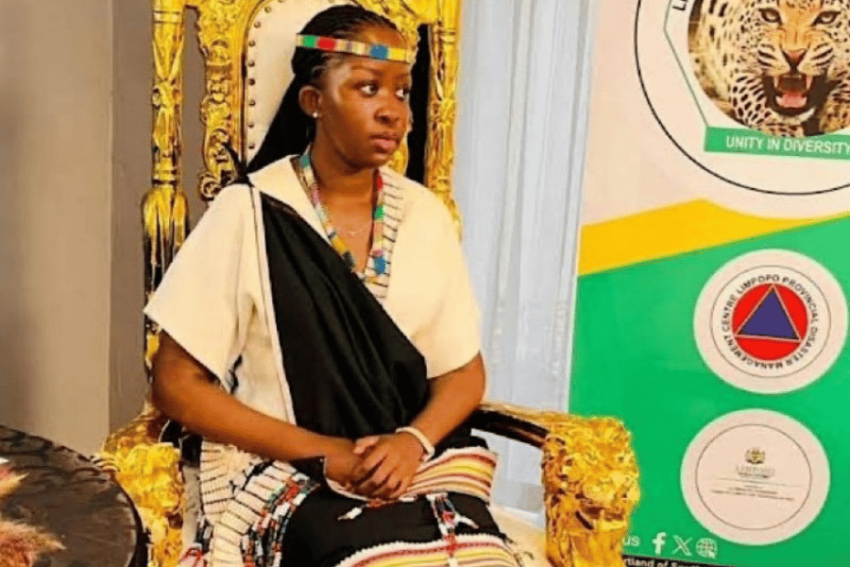
The long-running battle over the Balobedu throne has returned to court, with Prince Lekukela Modjadji challenging President Cyril Ramaphosa’s decision to recognise his sister, Princess Masalanabo Modjadji, as the leader of the Balobedu Queenship.
The matter will be heard over two days on September 2 and 3 in the Western Cape High Court, with Ramaphosa and senior ANC politician Mathole Motshekga expected to oppose Lekukela’s application.
The dispute dates back to the death of Masalanabo and Lekukela’s mother, Queen Makobo Caroline Modjadji VI, who died on 12 June 2005 after a sudden illness. She was only 27 and had been on the throne for a short period.
Because Masalanabo was still an infant at the time of her mother’s death, her uncle, Prince Mpapatla Modjadji, became regent.
However, years later a serious succession dispute emerged within the royal family. While one faction maintained that Masalanabo, as Makobo’s daughter, was destined to become the next Rain Queen, another faction of the royal council backed Lekukela.
The dispute escalated in 2021 when the royal council announced Lekukela as its preferred successor. He was subsequently installed by his supporters in 2022, despite opposition from Masalanabo’s camp.
Masalanabo reached adulthood in 2023, paving the way for renewed efforts to have her formally recognised as the successor to her late mother.
President Ramaphosa eventually recognised Masalanabo as the leader of the Balobedu Queenship, a decision now being challenged by Lekukela.
Despite the legal dispute, Masalanabo has continued to publicly perform duties associated with the Rain Queen. She has been seen attending various cultural and community events, where she has represented the Balobedu royal house and performed ceremonial duties.
The government has also treated Masalanabo as a recognised traditional leader. As part of the support and facilities provided to recognised traditional leaders, she was offered a BMW X6 by government.
The latest court case could, therefore, have major implications for the future of the Balobedu royal institution and potentially determine which of the two rival claims will ultimately prevail.
For the Balobedu people, the dispute is about more than a royal title. It involves questions of tradition, succession, customary authority, and the constitutional role of government in recognising traditional leaders.