
Chinese vehicle brands are no longer just disrupting South Africa’s new-car market – they are now entrenching themselves in the used vehicle segment, long regarded as a tough test of buyer confidence.
New data from AutoTrader shows that models from brands such as Chery, Haval, GWM and Omoda are selling in large volumes on the second-hand market, often at relatively low mileage and young registration ages. The figures point to a decisive shift in buyer behaviour as Chinese brands convert sceptics into confident second-hand shoppers.
That marks a profound turnaround from a decade ago, when Chinese cars were widely dismissed as cheap, inferior alternatives to established European, US, Japanese and Korean brands. Modern Chinese vehicles compete aggressively on design, safety, technology and perceived quality, while still undercutting rivals on price.
The used market is often seen as a more reliable indicator of brand acceptance than new-car sales. Buyers of second-hand vehicles are typically more cautious, more value-conscious and less swayed by novelty. Strong performance here suggests confidence not just in pricing, but in durability, resale value and long-term ownership costs.
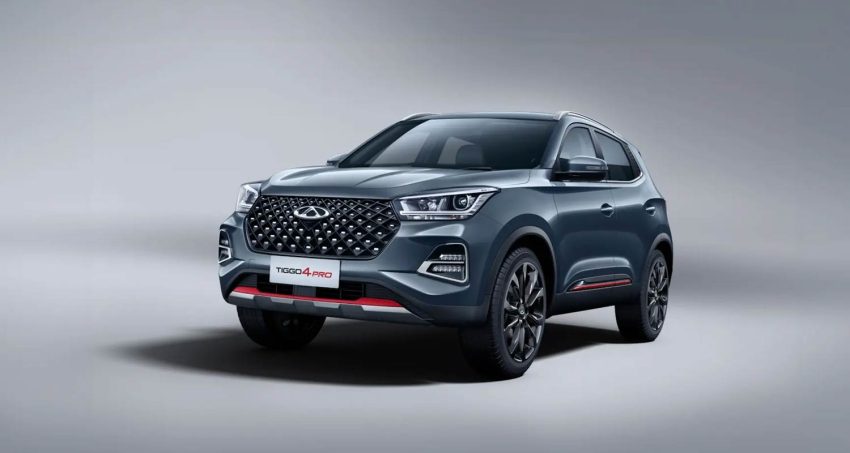
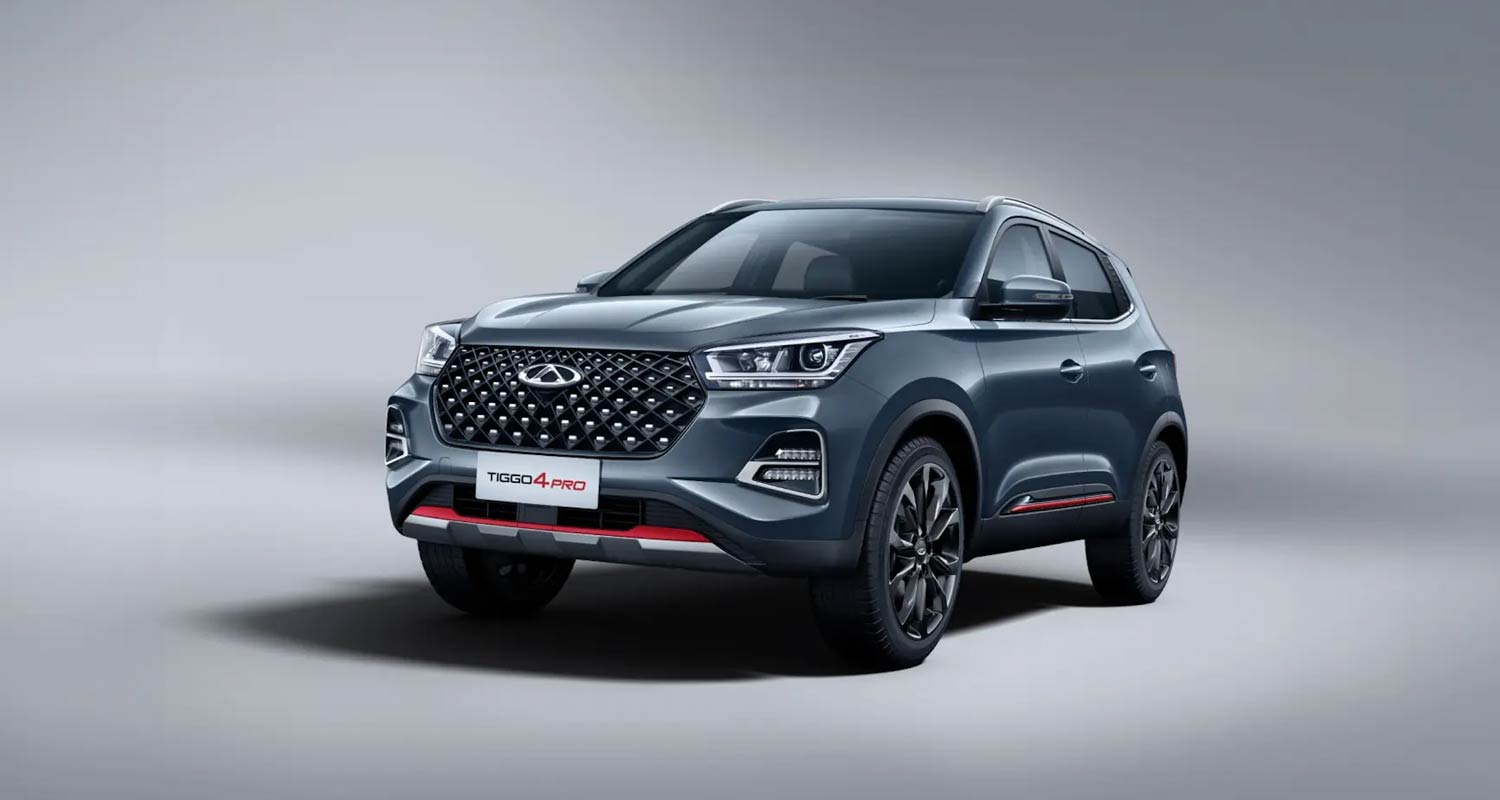
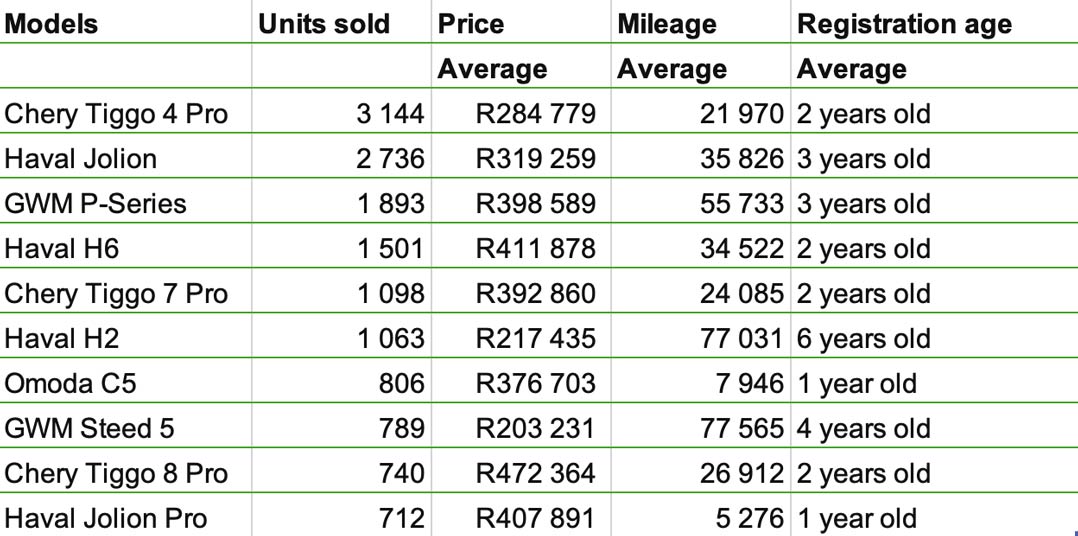
According to AutoTrader’s data for 2025, the Chery Tiggo 4 Pro was the best-selling used Chinese vehicle in South Africa, with 3 144 units sold during the year. That puts it among the most actively traded used passenger vehicles overall, not just within the Chinese segment.
With an average selling price of R284 779, average mileage of just 21 970km and an average registration age of two years, the Tiggo 4 Pro illustrates why Chinese brands are resonating: buyers are getting relatively new vehicles at prices that significantly undercut traditional competitors.
Gaining traction
The Haval Jolion, which competes in the same compact crossover segment, followed closely with 2 736 used units sold. Despite a higher average used price of R319 259 and mileage of 35 826km, the Jolion’s popularity suggests buyers are opting for better-specified models rather than chasing the cheapest possible options.
Chinese brands are also breaking into segments historically dominated by entrenched players. The GWM P-Series, a double-cab bakkie, ranked third overall with 1 893 used sales, making it one of the best-selling used double cabs in the country – Chinese or otherwise.
Watch | Watts & Wheels: S1E1 – ‘William, Prince of Wheels’
At an average price of R398 589, with mileage of 55 733km and a three-year registration age, the P-Series has proven that South African buyers are prepared to trust Chinese brands even in demanding, workhorse categories where reliability is paramount.
Meanwhile, newer brands are gaining traction faster than expected. Omoda’s C5, despite being just a year old on average, recorded 806 used sales, with extremely low mileage. That suggests many buyers are trading in or reselling nearly new vehicles – a sign of strong liquidity rather than distress, according to AutoTrader.
AutoTrader CEO George Mienie said the data reflects a fundamental shift in how South Africans evaluate vehicles.
“Chinese OEMs have learnt how to narrow the gap between cost and perceived value, delivering around 80% of the consumer experience at roughly 60% of the price of traditional players,” he said. “As buyers become more informed and discerning, brand loyalty is weakening, replaced by an expectation for products that clearly justify every rand spent.”
That weakening of brand loyalty is arguably the most important trend underpinning Chinese brands’ rise. In a high-interest-rate, cost-conscious environment, consumers are prioritising features, warranty coverage and total cost of ownership over legacy branding.
The scale and breadth of Chinese brands’ performance in the used market suggest this is not a temporary phase driven by novelty or aggressive discounting. Instead, it points to a structural realignment of South Africa’s automotive market.
As Chinese manufacturers continue to refine their products, expand dealer networks and build resale track records, their foothold in both new and used markets is likely to strengthen further. For incumbents, the message is clear: competition from China is no longer coming – it has already arrived, and South African buyers are embracing it with their wallets. – © 2026 NewsCentral Media
Get breaking news from TechCentral on WhatsApp. Sign up here.